Tiraspol’s new “elections”: Regime accused of mimicking state procedures
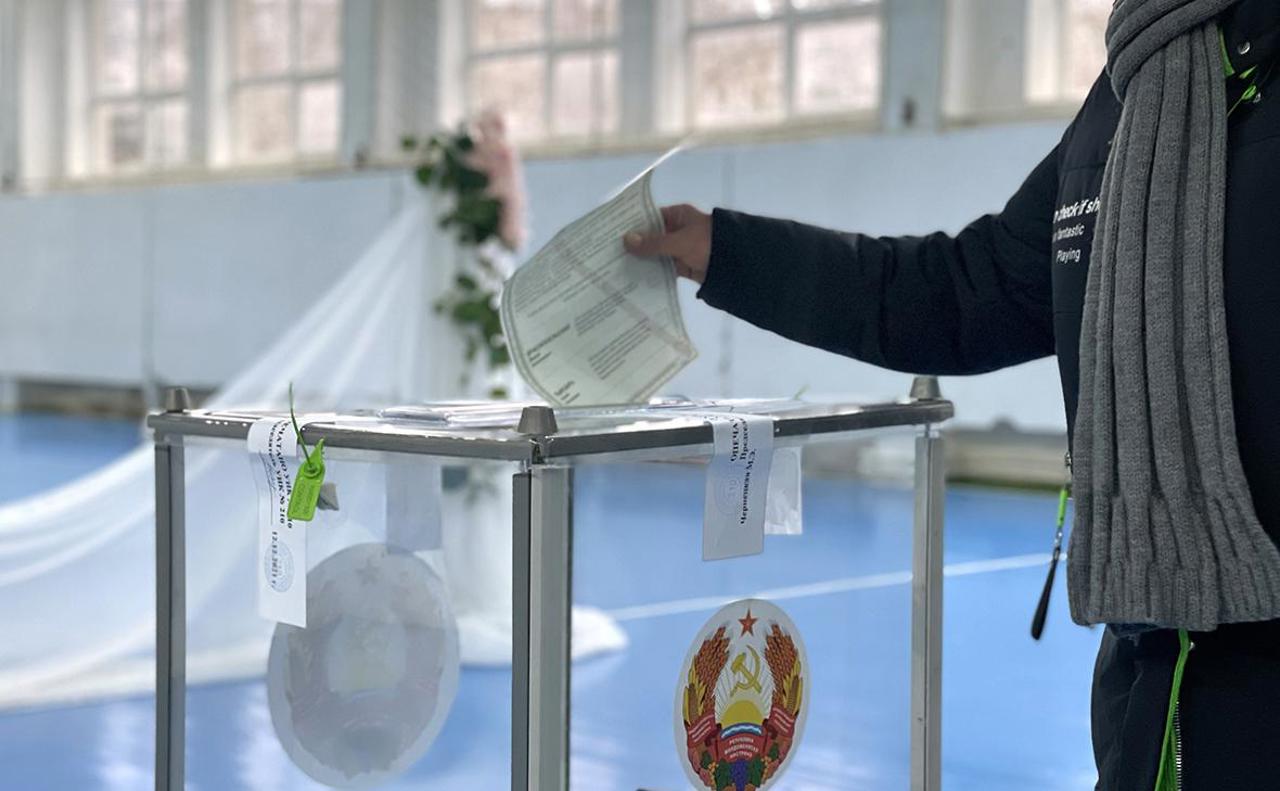
The separatist administration in Tiraspol is set to organize new elections at the end of this week for the so-called Supreme Soviet, which is claimed to be the legislature of the unrecognized regime on the left bank of the Nistru. Elections will also be held for new local council members. The constitutional authorities in Chișinău do not recognize this electoral process, and analysts have described the vote as a “mimicking of democracy.”
Until the alleged election day, residents of the left bank of the Nistru will have the opportunity to vote early, from November 24 to 29. According to the so-called electoral authorities in the region, early voting is available to citizens who cannot appear at polling stations on election day. Valid reasons include business trips, work commitments, or leaving the region.
Additionally, students temporarily residing in dormitories of vocational education institutions who will be absent from their registered place on election day can also participate in the early voting.
The election result is predictable, but the region remains in turmoil.
Mihaela Șerpi, a human rights expert from the Promo-LEX Association, states that the primary purpose of this alleged election is to maintain the facade of statehood on the left bank of the Nistru and to legitimize the occupying authority.
"The stakes of these elections, which are both illegal and illegitimate, are to simulate the existence of a so-called state in the Transnistrian region. It is well known that the occupying regime in Tiraspol has established its own structures and a so-called electoral process. This is merely a simulation to create the illusion of a state and to confer legitimacy upon the occupying authorities through an electoral process that does not adhere to democratic principles or international norms," she told Teleradio-Moldova.
According to Mihaela Șerpi, early voting cannot be considered a genuine reflection of electoral participation, as the data provided by the Tiraspol administration is unverifiable.
"Any data, including the results reported by the occupying regime, cannot be confirmed as accurate. They could easily manipulate the numbers. The reported turnout or number of voters in these so-called elections may be fabricated, as even the so-called electoral commission operates under the political influence of the occupying regime," explained Şerpi.
The analyst added that pressure on the population is ongoing, but the rising social tensions and worsening economic crisis may lead to low participation in this alleged election.
"Given the conditions in the region and the increasing social unrest stemming from the economic crisis, I do not foresee high participation from the population in the Transnistrian region," Mihaela Șerpi anticipated.
Regarding the relationship between Chișinău and Tiraspol after the conclusion of the alleged election, the analyst believes the results will not significantly affect their dynamics; rather, it will depend on the broader context.
"The changes that might occur in the relationship between the constitutional authorities and the separatist regime will likely be influenced not so much by the election results, but by the trajectory of the economic situation in the region on the left bank of the Nistru. The outcome is predictable: the 'Renewal' (Obnovlenie) party, controlled by the Sheriff holding, will prevail," said Mihaela Șerpi.
She also noted that the alleged administration in Tiraspol recently conceded that it will be unable to meet its social obligations to the population at the beginning of next year, including paying pensions and salaries. Furthermore, risks related to natural gas supply persist.
"This context could affect how Tiraspol engages with Chișinău. Simultaneously, it also depends on how prepared Chișinău is for a potential reintegration process of the region," concluded the expert.
“They are playing at statehood while brutally violating human rights.”
Former MP Oazu Nantoi asserts that there is neither real political competition nor opposition in the Transnistrian region, as the electoral process is completely controlled by the ruling regime.
"On the left bank of the Nistru, there is no internal struggle. Those who attempt to oppose the regime are eliminated. Just remember the fate of Oleg Horjan, who claimed to be an oppositionist on the left bank," Nantoi stated in an interview with Teleradio-Moldova.
He argues that the so-called elections for the alleged Supreme Soviet are merely a formal procedure designed to create the illusion of a democratic process.
"When these elections take place in an unconstitutional body that declares itself the Supreme Soviet, it is a mockery of democratic procedures. Just like five years ago, when the 33 so-called deputies were put in place by the Sheriff's interests, the same situation is repeating itself now," the analyst explained.
Nantoi compared the situation to the German reunification process, noting that the differences between East and West persist even after three decades, despite significant investments from the German government.
No change after November 30
Regarding the relationship between Chisinau and Tiraspol following the end of the alleged elections, Nantoi states that “nothing will change in the Chisinau-Tiraspol relationship.”
"The unconstitutional regime on the left bank of the Nistru mimics the procedures of a state. Therefore, this imitation does not alter reality, including the relationship between this regime and the constitutional authority,” concluded Oazu Nantoi.
We remind you that the proposed election on November 30 represents a new round of voting organized by unconstitutional structures in Tiraspol, which are not recognized by the constitutional authorities of the Republic of Moldova or the international community.