Moldova's growth lags EU: 1/3 of population in poverty
The Moldovan economy is projected to grow by two percent this year, increasing to three percent next year, a rate significantly below the average recorded in the European Union (EU) states.
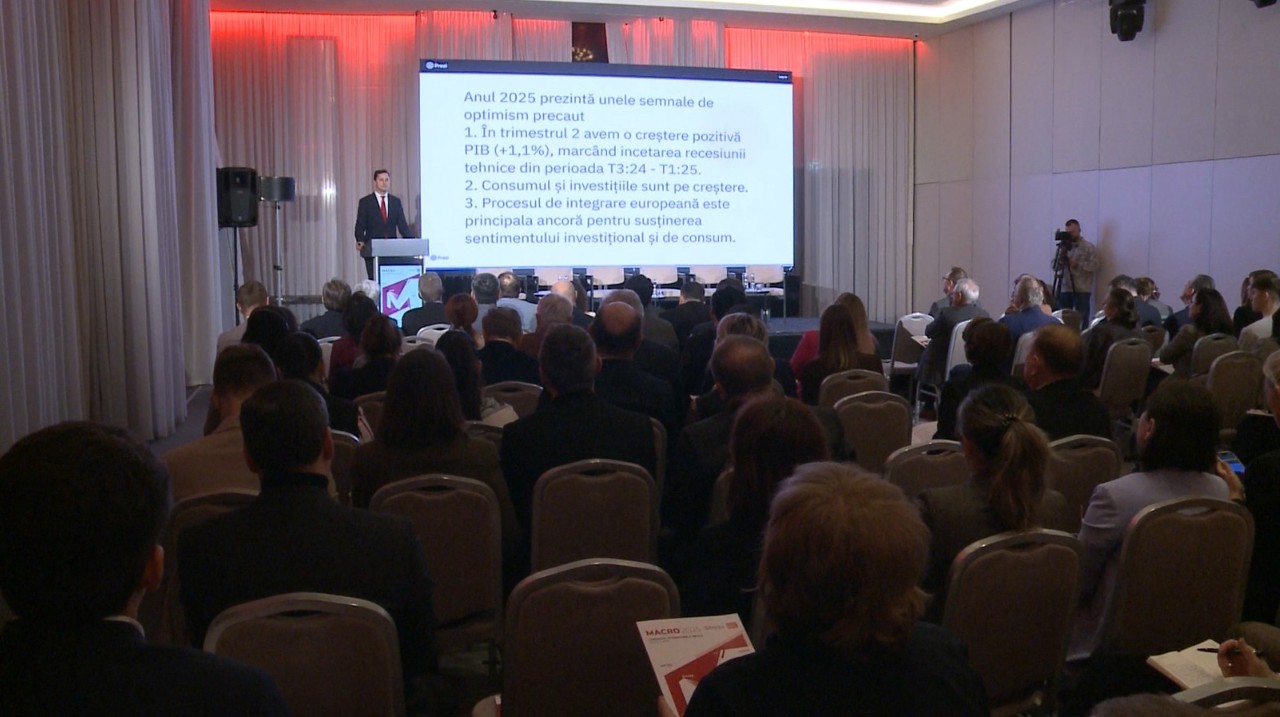
These forecasts are included in the State of the Country Report, presented at the MACRO Conference, one of the most important public debate forums on economic and social issues in the Republic of Moldova. According to experts, to revitalize the economy, the country needs institutional reform, reduced political involvement, and economic predictability. The report also notes that over one-third of the country's population lives in absolute poverty.
Slowing Development and Eroding Potential
The pace of economic development is continuously slowing, and the economy's potential is "eroding," states Adrian Lupușor, Executive Director of the Independent Analytical Centre "Expert-Grup," who presented the State of the Country Report. He warns that current measures offer results only in the medium and long term because the Republic of Moldova lacks efficient macroeconomic instruments for rapidly boosting the economy.
"We need firm, focused measures from the Government through state programs to channel financial resources into instruments that support high value-added investments. This means processing local raw materials, developing local brands, automating processes, and cultivating the consumption of local products, because we have a fairly large current account deficit—meaning we import heavily and export insufficiently. We also need programs to support exporters in implementing EU standards," mentioned Adrian Lupușor.
Poverty, Wages, and Education Crisis
One-third of the population of the Republic of Moldova lives below the absolute monetary poverty line. Factors exacerbating this phenomenon include: low wages, inability to work, and the low 30 percent income replacement rate for pensions, pointed out Marina Soloviova, Program Director at Expert-Grup. According to her, the biggest problem related to the consequences of poverty is sanitation: 96% of rural inhabitants do not have access to water and sewerage systems.
"Continuous education is necessary to increase labor productivity. Over 60% of the working-age population has a low level of education relative to the demands of the labor market. Adequate support for people with disabilities is also necessary. We calculated that the average disability pension must be increased by at least 15% for it to reach the minimum subsistence level. We also need an adequate minimum wage. We must implement the EU directive on adequate minimum wages, which should be at least 50% of the average gross wage," said Marina Soloviova.
Non-Economic Factors and Government Response
To develop the economy, investments are needed not only in the economy but also in education and health, specified Dumitru Budeanschi, President of the National Commission of the Financial Market. Furthermore, the diaspora must have a very significant role in the country's concept, as they can bring value, especially in terms of innovation, including in universities.
"The economy is a huge weight in economic development. Non-economic factors: education, health, security. We cannot have innovation; we cannot have people capable of implementing the projects we build if we do not have an educated society. We educate the population, and if we educate them well, they leave. But the solution to this problem, I assure you, is none other than to invest even more," commented Dumitru Budeanschi.
Prime Minister Alexandru Munteanu, present at the event, affirmed that the Government is working to grow the country's economy through investments in infrastructure, education, and digitalization.
"We are working, very soon, even this week, within the framework of launching the budget for the upcoming year 2026, we are considering a new tax system, which will be simpler and more uniform. Ultimately, our effort is to create a favorable framework for investments, for the private sector to come in, because I believe that everything the Government does, everything the authorities do, is necessary to create a favorable framework for the private sector," declared the Prime Minister.
Translation by Iurie Tataru