Moldova becomes a “laboratory” against hybrid threats, says expert Sorin Ioniță, urging Brussels to learn from Chișinău
The Republic of Moldova has shown that hybrid warfare can be effectively countered through collaboration between national institutions and external partners. Expert Ștefan Bejan from the WatchDog Community argues that Moscow's strategic goal is to undermine the European Union's (EU) unity to further its imperialist agenda. Additionally, Sorin Ioniță, the executive director of Expert Forum Romania, states that the Plan for Strengthening Democratic Resilience, approved by the National Security Council on December 2, represents an important step toward defending digital democracy. He emphasizes that this experience should be shared with EU member states before the elections in 2026-2027.
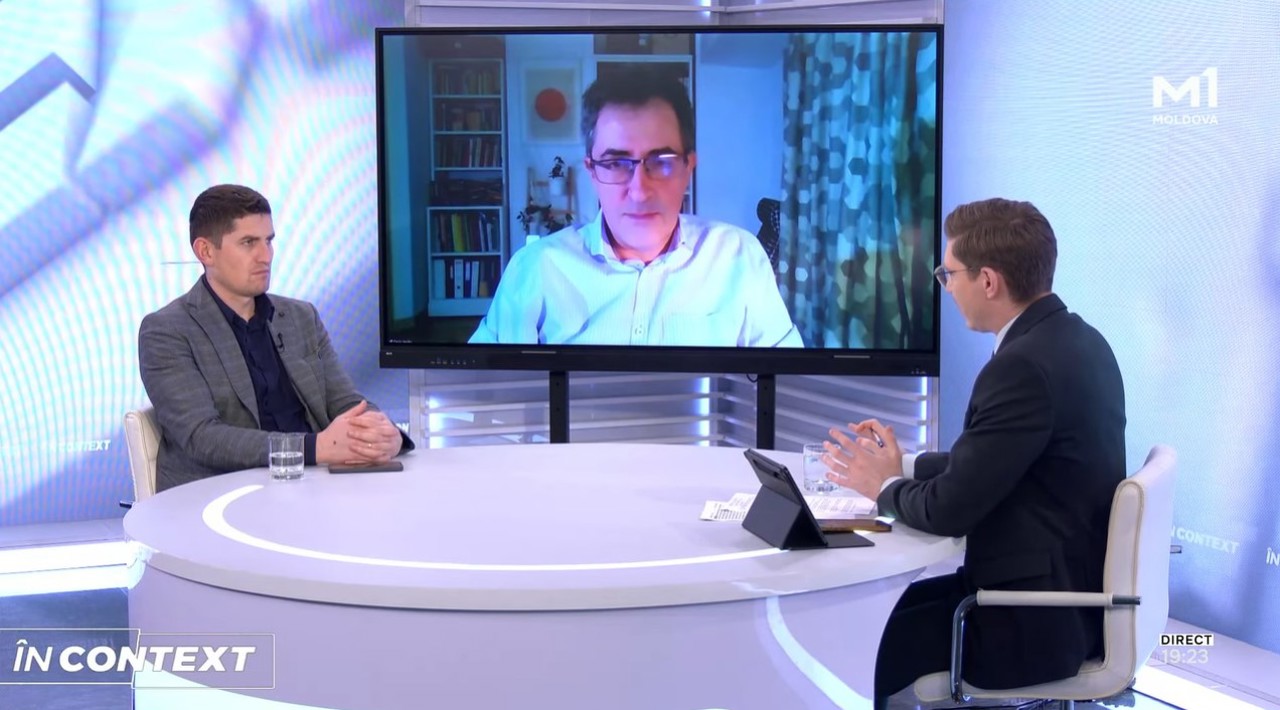
The large-scale hybrid war has been ongoing for several years, but it has escalated in intensity following the outbreak of the war in Ukraine. This situation has highlighted that even major Western democracies are currently facing challenges. There is no effective plan or magic formula to counter Russia's hybrid warfare tactics. On the contrary, the Republic of Moldova has become a hub for information gathering and a testing ground for these tactics, reflecting lessons learned from the last three electoral cycles. It has effectively served as a laboratory for Russian experiments. Russia will continue its aggressive actions against European states as it seeks to exploit weaknesses within democratic societies and sow discord among their populations, according to Ștefan Bejan, expert from the WatchDog Community, in an interview on the [N CONTEXT program on Moldova 1 TV.
Bejan emphasized that the resilience shown by Moldova would not have been possible without assistance from the European Union.
"We recognize that the advancements Moldova made in 2024-2025 are largely due to the support from our European partners. This includes assistance in countering cyberattacks and support for information and intelligence services. Achieving this would have been exceedingly difficult, if not impossible, without that support. It's evident that European states benefitted from this as well, learning from Moldova's experiences in this information war," Bejan added.
He also cautioned that "Moscow aims to disrupt the European balance and unity within the EU" while seeking to identify a strong ally to further its imperialistic plans.
"The Russian Federation is likely to implement a more sophisticated strategy to sway public perception against the EU and democratic institutions. We are witnessing developments such as propaganda related to drones, arms trafficking, and the state's battle against drug issues. These are tools that Russian propaganda effectively uses to undermine democracy," the analyst explained.
During the show, expert from Bucharest Sorin Ioniță praised Chișinău for achieving what many EU member states are still debating.
"The Republic of Moldova should take a bold step and align its entire strategy with the democratic framework introduced by the European Commission. We know what needs to be done, but we lack practical experience. Moldova, however, seems to have gained some experience. I would gladly take this plan to Brussels, despite not being a member country; it has something valuable to offer: a practical set of actions that are already working within institutions and can be applied to the Democracy Shield Strategy launched by the European Commission," Ioniță stated.
He also highlighted the risks that unregulated cryptocurrency payments could become a primary channel for the illegal financing of electoral campaigns in Europe.
“I believe it's crucial to ensure transparency in these payment methods. We have observed problematic situations in both Romania and Moldova in 2024 and 2025. We shouldn’t wait for the next elections in France and Germany to understand how critical this is. They might face significant surprises if they fail to recognize the risks involved,” Ioniță warned.
The executive director of Expert Forum Romania compared the fight against foreign interference to "an arms race, where strategies and technologies evolve every six months." He cautioned that the EU risks losing the 2026-2027 elections: “We need to create a map of political risks in Europe. Major elections are approaching in significant countries, and if we lose these as we did in the United States, it will be detrimental."
Ioniță also clarified the fundamental difference between legitimate pluralism and hybrid manipulation.
“There is no perfect society where everyone agrees; otherwise, democracy could not exist. The real issue lies in how pluralism and freedom of opinion, including online discourse, should be respected without compromising democratic principles. Every individual should have one opinion and one vote, even if some opinions are unconventional. However, it's unacceptable for democracy to be manipulated by bots, robots, or fake accounts that distort the democratic debate, creating the illusion that specific viewpoints are well-represented when, in reality, they are not supported by genuine individuals. The Kremlin seeks to 'multiply' people and manipulate votes, which undermines the democratic process,” Ioniță concluded.
The National Security Council approved a comprehensive set of measures aimed at strengthening democratic resilience for 2026-2027 on Tuesday, December 2. This document outlines actions intended to enhance information resilience, ensure cybersecurity, and combat illegal electoral financing—areas identified as vulnerable to external interference in recent electoral processes.