FIA White Book 2025: Justice reform is key to secure Moldova investment climate
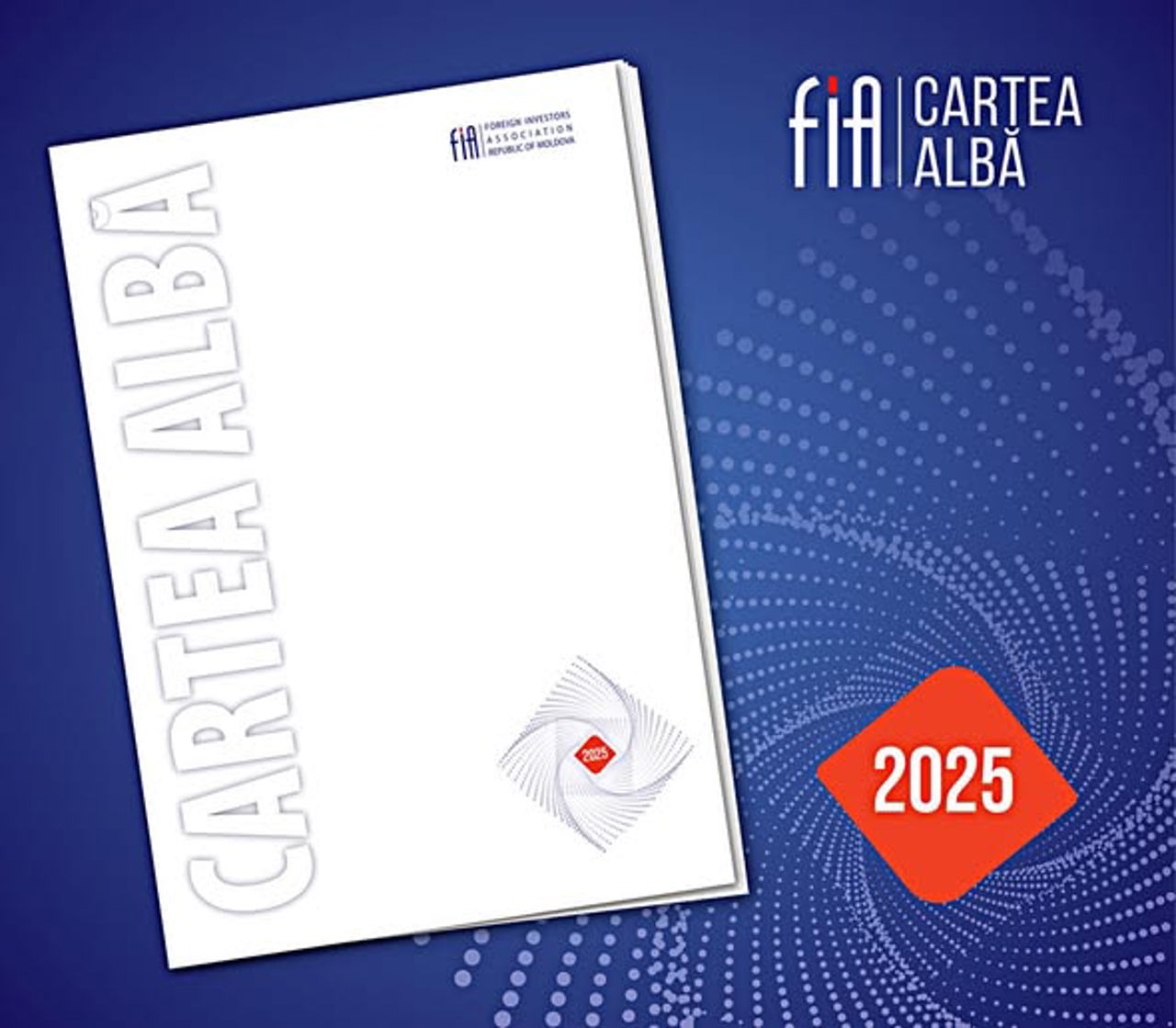
Justice reform in Moldova, widely considered the most significant obstacle for the Moldova business environment, dominates the 2025 edition of the FIA White Book 2025, published by the Foreign Investors Association (FIA).
Developed as the Republic of Moldova progresses as an EU candidate country, this edition comprises eight thematic chapters on reform. Each chapter scrutinizes major sector challenges and provides targeted, practical recommendations for both authorities and the private sector, aimed at substantially improving the overall investment climate.
The FIA White Book serves as the primary dialogue platform between foreign investors and public authorities, reflecting the investment community's steady commitment to modernizing and enhancing the nation's investment climate.
"The chapters address the labor and capital market, the transition to a green and sustainable economy, the financial sector, agriculture, and land relations," stated Ana Groza, FIA Executive Director, on the "Zi de Zi" show at Radio Moldova. "Only proposals backed by consensus are included. The paramount hurdle remains justice reform in Moldova."
Groza emphasized the need for speed: "Authorities have recently taken numerous steps, but we must accelerate this process. We urge the finalization of the vetting and pre-vetting stages, including within the prosecution bodies, to ensure the Moldova business environment feels secure operating in the country. The most challenging phase is next: organizing a series of targeted round tables with relevant authorities to present and argue for our specific proposals, ensuring they are subsequently integrated into the normative acts of the Republic of Moldova."
The Executive Director noted that the structure of the White Book is subject to annual review. For instance, a chapter focused on the pharmaceutical and health sector was removed from the 2023 edition because its prior recommendations had been fully implemented and addressed by the authorities. Conversely, proposals concerning the telecommunications sector were reintroduced, citing new challenges for companies aligning with complex EU legislation.
Nicolae Ciubuc, raw material development director at a sugar production company, views the publication as a clear guide outlining the sector's problems and potential solutions. He stressed that in agriculture and land relations, the main difficulty is limited access to finance.
Ciubuc highlighted the financial disparity: "The agro-industrial sector, vital for Moldova's goal of integration into the European Union, requires adequate financing to achieve competitiveness and align with European standards and rules. Regrettably, only 2% of budget expenditures are currently allocated to agriculture, a stark contrast to the European Union's figure of over 30% of total expenditures."
Limited access to irrigation water is another major challenge, necessitating the swift development of a national strategy. Ciubuc also called for strengthening institutional capacities to meet European standards and effectively tackle systemic challenges like corruption, bureaucracy, and professionalism, which would ultimately provide direct benefits to farmers and other service users.
Ludmila Andronic, corporate affairs director at a beer industry company, affirmed that the new edition aligns the national green transition agenda with the goals of the European Green Deal and the Republic of Moldova's commitment to climate neutrality.
Andronic stressed that it is crucial for Moldova to immediately begin drafting the legislative framework for implementing ESG reporting—a complex European system that mandates disclosure on environmental impact, labor relations, and corporate governance.
"It is a complex framework, but it can be simplified for smaller companies, which must demonstrate their environmental and societal impact and the corporate governance model they employ," Andronic explained. "ESG reporting will gradually become mandatory for companies collaborating with European firms."
She also underscored the need to develop green financing mechanisms, the European taxonomy, and the measured introduction of a carbon tax.
"As we become an integral part of the European economy, companies must embrace the necessity of business modernization, carbon emission reduction, and corresponding investments. Adjustments to the legislation on extended producer responsibility, waste management, and deposit system regulations are also required," Andronic concluded.
The first White Book was released in 2005. Since then, the document has evolved into a systemic tool for framing reform proposals, with the rate of official adoption of its recommendations consistently exceeding 80%. This figure validates its high relevance and practical utility for the investment climate.
Translation by Iurie Tataru