Chisinau's proposals for Transnistrian conflict settlement, presented in Brussels
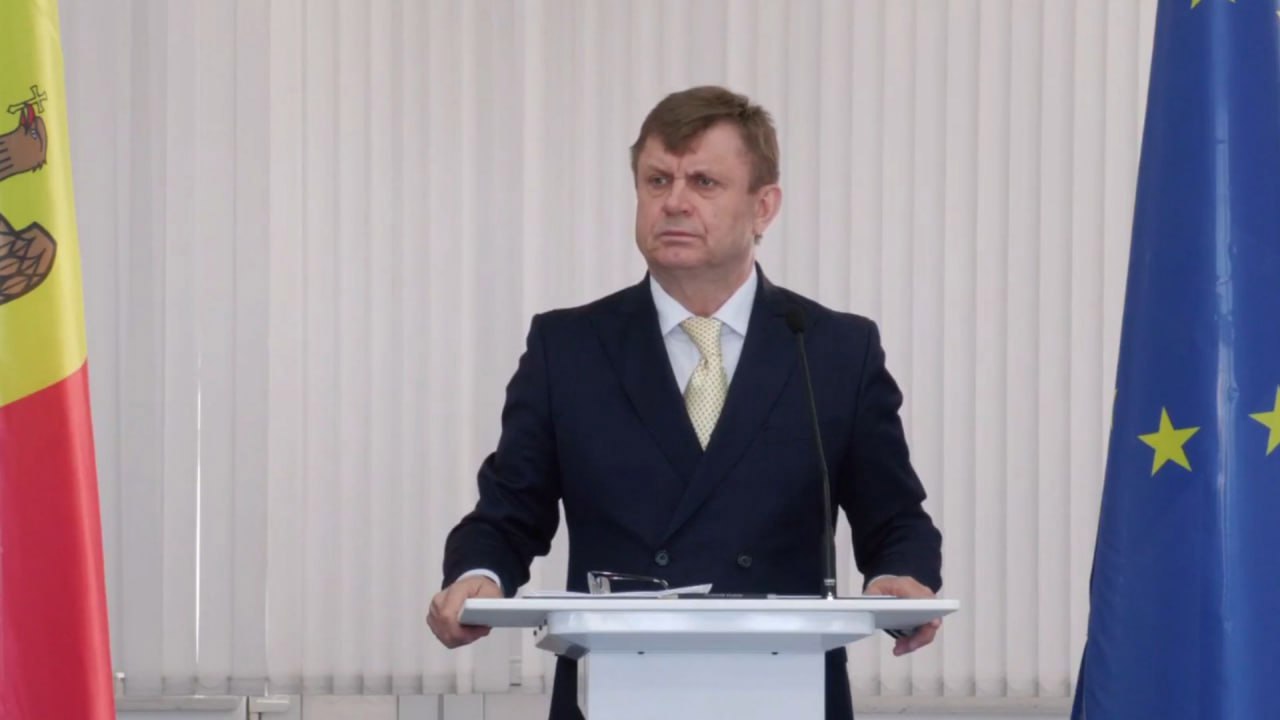
A foreign country exerts significant influence over the separatist administration in Tiraspol, even though it may not directly control it. Chisinau aims to change this situation by establishing an impartial international civilian mission that promotes a neutral policy in the reintegration process. These statements were made by Valeriu Chiveri, the Deputy Prime Minister for Reintegration, in response to press questions about the document he presented to European partners during his visit to Brussels last week.
Non-paper, not reintegration strategy
Valeriu Chiveri stated, in a press conference on March 17, that this is an informal document, the so-called non-paper, frequently used in diplomatic dialogue. It is not a strategy or a reintegration plan and should be treated as a purely informative document.
"We are talking about an instrument for consulting external partners, a sketch of certain ideas and possible directions. Essentially, a starting point for discussions with our European partners," the official noted.
The Deputy Prime Minister for Reintegration denied speculations that Chisinau would transfer responsibility for reintegration to the European Union. He said that this is and will remain, fundamentally, the responsibility of the Republic of Moldova.
The dialogue with the member states and the institutions of the European Union does not imply the transfer of responsibilities, but an active search for reintegration solutions, consultations being all the more natural as the European integration process advances. At the same time, the deputy prime minister said that, at present, Chisinau has a thorough understanding of the existing context, opportunities and vulnerabilities.
“The Republic of Moldova approaches the reintegration process with a clearer and more defined vision, as well as with determination, and the document presented to the partners constitutes an instrument of dialogue and cooperation aimed at identifying the best solutions for the country and for the citizens on both banks of the Nistru”, the deputy prime minister emphasized.
Old initiative, new nuances
According to Valeriu Chiveri, reintegration is a complex and long-term process, and complete strategies are developed in several stages and in separate pillars, some of which are already taking shape. The official highlighted, in this context, the initiative of a group of deputies to expand the regulatory framework in the economic field throughout the country, as well as the creation of the Convergence Fund, through which initiatives to bring the two banks of the Nistru closer together would be supported.
"I personally believe that the Fund could generate an unprecedented dynamic in the reintegration process, with results that could exceed any estimate at this time. I will not provide details, because we are in the process of developing the implementation mechanism, but we want the European Union to be as active as possible", Valeriu Chiveri said.
Regarding the proposal to establish an international civilian peacekeeping mission or a civilian administration for the Transnistrian region, Valeriu Chiveri said it is not new. The subject has been discussed on various occasions in the past, but new nuances and accents have emerged, which require additional consultations.
"During the visit to Brussels, we did not discuss the document in its entirety, but certain elements of this non-paper were on the table for discussion. My feeling was that our initiatives were met with understanding. Although, I believe, it still takes time to shape a final decision, especially when it comes to the involvement or acceptance of all the member states of the European Union", noted Valeriu Chiveri.
"1+1" meeting in mid-April
Referring to the current state of talks with Tiraspol, the deputy prime minister said that the reintegration process remains dynamic.
On March 17, the working group in the field of transport met, while meetings of other thematic groups are being prepared, and a new round of dialogue in the "1+1" format is planned for mid-April, after the one in February.
From draft ideas to policy documents
Based on the draft ideas presented in Brussels, a strategy must also be developed that answers the main questions: "how do we resolve this conflict, how do we remove the foreign military presence and the unconstitutional paramilitary formations and how do we restore economic, social, fiscal, budgetary integrity, etc.", says former Deputy Prime Minister for Reintegration, Alexandru Flenchea.
In a recent live interview on Radio Moldova, Alexandru Flenchea emphasized the need for greater transparency in the decision-making process regarding the establishment of the Convergence Fund.
"We only know that the Convergence Fund will be created. The Government needs to develop the fundamental documents, establish the operational framework for the fund, determine how the funds will be gathered, and outline how these funds will be utilized," stated the former Deputy Prime Minister. He highlighted the importance of conducting public consultations on the matter.
Flenchea also addressed broader issues affecting the Republic of Moldova, stating, "The challenges we face are all present within our country. The way our state functions, or often does not function effectively, is currently the main barrier to our accession to the EU. In simple terms, we do not meet the necessary standards and criteria. Therefore, we are working to comply with these criteria, while also addressing the issue of the foreign military presence, which, we must acknowledge, is a significant impediment."
It is also worth noting that Valeriu Chiveri, the Deputy Prime Minister for Reintegration, visited Brussels for a working trip from March 12 to March 13, 2026.