Moldova's 2026 budget prioritizes capital investments despite $1.18B deficit
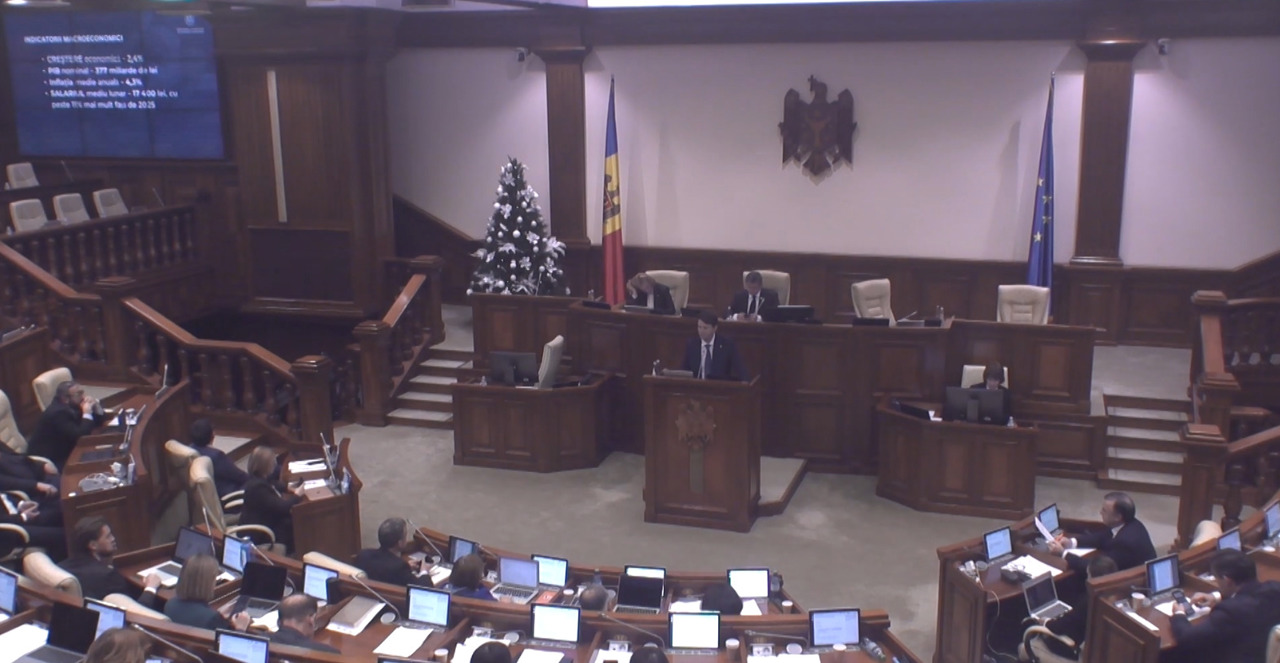
The Parliament of Moldova on Friday evening voted for the draft state budget law for 2026 in the first reading. Government representatives define the upcoming financial plan as one of "responsible investments," despite projecting a significant Moldova budget deficit of approximately 21 billion Moldovan Lei (MDL), or about €1 billion.
The administration states the deficit will be managed by prioritizing capital investments while ensuring minimum social expenses are covered. The budget's core objectives are to consolidate economic resilience, support infrastructure development, stimulate private sector competitiveness, and promote strategic investments.
The 2026 budget forecasts economic growth of 2.4% and an annual inflation rate of 4.3% by year-end. Total state budget revenues are estimated at nearly 80 billion MDL, a 5% increase from the current year. Expenditures are projected to exceed 100 billion MDL, marking a 7% rise. Consequently, the budget deficit for 2026 is set at nearly 21 billion MDL.
The revenue stream primarily consists of collected taxes and duties, accounting for nearly 73 billion MDL. Authorities estimate 2.25 billion MDL will come from grants, with an additional five billion MDL sourced from other income.
In terms of allocations, the largest funds are directed towards social protection (22.5 billion MDL) and education (nearly 22 billion MDL). Nearly 15 billion MDL is earmarked for economic support, 10 billion MDL for healthcare, and 9 billion MDL for public order and national security. Conversely, the lowest allocations are for defense (1.9 billion MDL), culture, sport and youth (the same amount), local public utilities (1.5 billion MDL), and environmental protection (1.1 billion MDL).
"We are after a few extremely difficult years. We have only seen the return of private investments for seven quarters. We are at the first horizon where we can say that economic growth is awaiting us starting next year; it is a very small, symbolic growth... it is our duty to be conservative and responsible," said the Minister of Finance, Andrian Gavriliță.
While the document promises higher salaries, increased investments, and economic growth near three percent, the project has sparked harsh opposition criticism.
"Lately, it scares me when the minister and the authorities come up with special names for the budget... I didn't see any innovations there. I saw the continuation of old policies that led to nothing good," argued Diana Caraman, a deputy from the Communists’ Party.
"I expected a complex program from the Government to solve problems in the economy and social sphere. Without a functioning economy, we have no perspective," stated non-affiliated deputy Vasile Tarlev.
"How will the government manage the subsidization fund of 2.3 billion MDL? If they continue prioritizing areas, those who invested in 2024 will not receive subsidies even in 2026," warned Sergiu Stefanco, a deputy from the "Democracy at Home" party.
The parliamentary majority, however, insists the budget is responsible and people-oriented.
"While the capital city, Chișinău Municipality, does not have an approved budget for the second consecutive year, we ensure that the country's budget includes projects on which the lives of Chișinău residents depend. The 2026 budget is about people, about families, and about efficient public services," countered Larisa Novac, a deputy from the governing Action and Solidarity Party (PAS).
Translation by Iurie Tataru