Justice Reform Forum: Moldova needs a credible justice system for a European future and sustainable development
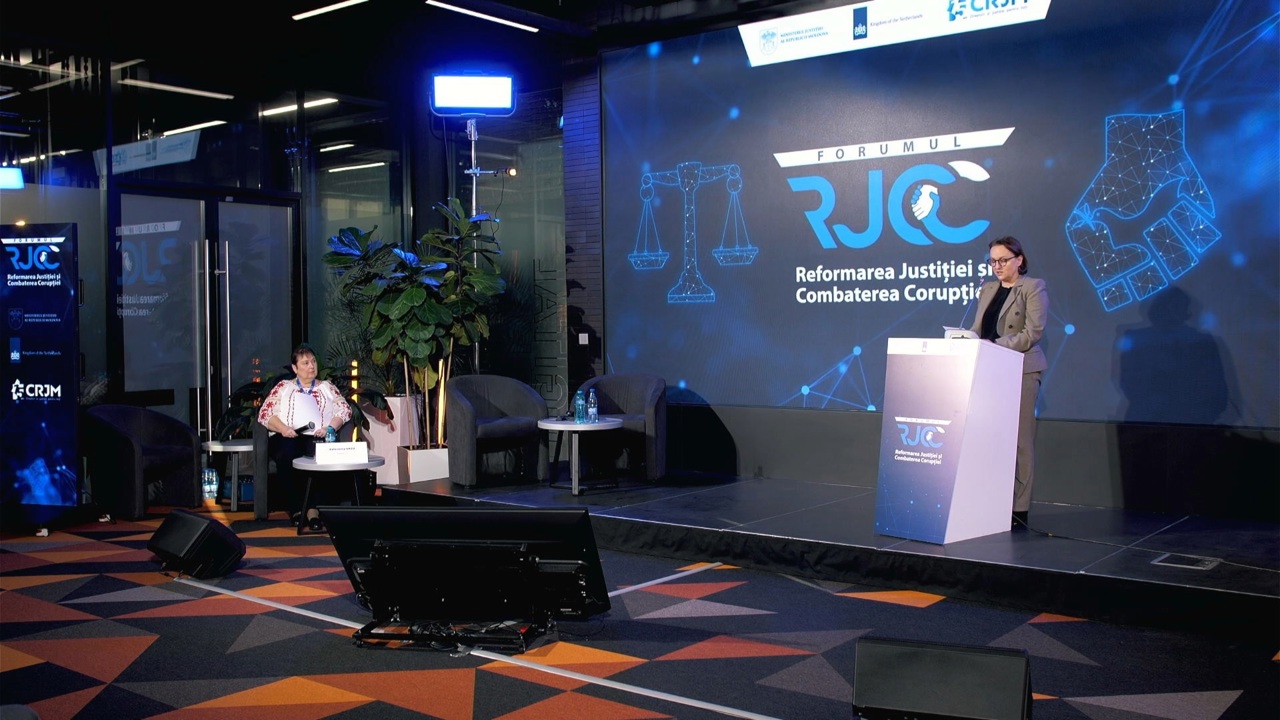
The reform of the justice system in the Republic of Moldova is currently at a crucial stage. While there has been recognition of progress at the European level, significant challenges remain. Key priorities highlighted at the 7th edition of the Forum "Justice Reform and Combating Corruption," held on December 16 in Chisinau, include the ongoing evaluation of judges and prosecutors, the acceleration of corruption cases, and the digitalization of the justice system.
Prime Minister Alexandru Munteanu stated at the opening of the event that citizens deserve a justice system in which they can have complete confidence: an independent, efficient, incorruptible, and accessible justice system. He emphasized that the Republic of Moldova cannot have a European future or sustainable economic development without a credible justice system.
"This is not just a political promise; it is a state obligation and an essential condition for our process of accession to the European Union," the Prime Minister said, stressing that the government is prepared to bear the political costs of reform, which he described as "difficult and, at times, inconvenient."
The Prime Minister reaffirmed the authorities’ commitment to completing the vetting process and to relieving pressure on honest magistrates and prosecutors.
“The Government’s response is clear: we will complete the extraordinary evaluation, fill vacant positions, enhance the attractiveness of legal careers, expedite corruption cases, confiscate criminal assets, and digitalize the justice system. We are also focusing on clearer delineation of responsibilities and better coordination among institutions. These are our concrete priorities,” the Prime Minister concluded, expressing openness to “well-reasoned solutions that genuinely strengthen the rule of law.”
European Union Ambassador Iwona Piórko noted that the Republic of Moldova has made significant strides in justice reform: the extraordinary evaluation process continues, and specialized institutions are collaborating with prosecutors and judges who have passed the integrity test. The European Commission’s 2025 report highlights improvements in the justice sector and progress in combating corruption.
“External evaluations have become crucial for justice reform, not only as a requirement but also because citizens demand a trustworthy justice system. I would also like to highlight the Republic of Moldova's commitment to digitalize the sector, which is essential for providing better services. These results are felt by citizens, as the country has registered an 11-point increase in the Corruption Perceptions Index,” the Head of the EU Delegation in Chisinau stated.
The diplomat reiterated the support of EU partners, announcing that the EU will allocate 14 million euros next year for the digitalization of the justice system through modern technological resources.
“We need to be honest. We still have significant work ahead. The Republic of Moldova needs better access to information, more effective cooperation among institutions to enhance transparency and efficiency, and accelerated external evaluations. Moreover, we must improve prosecution skills, especially in vulnerable sectors,” Iwona Piórko noted, adding that “real reforms occur when every citizen commits to fairness and state institutions support those decisions.”
Ilie Chirtoacă, president of the Moldovan Legal Resources Center (LRCM), the institution organizing the forum, pointed out that vetting—the core component of justice reform—has strengthened the financial and ethical integrity of employees but has also led to staff shortages.
He noted that unattractive salaries and public pressure discourage candidates from joining the system, a challenge evident even at the Supreme Court of Justice, where vacant positions remain unfilled following recent reforms.
Regarding the Judicial Map and the reorganization of prosecution offices, specialized panels have been established to focus on anti-corruption, and the speed of adjudicating cases has improved. However, systemic corruption continues, compounded by illicit financing and disinformation campaigns that hinder reforms, according to Chirtoacă. He did highlight, however, that there is the political will necessary to sustain these reforms.
"I believe we can succeed because there are positive circumstances aligning in our favor. First, there is political will. We see a government, a parliament, and a presidency that share a common vision. Second, the electoral programs of the opposition also prioritize justice reform. Yes, there are differing approaches, but both the government and the opposition view justice reform as a priority," added the civil society representative.
In the Rule of Law Index 2025, the Republic of Moldova ranks 68th out of 143 countries globally and 6th out of 15 in the region, placing 17th among 41 countries with similar income levels.
According to a survey conducted in April at the request of the LRCM, 57% of lawyers, 34% of judges, and 21% of prosecutors support the law on the external assessment of the integrity and assets of judges and prosecutors. The willingness to undergo vetting has increased compared to previous surveys, although those who oppose it cite concerns about the process's transparency, objectivity, and constitutionality.