Moldovan honey industry at a crossroads: Rising exports hide a domestic crisis
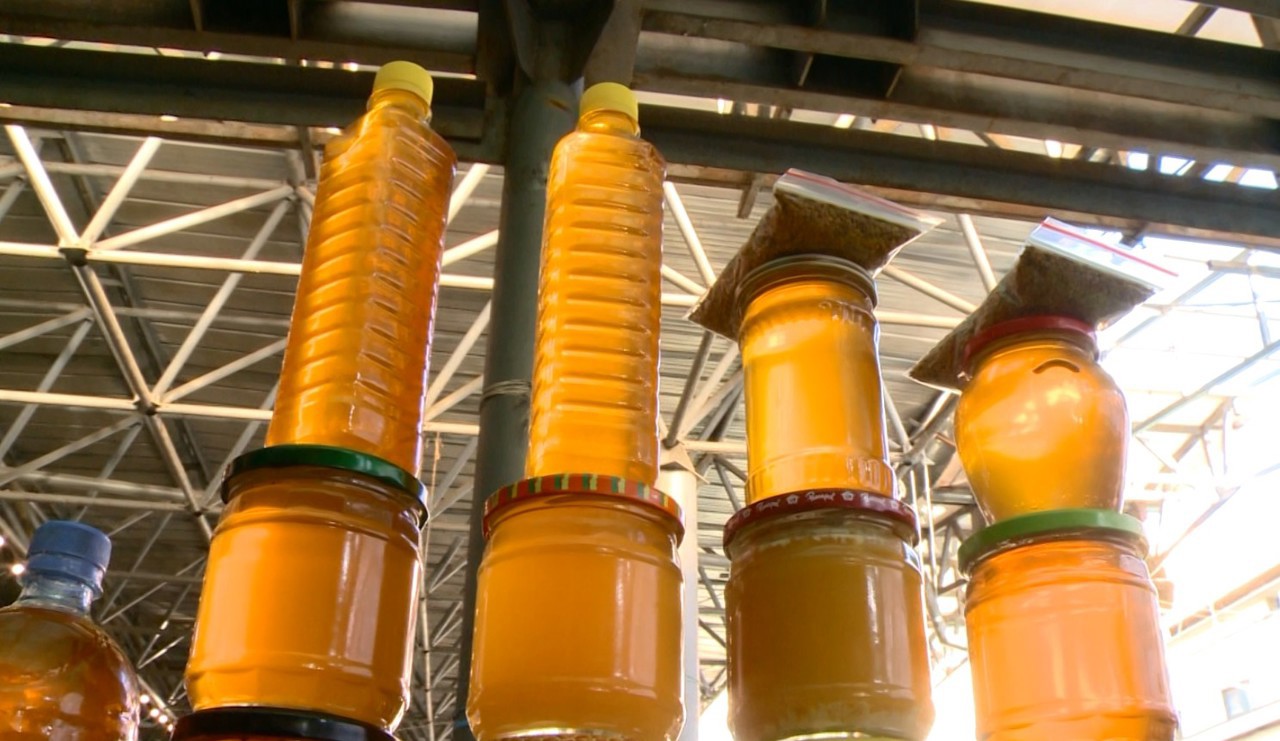
Moldovan beekeepers faced their most challenging year in decades in 2025, as honey production plummeted to approximately 2,500 tons.
This figure represents a nearly 50% drop compared to the previous year and marks the lowest production level recorded in the last 15 years.
According to economic policy expert Veaceslav Ioniță, the crisis was primarily triggered by severe spring frosts that devastated the floral areas essential for bee foraging. The shock was only partially mitigated by selling off stocks from previous years and a slight recovery in international prices.
Economic erosion and domestic decline
The crisis has severely impacted producer incomes. Ioniță estimates that beekeepers now need to sell 2.5 times more honey to match the income levels of 2010. In real terms, a kilogram of honey today yields only 40% of the purchasing power it provided 15 years ago.
Domestic consumption has also seen a sharp decline. In 2023, the average Moldovan consumed 0.7 kg of honey annually; by 2025, this figure dropped to just 0.4 kg per capita.
Export markets offer a lifeline
Despite the production collapse, Moldova exported approximately 4,500 tons of honey last year, valued at $13.8 million (approx. €12.6 million). To meet this demand, exporters drew nearly 2,000 tons from existing reserves.
Approximately 90% of these exports are destined for the European Union. Italy, Romania, and Slovakia remain the primary markets, with significant volumes also reaching France, Norway, and Germany.
Industry structure and price recovery
While international prices recovered to $3.3 per kg in the third quarter of 2025, they remain below the 2022 peak of $3.8 per kg. The sector's resilience is further tested by its fragmented nature, as most of the country’s 212,000 bee colonies are held by small-scale family holdings rather than industrial farms.
Expert analysis suggests that without targeted support policies, the sector remains highly vulnerable to climate volatility and shifting global trade patterns.