EU becomes main market for Moldovan exports as CIS drops to historic low
The Republic of Moldova is solidifying its shift in export focus toward the European Union market, which has now become the primary destination for its domestic products. Over the past decade, dependence on markets from the Commonwealth of Independent States (CIS) has significantly decreased. According to data presented by authorities, this change is not only directional but also structural. It has been driven by European economic integration, past embargoes, and producers' adaptation to meet stricter standards.
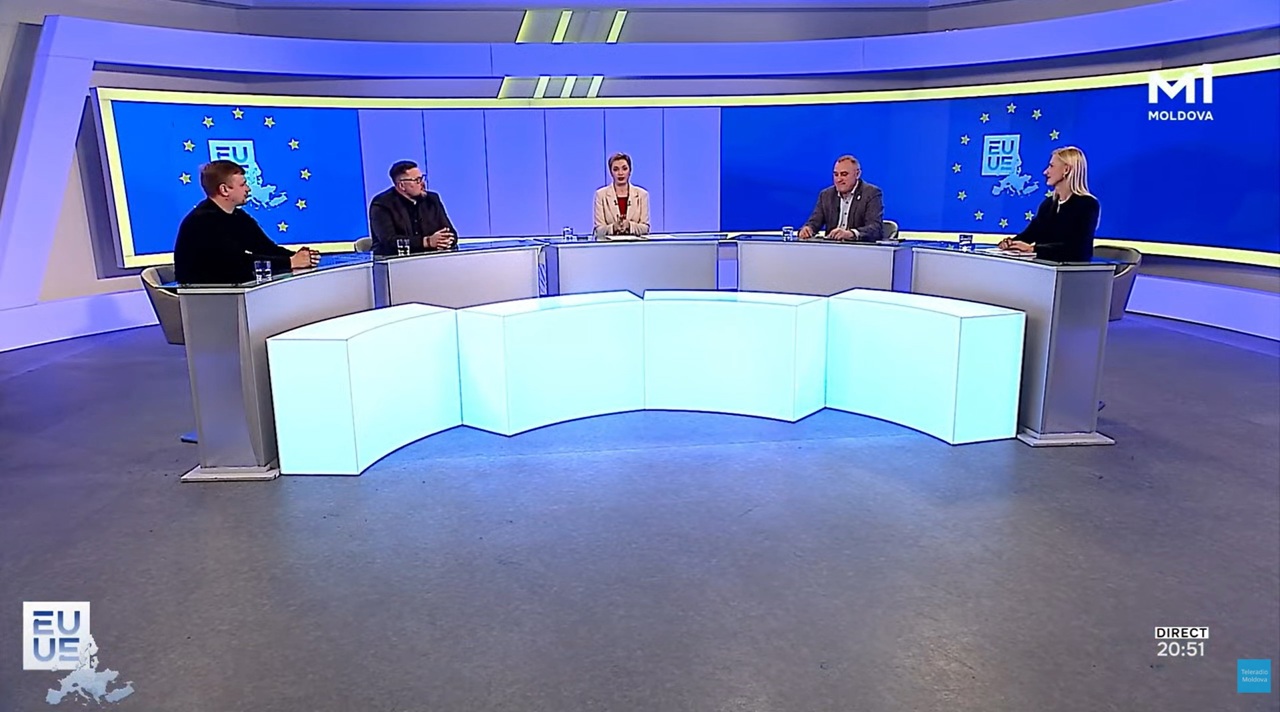
"If in 2014 about 50% of the Republic of Moldova's exports went to EU countries, (...) in 2025 we managed to reach a share of 67%, and, in nominal terms, this has doubled in 10 years. So we are talking about a reorientation of Moldovan exports towards EU markets, and if we compare it with the market share that the CIS countries had, which was about 40%, well, in 10 years we reached 6.8% of exports destined for these markets", declared the Deputy Director of the Investment Agency, Irina Tolstousov, during the show "I and the European Union" on Moldova 1.
She emphasized that the European market has become a "safe, reliable" one, but also much more demanding, where consumers "are willing to pay more for quality products".
Romania, the gateway to the European market
At the same time, Tolstousov highlighted Romania's essential role in Moldovan producers' access to the EU market.
"Romania is the main trading partner for our winemakers. (...) it is the access market for the rest of the EU markets", explained Tolstousov. According to her, over 100 wine industry companies already export to the European Union, and almost half of their deliveries go to this market.
Producers say that, with the orientation towards the European Union market, the challenges are not only related to the actual access, but especially to the ability to resist and maintain themselves in an extremely competitive market. Unlike traditional markets, where commercial relations were already consolidated, in the EU each product competes directly with established brands at a global level, and its presence on the shelf depends on a combination of quality, marketing, volume, and consistency in deliveries.
In this context, producers confirm that access to this market comes with major challenges and involves direct competition with global players.
"We produce some extraordinary wines, but the European Union market is fiercely competitive, so we must be very aware that we are fighting for the shelf with everyone, so it is not just about winemakers in the European Union, we are also talking about Chile and South Africa, with everyone and we must be prepared, to fight that fight with our heads held high, to prepare everything at the level", declared wine producer Anton Deleu.
Romania thus remains the main gateway for Moldovan products to the European Union, being considered a launch market for companies.
"The Romanian market is the springboard for any enterprise, (...) it is the first attempt to enter the European Union space", the producer said.
Moldovan fruits, increasingly present in the EU
The shift in export direction is also evident in the agricultural sector, where producers have had to quickly adapt to European requirements.
"We currently export 47% of all fresh and dried fruits to the European Union, while in 2022 before the war we had 97% of some species going to the CIS market and if we succeeded it means it is possible it is not something terrible, there are requirements that are not in question, namely the requirements of harmlessness", said the executive director of the Moldova Fruct Association, Iurie Fală .
At the same time, the adaptation process involved considerable investments and the modernization of the entire production chain.
"You have to know what the requirements are, to invest (...) to align quality standards and production practices", he explained.
We note that the change in export direction was driven by embargoes imposed by the Russian Federation, as well as by the regional context in recent years, including the war in Ukraine, which affected trade routes and traditional markets. In these conditions, the Republic of Moldova accelerated its economic rapprochement with the European Union, and the Association Agreement became the main instrument of integration into the community market.