Freedom lesson of the 2009 generation: 17 years since April 7 protests
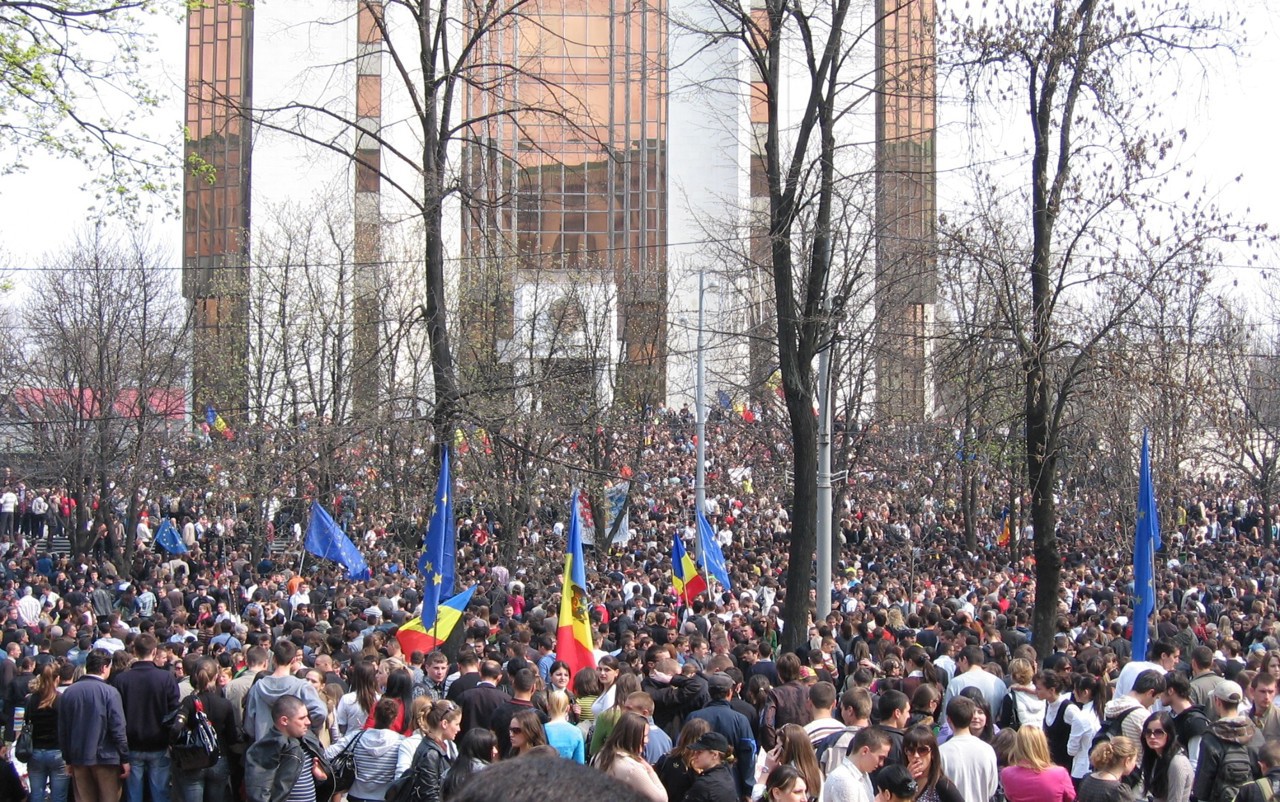
Seventeen years ago, the Great National Assembly Square in Chisinau became the focal point of a significant transformation for society. This event marked a definitive break from the communist model of governance, which had been heavily influenced by the Russian Federation, and established the Republic of Moldova's commitment to European civilization. The catalyst for this change was driven by tens of thousands of young people who refused to accept the fraudulent results of the April 5, 2009 election. Their protests evolved into a powerful manifesto advocating for freedom and democracy.
The April protests led to the overthrow of the communist government and set the stage for free and democratic elections. These events highlighted society's yearning for change while also exposing the fragility of national unity. While the protests revealed deep divisions within society, they also showed that freedom and democratic values can serve as powerful forces for mobilization and unification.
After the April 5, 2009, elections, the Communist Party won a majority in Parliament for the third consecutive time. Believing the elections were fraudulent, over 30,000 opposition supporters, primarily young people, gathered to protest in the center of the capital.
Initially peaceful, the protest on April 7 escalated into a violent uprising as authorities responded with brutality. Four individuals lost their lives, and more than 600 young protesters were arrested, beaten, humiliated, and tortured in police stations.
Seventeen years after the events of April 7, 2009, the victims are still seeking justice. The criminal investigation is ongoing, and the full truth about what transpired remains undisclosed.
Several individuals have been identified as defendants for their involvement in the repression of the peaceful protest, which turned violent. According to a response from the PCCOCS, which resumed the investigation in November 2021, 11 people have been convicted in relation to these events.
The unrest resulted in material damages estimated at 146 million lei, as well as the destruction of the original Declaration of Independence of the Republic of Moldova and numerous documents from the Parliament Archives.
The Parliament elected on April 5, 2009, was dissolved because it failed to elect the country's president. Opposition parties blocked the election of the Communist Party's candidate for head of state on two occasions, prompting early elections on July 29.
In the subsequent election, the Communist Party again secured the most seats, obtaining 48 mandates. However, the opposition parties—the Liberal Party, the Liberal Democratic Party of Moldova, the "Moldova Noastra" Alliance, and the Democratic Party of Moldova—formed a coalition called the "Alliance for European Integration," which enabled them to establish a new government.
On September 11, 2009, the sitting president, Vladimir Voronin, officially announced his resignation. Mihai Ghimpu, who served as the head of the Legislative Assembly, also acted as the interim president of the Republic of Moldova.
In 2012, Parliament declared April 7 as "Freedom Day" to honor the young individuals who peacefully demonstrated for freedom and democracy.