Maia Sandu: “Russia is an aggressor.” Special Tribunal for Ukraine approved in Chișinău
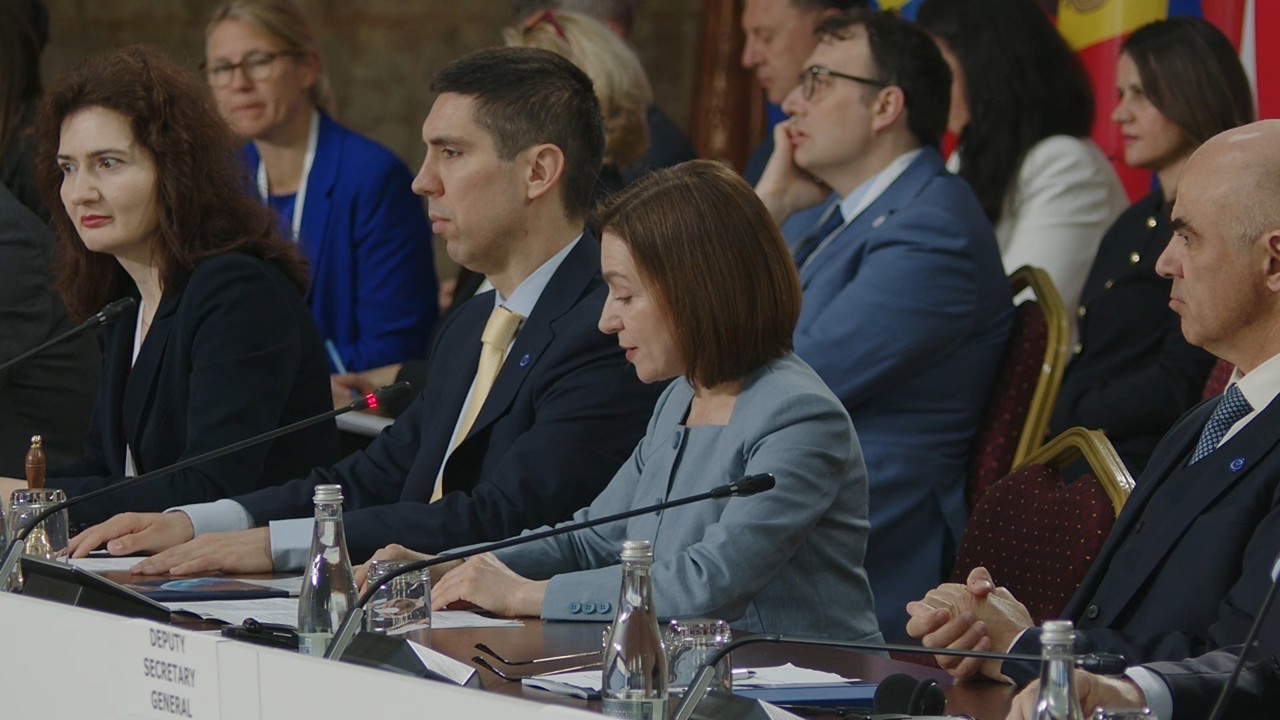
Peace and democracy in Europe are currently at risk, primarily due to Russia's aggressive actions, including the use of drones that target civilians, as well as hybrid attacks and cognitive warfare. President Maia Sandu stated this at the opening of the Council of Europe's ministerial session in Chisinau. She emphasized that the defense tools developed decades ago are no longer effective. The president also welcomed the establishment of the new Democratic Pact for Europe, initiated by the Secretary General of the organization, along with the creation of a Special Tribunal to address crimes committed against Ukraine.
Maia Sandu stated that any democracy that remains outside the European family is vulnerable to exploitation. She emphasized that the most effective way to counter those who seek to destabilize democracies is to reduce the number of vulnerable targets.
"Just yesterday, Russia launched one of the longest and most extensive attacks on Ukraine since the start of the war. A total of 1,560 drones were deployed, resulting in civilian casualties and damage to energy infrastructure, as well as violations of the airspace of the Republic of Moldova. Russia does not intend to cease its aggression; the country continues to carry out actions that kill innocent people. We must clearly articulate what we observe: Russia is a nation that sends drones against sleeping civilians and deliberately targets hospitals, schools, and power stations. Russia is an aggressor," noted Maia Sandu.
Special tribunal for crimes against Ukraine
The pressure on Russia must not be lessened. In addition to financial sanctions, accountability is essential, emphasized the head of state. She highlighted the significance of the Republic of Moldova being a founding member of the Special Tribunal, which was established within the Council of Europe to investigate crimes against Ukraine.
The resolution was adopted on May 15, in Chisinau, with the Extended Partial Agreement on the Management Committee of the Special Tribunal for the Crime of Aggression against Ukraine being signed by 36 countries.
“Very many member states have expressed their interest in joining. I encourage other member states to do the same. This is a legal and political act that sends a message to every aggressor, both today and tomorrow: the rules still apply, the Court will convene, and justice will be served,” declared Maia Sandu.
Ukraine has redefined the doctrine of modern defense and has become a security provider for the European continent—an achievement that deserves consistent support, according to the President of the Republic of Moldova. She stated that efforts must also be directed against cognitive warfare, which seeks to affect societies and influence public perception, ultimately aiming to weaken and control Europe.
“One war destroys cities; the other undermines the trust essential for a democratic society. Moldova has been grappling with this second war for years. We face energy blackmail and information interference. All of this has one goal: to distance us from Europe. We have resisted, but the danger has not yet passed,” noted Maia Sandu.
The president underscored that supporting the European Union's enlargement and defending democratic rights is a form of resistance. She asserted that both the Republic of Moldova and Ukraine have earned their right to be part of the European community by “choosing Europe under very difficult conditions.”
“We are not seeking shortcuts; we are doing our homework. However, we request that our merits be recognized, as for us, accession is an existential matter, and for Europe, it represents an investment in its own security. The way technology has revolutionized modern societies requires us to update our defense strategies. We must continue to support Ukraine and provide tools against cognitive warfare. Moldova is ready to meet these demands as a country that believes in the importance of defending and building the European project,” the president concluded.
New Democratic Pact for Europe
Alain Berset, the Secretary General of the Council of Europe, emphasized that without democratic security, other security components can falter, even if they initially appear robust. The New Democratic Pact for Europe is designed to enhance resilience, uphold rights, and protect against oppression and militarism, thereby increasing the Council of Europe's capacity to act.
“Member states must utilize this instrument as a geopolitical force. The challenges of foreign information manipulation and interference necessitate a collective response. The Republic of Moldova understands this better than anyone. A framework convention will serve as a crucial legal tool, forming the basis of our shared legal space,” stated the Secretary General.
Support for Ukraine remains a priority for the Council of Europe, according to Alain Berset. He highlighted the importance of accelerating reconstruction and restoration efforts and ensuring accountability for crimes committed in Ukraine.
“This continent has not weakened; on the contrary, it has become more prepared. We have demonstrated that we are ready for every decision to be made in this room today. Without a common legal space, Europe risks becoming what others wish it to be: a market to be exploited, a territory to be pressured, a map to be negotiated. Europe, however, is a force that establishes its own rules,” Berset added.
Two projects united by the same mission
Deputy Prime Minister and Minister of Foreign Affairs Mihai Popșoi expressed his confidence that democracy will endure even under the greatest pressures; however, he emphasized the importance of shared responsibility.
“The Committee of Ministers of the Council of Europe has clearly stated that peace in Europe must be founded on responsibility. The Committee is continuing its work with determination to create a framework aimed at bringing an end to the war of aggression against Ukraine. An important component of this framework is the Special Tribunal established today in Chișinău,” said the official, noting that it is crucial for more countries to join this initiative.
Mihai Popșoi also conveyed that for the Republic of Moldova, the path toward Europe symbolizes inspiration for peace, security, and democratic strengthening. Aggression must not divide societies or hinder the future of the European continent.
“For my country and for me personally, this is a journey we undertake with determination and hope. In this context, we value the long-term strategic partnership between the European Union and the Council of Europe. These are two complementary projects united by the same mission: protecting our shared values and promoting peace and prosperity across Europe,” concluded the Minister of Foreign Affairs.
Three pillars of accountability
A copy of the resolution to create the Special Tribunal for Crimes against Ukraine was presented to Ukrainian Foreign Minister Andrii Sybiha. The Ukrainian official emphasized that it was "a historic day," adding, "Like the Nuremberg Tribunal, the Special Tribunal will restore justice from the ruins of war."
“Yesterday, Russia killed many civilians in Ukraine. Their relatives are now watching us online. We cannot afford any mistakes. They have the right to justice, as evidenced by the support of states that have joined this initiative. We have reached a point of no return. This Special Tribunal is now a reality. Very few believed this would happen, but it did. A year ago, we approved the political decision, and now we have the implementation agreement. For international criminal justice, this speed is truly remarkable,” said the Ukrainian minister.
Andrii Sybiha noted that an accountability infrastructure is being established based on three pillars: the Special Tribunal, the Damages Registry, and the Damages Commission. He emphasized that there will be no room for compromise when it comes to communicating the truth and holding the aggressor accountable.
135th ministerial session
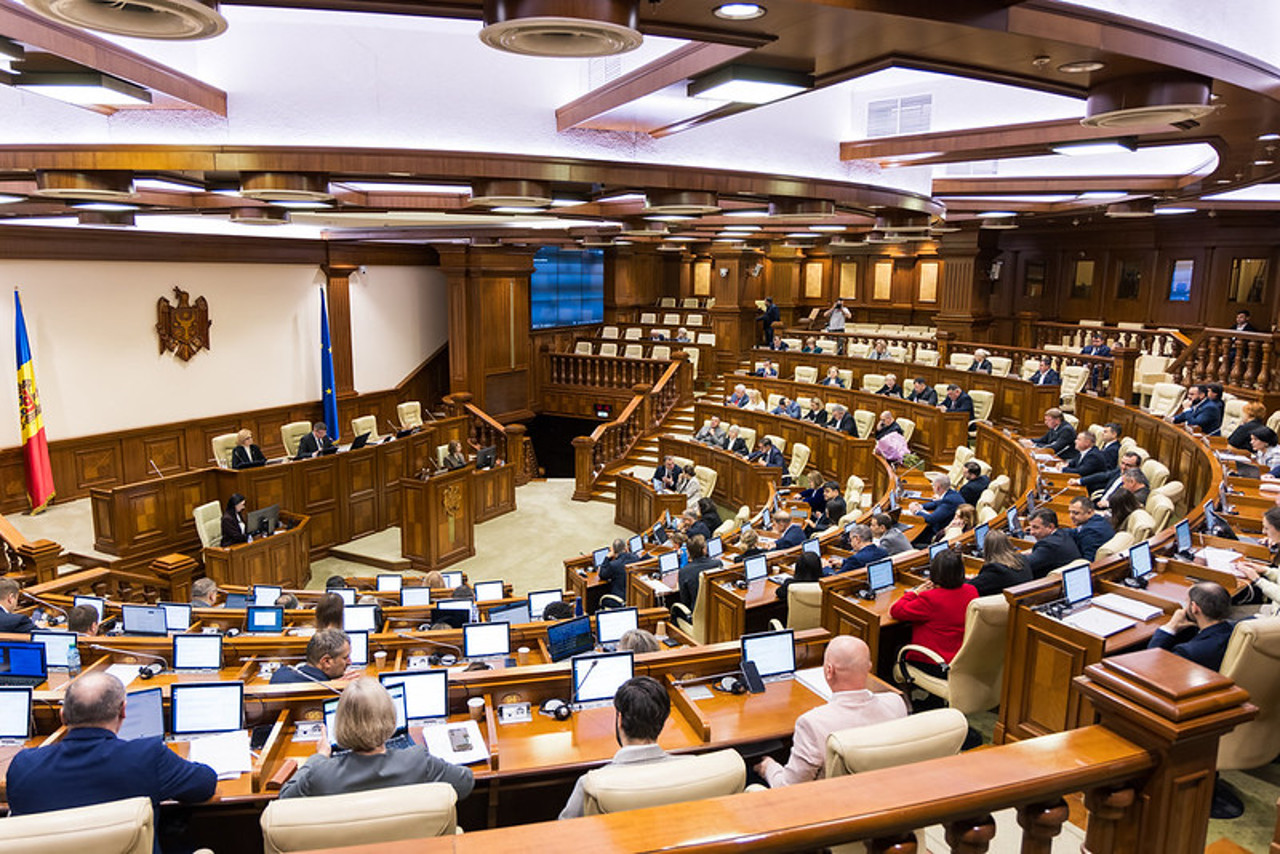
Chisinau is set to host the 135th Ministerial Session of the Committee of Ministers of the Council of Europe on May 15. This event will mark the conclusion of the Republic of Moldova’s six-month chairmanship of the organization, after which the chairmanship will be transferred to the Principality of Monaco.
The Council of Europe is the primary intergovernmental organization on the European continent, consisting of 46 member states. Its mission focuses on the protection of human rights, democracy, and the rule of law.
The Republic of Moldova became a member of the Council of Europe on July 13, 1995. The country’s parliament ratified the European Convention on Human Rights on July 24, 1997. Additionally, the Council of Europe Information Office was established in Chisinau on June 30 of the same year.