Parliament presented with major violations of children’s rights

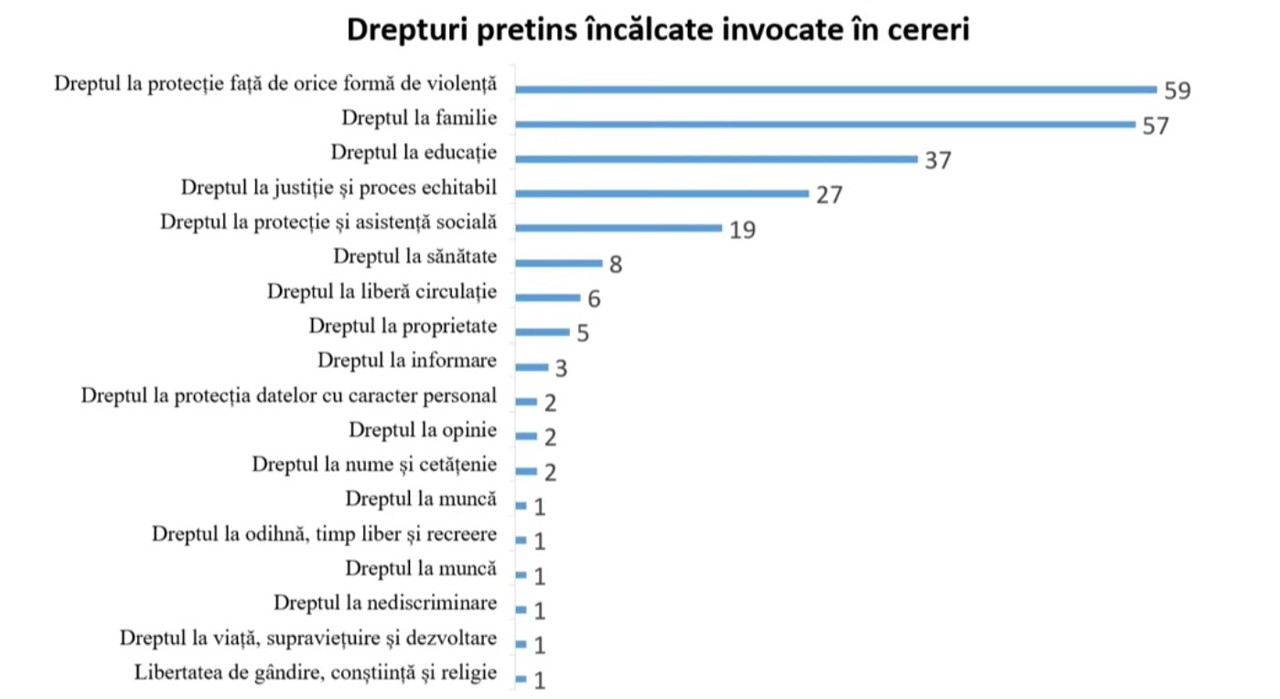
The Republic of Moldova continues to face significant issues regarding children's rights, with violations occurring repeatedly from year to year. During parliamentary hearings on May 20, several key vulnerabilities highlighted in complaints submitted to the Ombudsman for Children's Rights in 2025 were identified. These include insufficient protection against violence, inadequate access to education and social assistance, and failures in ensuring the right to family integrity and fair trial in court.
Rising cases of violent deaths among children
During the hearing of the Annual Report on the observance of human rights and freedoms in 2025, hosted by the Commission on Human Rights and Interethnic Relations, a section addressing children's rights was included.
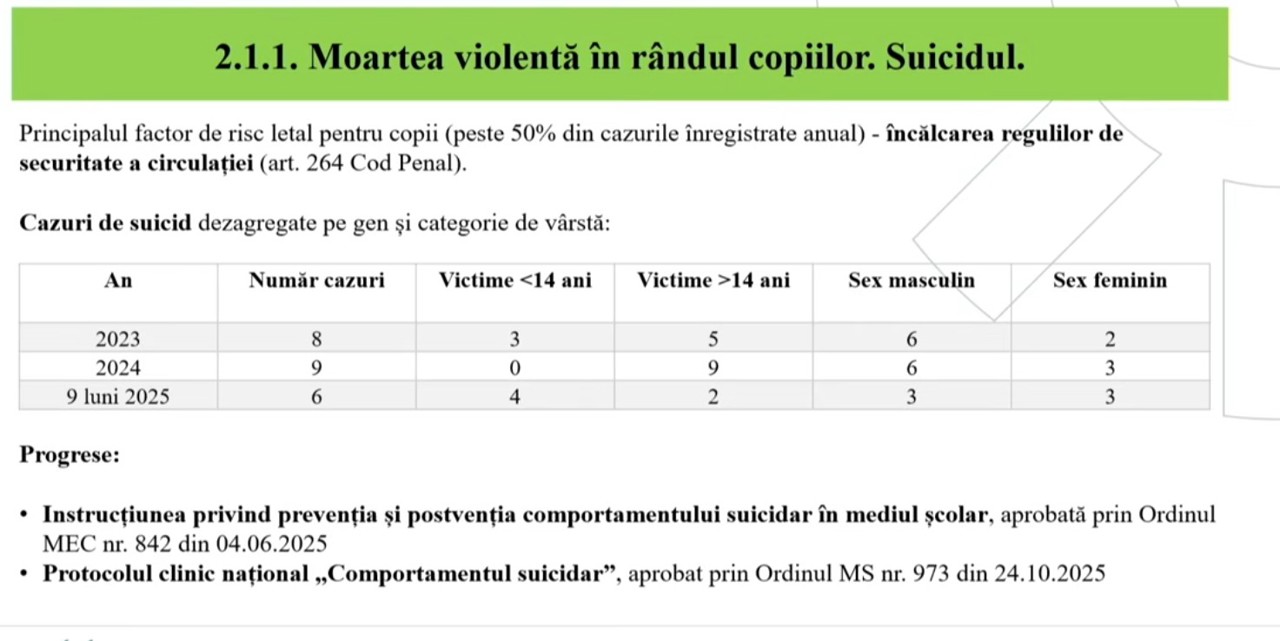
Vasile Coroi, the People's Advocate for Children's Rights, reported a concerning increase in cases of violent deaths among children compared to the previous three years.
"In all the analyzed years, the primary risk factor for lethal outcomes for children—accounting for over 50% of cases—has been the violation of road safety rules. I also appreciate the recent adoption of guidelines aimed at preventing suicidal behavior in school settings," said the People's Advocate.
Over the past three years, there have been 23 recorded cases of death by suicide, with most victims being adolescents over the age of 14.
Free access to drugs and cigarettes
A particularly concerning issue is the circulation and use of drugs among children.
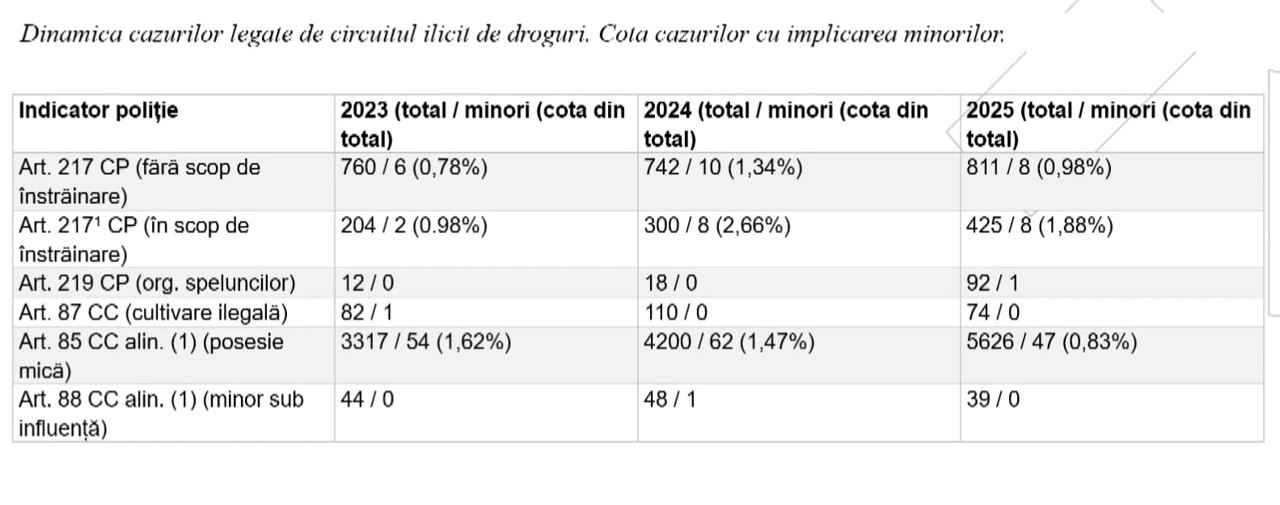
"The phenomenon is alarming, especially given that statistics from the last three years indicate an increase in the scale of the illegal drug trade in the Republic of Moldova, particularly in relation to crimes involving synthetic drugs and mixtures of narcotic substances," emphasized Vasile Coroi.
According to the General Inspectorate of Police, 1,301 drug-related crimes were registered in 2025, an increase of approximately 25.9% compared to the previous year.
One of the most commonly reported crimes is the circulation of drugs without the intent to distribute, which saw an increase of 9.3% compared to 2024. In contrast, the illegal circulation of drugs with the intent to distribute has risen by over 40% compared to 2024.
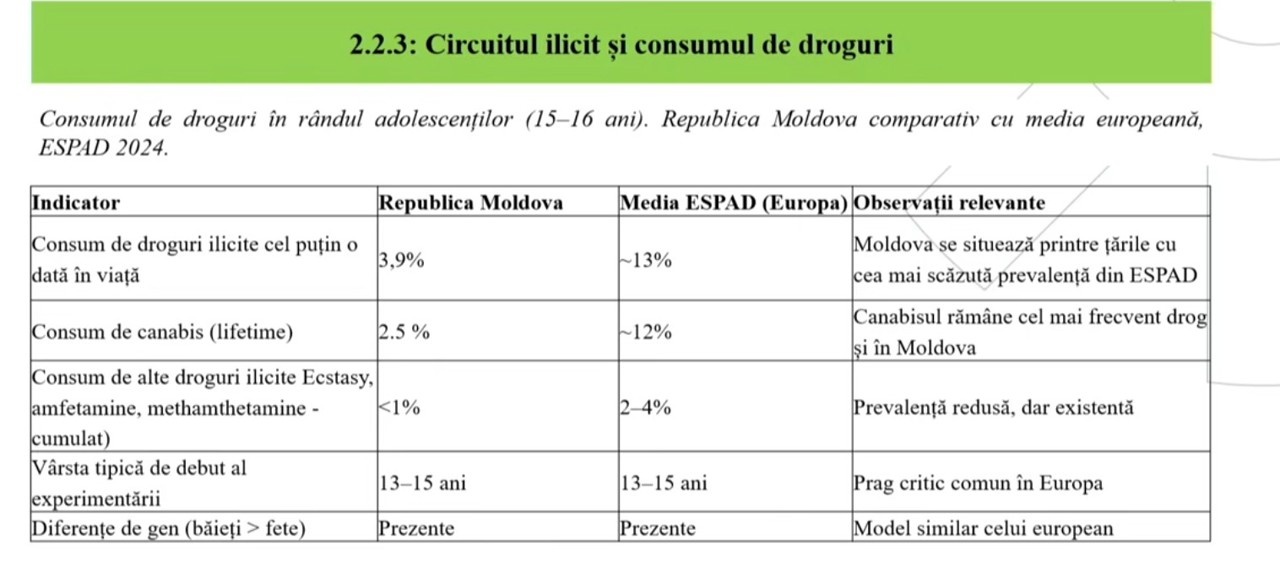
There has been a rapid increase in e-cigarette use among children and adolescents. This trend is driven by several factors specific to these products: their high accessibility, ease of use, presentation as a less harmful alternative to traditional cigarettes, and their technological and sensory appeal, particularly due to flavors that mask the harshness of nicotine.
A national study conducted with a sample of 530 students aged 11 to 15 confirms the seriousness of the situation: over one-third of the students reported using e-cigarettes, with some even initiating use as early as 8 to 10 years old.
"In this context, I express my concern about the repeated postponement, now to March 2029 instead of March 2026, of the ban on flavours for tobacco and related products, including electronic cigarettes," stated Vasile Coroi.
With toilets in the schoolyard and no sewage networks
The current state of school infrastructure reveals significant shortcomings. In many schools, particularly in rural areas, sanitary conditions are alarming. Frequently, restrooms are not accessible to children with disabilities, and some schools still have outdoor toilets that are not connected to water and sewage systems.
Additional challenges include high rates of non-enrollment and school dropout among Roma children, which remain a pressing issue. There is also a noticeable rise in unmotivated absenteeism, particularly among children from vulnerable backgrounds.
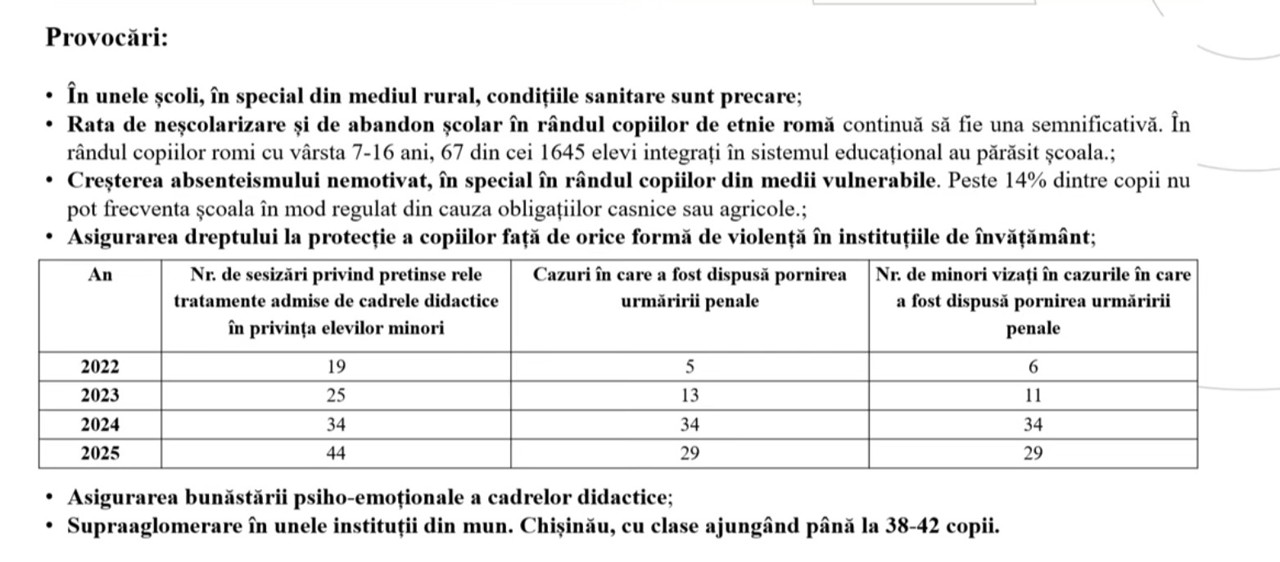
A major concern is the protection of children from all forms of violence within educational institutions. In recent years, there has been an increase in complaints to law enforcement about alleged mistreatment by teachers of students. As a result, several criminal investigations are underway.
According to the Ombudsman for Children's Rights, “In 2022, there were 19 notifications, leading to five criminal cases initiated involving six minors. By 2025, the number of notifications had risen to 44, resulting in criminal prosecution in 29 cases involving 29 minors.”
Fewer crimes than in 2024
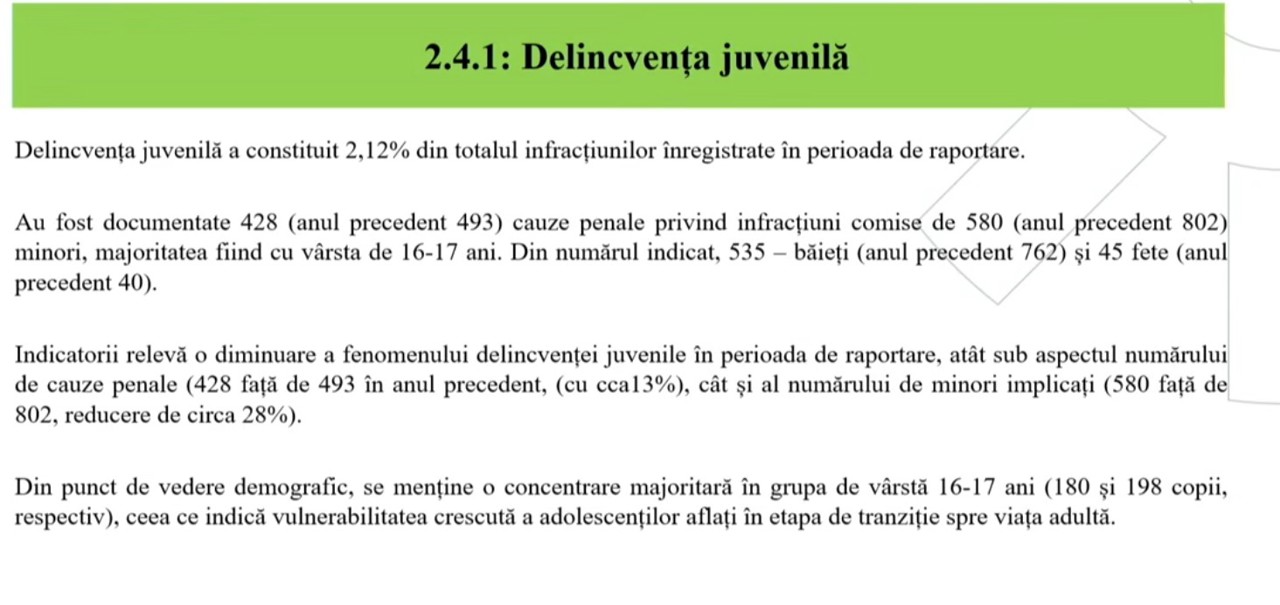
In the context of child-friendly justice, juvenile delinquency accounted for 2.12% of all crimes reported during this period. The data shows a decrease in both the number of criminal cases and the number of minors involved.
In 2025, there were 428 documented criminal cases, a drop from 493 in 2024. These cases involved 580 adolescents aged 16 to 17, compared to 802 adolescents in 2024.
Children's rights in the Transnistrian region
The report on children's rights in the Transnistrian region highlights several concerning issues, particularly the risk of trafficking associated with the so-called adoptions of minors who have been left without parental care.
It also outlines the challenges faced by schools that offer instruction in the Romanian language, including the non-return of their premises and difficulties in registering young people. Additionally, there is a risk of enlistment in the local army, as well as limitations on freedom of movement and instances of systematic harassment.
Another longstanding issue, which has been increasingly reflected in recent annual reports, is the ideologization, indoctrination, radicalization, and militarization of children within educational institutions in the region.
Maha Damaj, UNICEF Country Representative in the Republic of Moldova, expressed her appreciation for the content of Vasile Coroi's report.
“The document is evidence-based and provides a clear and credible overview of the situation in the Republic of Moldova, highlighting areas where further efforts are needed. It emphasizes children's lived experiences and ensures their voices are included in high-level policy discussions. The information presented conveys a balanced yet urgent message: while the Republic of Moldova has made significant progress, many children are still being left behind,” Maha Damaj stated.