95% of the population will have drinking water by 2030
By 2030, nearly the entire population of the country will have access to drinking water, and more than half will have access to sewage services. This is the commitment made by the authorities for the next four years. In this context, the government has approved the National Program for the Development of the Water Supply and Sanitation Sector for the period 2026-2030, which includes an investment of approximately 600 million lei.
According to the document prepared by the Ministry of Infrastructure and Regional Development, by the end of the program, at least 95% of the population will have access to safe water sources, and at least 65% will be connected to sewage networks.
"Access to safe water and quality sanitation services must become a reality for as many people in the Republic of Moldova as possible. For the implementation of the measures provided for in the program, approximately 598 million lei are estimated, of which over 342 million lei from the state budget and approximately 128 million lei from external assistance", declared the Minister of Infrastructure and Regional Development, Vladimir Bolea, during the Government meeting.
The rest of the financing is to be provided from other sources provided for by the program.
The data presented in the document shows the extent of the existing gaps. In 2024, only 67.6% of households were connected to public water supply systems, while only 33.4% had access to public sewage networks. At the same time, in 37% of localities there are no centralized water supply systems, and in approximately 90% of localities there are no functional sewage networks or treatment plants.
The differences between regions are even more obvious. Chisinau Municipality has the best results, with 84.4% of households connected to water and 80.8% to sewage. At the opposite pole is the Nord development region, where only 52.4% of households have access to public water networks, and 20.9% to sewage. In the Centru region, the indicators are 62.3% and 15.1%, respectively.
The data suggest that the main problem is not only the lack of infrastructure, but also the large difference between localities. Especially in rural areas, access to centralized services remains far below the level set as a national objective.
Prime Minister Vasile Tofan drew attention to the situation in educational institutions.
"Only two-thirds of homes are connected to the water system, only one-third - to the sewerage system. Especially in schools there are situations where there is a lot of work to be done for students to benefit from adequate sanitary conditions", said Prime Minister Vasile Tofan.
The problems are not only related to access, but also to the quality of water
The program also starts from a public health issue. In many localities, the population still depends on wells, springs or improvised systems, which do not always offer sufficient sanitary protection. According to data from the National Agency for Public Health referred to in the document, approximately 54% of the water samples analyzed in 2023 did not comply with chemical and bacteriological standards, and only 65% of the total volume of water distributed was considered potable according to sanitary norms.
Among the main problems identified are exceeding the permissible level of nitrates, ammonium and iron, as well as bacteriological contamination of water. The situation is favored by the infiltration of untreated wastewater and insufficient infrastructure for water treatment, which can increase the risks to the health of the population, especially in the case of children and the elderly, and can favor the occurrence of water-borne diseases, such as hepatitis, gastroenteritis and dysentery.
In this regard, one of the main problems is sewage and treatment. Of the 125 treatment plants monitored nationally, only 81 are functional, according to the data presented in the project. However, some of the functional stations do not provide adequate treatment, either due to undersizing or because they do not meet national and European legislative requirements. The problem is particularly serious in rural areas. In over 80% of rural localities, wastewater is discharged through rudimentary systems or directly into natural outfalls, without adequate treatment.
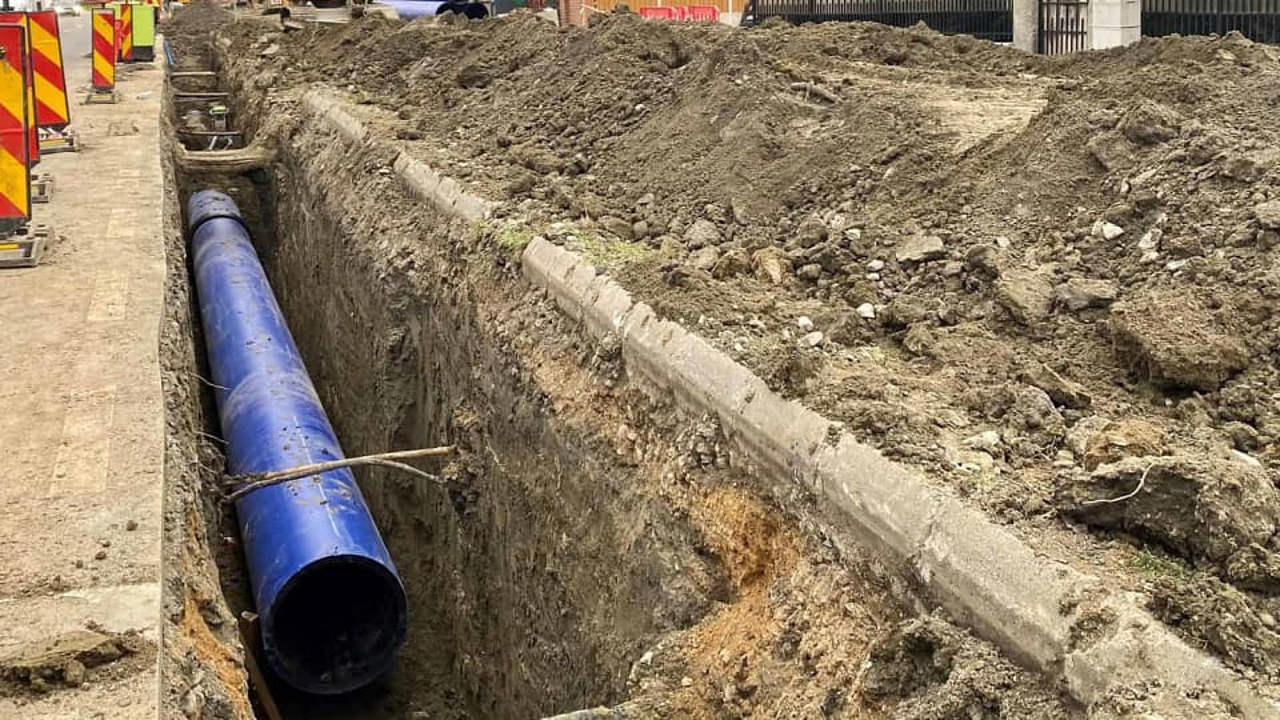
This situation affects not only the environment, but also the water sources used by the population. Untreated wastewater can infiltrate the soil and the first aquifer, from which many of the mine wells in rural localities are fed. Thus, to remedy the existing situation, the program provides for the construction and modernization of sewage systems and treatment stations, with the objective that at least 40% of the total volume of wastewater be treated according to European standards. This means that the amount of organic substances, nitrogen and phosphorus reaching the rivers will also be reduced, contributing to improving the water quality of the Nistru and the Prut rivers and reducing the risk of cross-border pollution.
The authors of the program warn that postponing investments would lead to higher rehabilitation costs, increased health risks and environmental pollution. The lack of modern infrastructure can also affect the development of localities, by reducing the attractiveness for investments and increasing rural depopulation. Also, this would mean failing to fulfill European commitments, which could attract penalties and reduce external funding.