Moldova president honors 1970 anti-Soviet graffiti activists
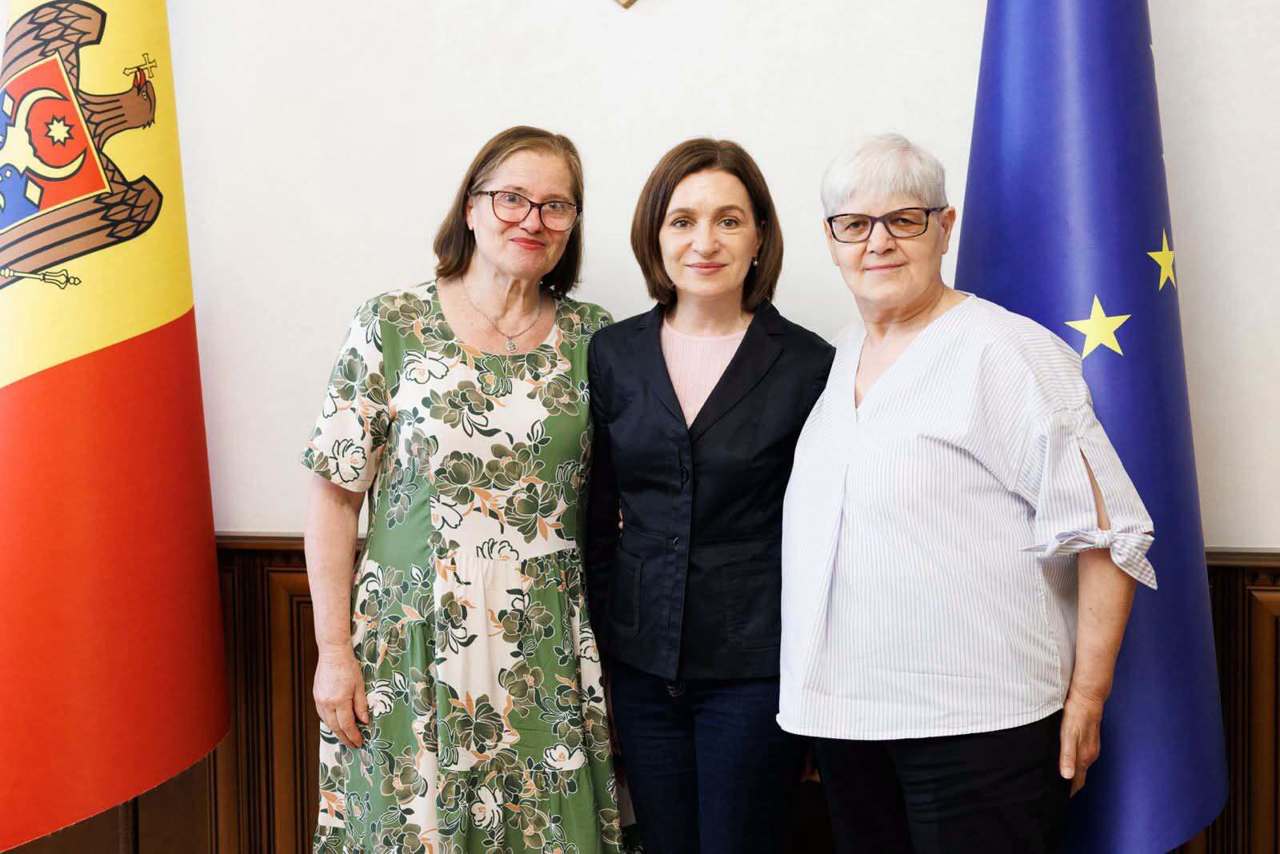
President Maia Sandu met on Friday, August 14, with Lilia Neagu and Asea Andruh-Scorpan, two women who defied Soviet authorities nearly 56 years ago as teenagers by painting anti-regime slogans across Chișinău. Sandu praised their bravery and emphasized the importance of preserving personal stories of resistance for younger generations who never lived under totalitarian rule.
"I had a warm and moving meeting with Lilia Neagu and Asea Andruh-Scorpan—two friends who, in 1970, had the boldness to write slogans in the Romanian language on the walls of Chișinău," President Sandu stated in a social media post. She added that their actions show how history is shaped not only by major events or political leaders, but also by courageous individuals who refuse to remain silent.
A overnight protest across Chișinău
On the night of September 30 to October 1, 1970, Neagu and Andruh walked from the Malina Mică neighborhood to central Chișinău. Armed with jars of gouache paint, the teenagers scrawled approximately 40 slogans across prominent public buildings, including the Ministry of Internal Affairs, university dormitories, state publishing houses, and School No. 1.
The slogans called for the restoration of the Latin alphabet, equal rights for the local population, and an end to Soviet Russification policies. One message directly targeted Ivan Bodiul, then First Secretary of the Communist Party of the Moldavian SSR, reading: "Bodiul, get out of Moldova!"
The young women acted out of frustration over cultural suppression, the closure of churches, and the discrimination faced by native Moldovans. Soviet authorities immediately classified the acts as grave anti-Soviet agitation threatening the existence of the USSR.
KGB manhunt and graphological tracking
Soviet security forces identified Neagu within days using handwriting analysis. The KGB already possessed samples of her penmanship from 1969, when she had been subjected to political profiling and warnings after making anti-Soviet statements as a first-year medical student.
Despite Neagu warning her friend during the operation that her handwriting was on file, Andruh insisted on completing the protest together. On October 5, 1970, KGB officers arrested Neagu at her residence and brought Andruh in for questioning.
Neagu was held at KGB headquarters until March 10, 1971, when both were brought before the Supreme Court. During the trial, both young women stood by their convictions, questioning why Moldovan churches were shuttered, why southern Bessarabia had been ceded to Ukraine, and why the Soviet state forced the "Moldovan" language label over Romanian.
Sentencing and historical legacy
Archive files from the Security and Intelligence Service (SIS) reveal that while the KGB initially treated Andruh as a witness, she openly demanded in court to be sentenced alongside her friend.
To avoid a public scandal that could compromise a high-ranking party official whose child attended the same school class, authorities handled Andruh's case administratively. She was expelled from school and sentenced to forced labor at the "Steaua Roșie" knitting factory, though her punishment was quietly suspended after several months.
Neagu was born on May 14, 1951, in Leova, while Andruh was born on February 16, 1954. Their case remains a key historical example of youth resistance in Soviet Moldavia, demonstrating how internal personal freedom posed an existential challenge to the communist regime.
Translation by Iurie Tataru