Moldova parliament extends probe into state enterprises over registry chaos
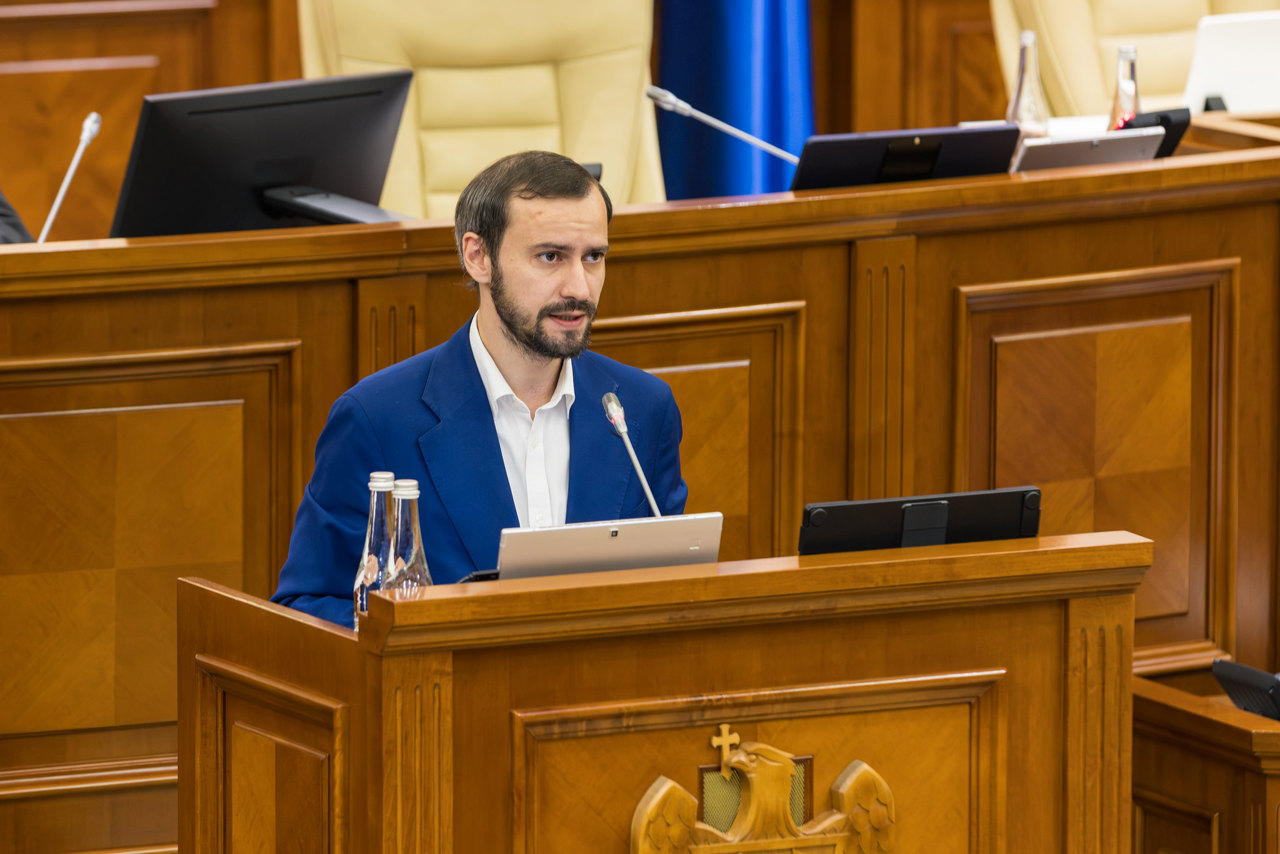
Moldova’s parliament on September 3 extended the mandate of a special commission investigating state-owned enterprises by 30 days, citing severe registry discrepancies, decades-long insolvencies, and unjustified management salary increases.
Severe Register Inconsistencies
Presenting interim findings to parliament, commission chair Dinu Plîngău stated that while Moldova has created 1,359 state enterprises since independence, public authorities still lack a unified accounting system. Official records show major discrepancies: the State Register of Legal Entities lists 515 state enterprises—323 of which lack a unique state identification number (IDNO)—while the Public Property Register records 163, and the State Tax Register lists 609, including municipal utilities.
“The very serious issue detected today is the inconsistency among official registers submitted by state institutions,” Plîngău said. “Direct verification of the list provided by the Public Services Agency indicates that these discrepancies have not been rectified in recent years; on the contrary, in some cases, the situation has worsened.”
Auditors also uncovered phantom operations where state enterprises declared commercial revenue over multiple years while reporting zero employees, alongside sharp contradictions between tax and financial disclosures.
Decades of Stalled Insolvencies
The investigation revealed that 70 state enterprises remain locked in insolvency proceedings, with some cases lingering unresolved for over 20 years. These insolvent entities hold extensive public land and buildings that the state cannot capitalize on, while accumulating substantial wage arrears and fiscal debt to the State Tax Service.
“Most of these enterprises entered this procedure for various reasons, but what is certain is that the majority owe debts to the state, the tax authorities, and employees,” Plîngău said. “Identifying a legal solution would at least allow us to monetize assets that have remained trapped in this procedure for 20 years.”
Board Accumulation and Wage Surges
The commission examined 1,628 board positions, flagging cases where individuals accumulated multiple directorships to collect additional compensation. Moldovan law caps board memberships at three for state enterprises and five for joint-stock companies, with individual monthly allowances reaching 6,200 MDL (approx. €320).
“When an individual sits on seven, eight, or nine management boards, multiplied by 6,200, the payout is quite substantial,” Plîngău said, noting rapid rotations where members served only two or three months per entity.
Wage surges were also documented across major state firms, most notably air navigation authority MoldATSA, where average monthly salaries rose from approximately 32,000 MDL (€1,655) in 2019 to roughly 63,000 MDL (€3,260) for its 230 employees—an increase of up to 71% over two years without documented justification. Similar salary levels were reviewed at state power trader Energocom and gas utility Moldovagaz.
Opposition Demands Accountability
Lawmakers from the opposition socialist bloc criticized the ruling party, alleging that the parliamentary probe avoids scrutinizing high-level political patronage and non-competitive appointments.
“The current ruling party has been in power for five years and could have at least begun resolving this issue,” socialist lawmaker Pavel Voicu said during the floor debate, questioning why leadership recruitment contests were bypassed in favor of long-term interim managers.
Socialist deputy speaker Vlad Batrîncea argued that board remuneration varies widely between 60,000 MDL and 150,000 MDL (€3,100 to €7,760) without performance metrics, while complaining that the opposition was denied access to commission working files.
Plîngău countered that all documented violations—including six inactive enterprises that continued paying board members while assets were sold for scrap—will be referred directly to prosecutors once commercial confidentiality and personal data protections are processed.
Translation by Iurie Tataru
RELATED COVERAGE