Moldova's Ministry of Environment buys ten new air quality monitoring stations
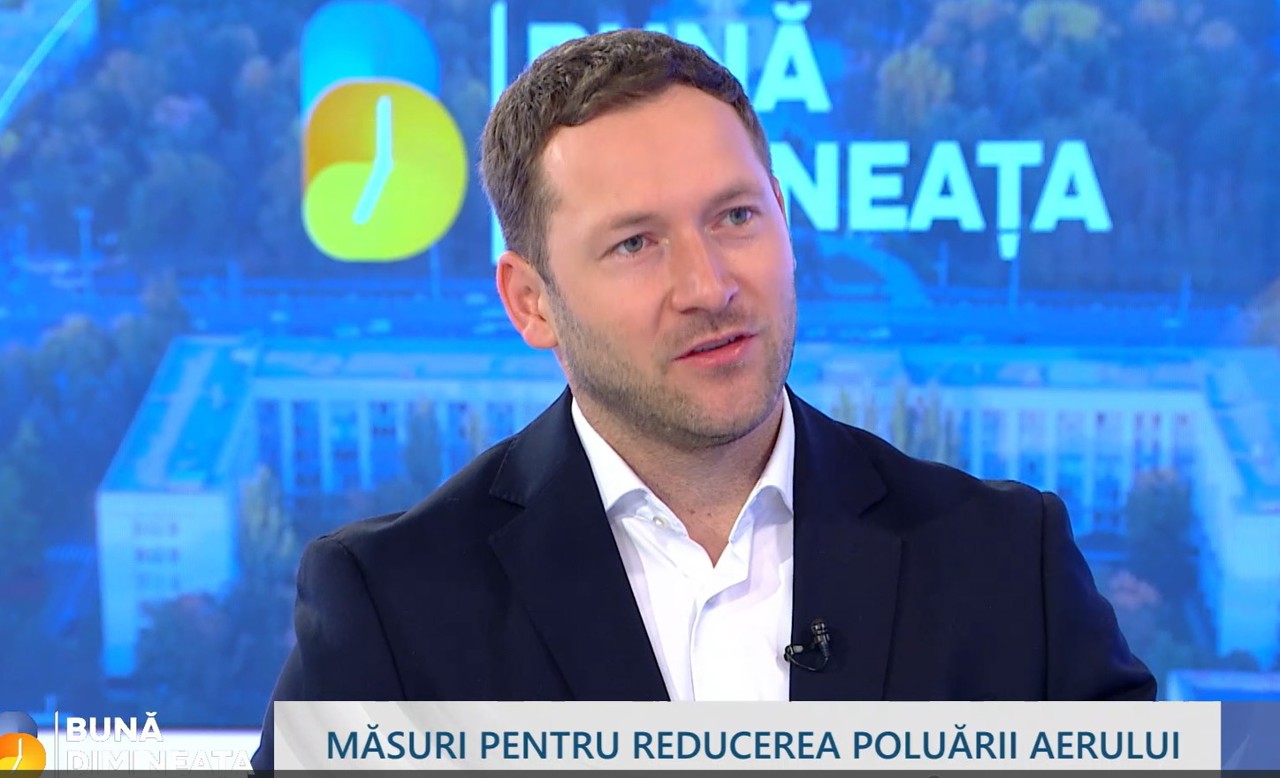
The air in the Republic of Moldova is generally clean; however, the authorities are working to enhance the pollution surveillance system to provide the public with quicker information when pollution levels exceed permissible limits. Gheorghe Hajder, the Minister of Environment, announced on Moldova 1 that ten new automatic monitoring stations will be purchased and installed in various regions across the country.
“The air is relatively clean in the Republic of Moldova, because we do not have a highly industrialized country, and this is a beneficial thing for air quality,” said Gheorghe Hajder, on the “Bună dimineața” show on Moldova 1, on the occasion of the International Day of Clean Air for a Blue Sky, marked annually on September 7.
However, the minister stressed that industrial development must be accompanied by strict pollution prevention measures. The new stations will allow authorities to obtain more accurate air quality data, which will be made available to citizens.
"We have purchased ten more automatic air monitoring stations, which is an excellent thing. We are going to install them and organize trainings, including for central and local authorities. Another positive aspect is that the data will be fully accessible to citizens. We will have monitoring stations in Chisinau, Balti, Cahul, Edinet, and Ghidighici, as well as on the left bank of the Nistru. At the same time, we will create an alert mechanism: when exceedances of the norms are detected in certain areas, citizens will receive information messages", explained the minister.
Hajder drew attention to the fact that air pollution is a phenomenon that is difficult for the population to immediately notice. Therefore, regarding major sources of pollution, the minister spoke about a mechanism by which companies with a significant impact on air quality will have to monitor their emissions.
*"Air pollution is always an invisible enemy and we must be aware of this. Every company that poses air pollution risks must submit a monitoring plan to the Environmental Agency to know exactly who and how much they pollute. Following these reports, compensatory measures will be applied: either they will plant a forest or they will pay the carbon tax. In this way, we will motivate the big polluters to switch to more environmentally friendly alternatives," Hajder said on the public television station.
Gradual measures regarding environmental protection
Another problem reported by the minister concerns pollution caused by leaf burning and unauthorized landfills. According to data presented during the show, in 2026 alone, inspectors identified 289 such illegal landfills.
Hajder argues that responsibility must be shared between authorities and citizens, while the state accelerates the development of modern waste management infrastructure.
"It would be incorrect to say that only local authorities are responsible, although the law assigns this competence to them. However, the government has undertaken a much broader program of waste infrastructure construction. I am glad that we have signed the first contracts for Nisporeni, Hâncești and Călărași, where we will build two transfer stations. The management center and the expansion of the project to all regions will follow, in order to abandon the practice of taking garbage to the hills and permanently close these unauthorized landfills that pollute the air", Hajder noted.
In the same context, the minister stressed the need for solutions to reduce car pollution. In his opinion, a possible limitation on the import of old cars should be complemented by fiscal mechanisms, such as an environmental tax calculated based on emissions levels.
In parallel, the authorities intend to expand the forested areas. For the current year, 7,000 hectares of new forests are planned, an essential measure for improving air quality.
The Minister of the Environment advocated a gradual approach and for informing the public before imposing drastic restrictions.
“We need to demonstrate to citizens in concrete terms: ‘Look what happens if we continue to burn leaves or other waste’, and then intervene with tougher restrictions. We need to act in parallel on all dimensions. I believe this is the right way, and if the message is not understood, only then will we move on to stricter measures”, concluded Minister Ghoerghe Hajder.