New central Moldova water pipeline enters testing amid drought
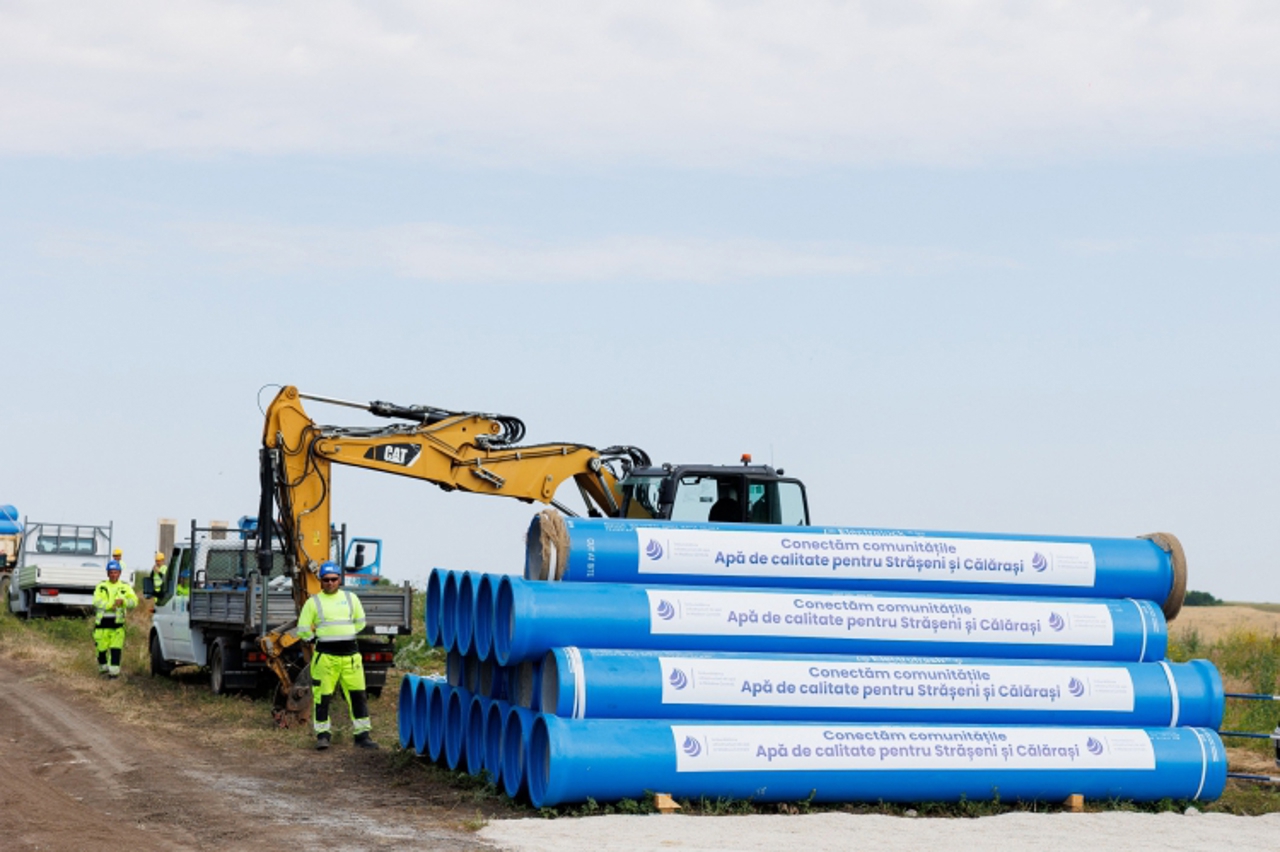
Testing began on the Chișinău–Strășeni–Călărași water pipeline as Moldovan authorities move to secure drinking water supplies for thousands of central households amid a worsening regional drought, officials announced.
Crews completed network construction and launched initial hydraulic pressure tests along a municipal section in Chișinău. The main conduit will transport treated surface water directly from the Dniester River to regional distribution hubs.
“We expect to finish works by year-end, with the new pipeline entering service next year to supply Dniester tap water to Strășeni and Călărași,” said Ion Pânzari, Director of the Regional Development Agency (RDA) Center.
New water intake at Vadul lui Vodă
The project advances against a backdrop of acute hydrological stress along the Dniester basin, which continues to depress river levels. In response, authorities concluded an agreement to build a new raw water intake station at Vadul lui Vodă.
The German government is providing a €14.0 million grant (approx. 282.3 million MDL) to finance the facility. Central officials noted that the existing municipal intake station has exhausted its operational lifecycle and requires replacement to protect critical urban infrastructure.
Once completed, the new intake system will secure bulk water deliveries for the capital Chișinău, Strășeni, Călărași, and large sections of the neighboring Ialoveni district. Detailed technical specifications will be finalized during the engineering design phase.
“We are relying on our primary surface source, the Dniester River,” Pânzari said. “However, depending on climate developments in the coming years, we will evaluate complementary solutions to guarantee uninterrupted drinking water supplies.”
Emergency measures and Dniester deficits
Pânzari noted that long-term water management reforms must advance alongside engineering works, pointing to the National Water Supply and Sanitation Plan approved by the Ministry of Infrastructure and Regional Development.
Hydrological conditions upstream remain critical. At Ukraine's Novodnistrovsk reservoir, water outflows exceeded inflows by roughly 63.4 million cubic meters during the first 20 days of September. Reservoir inflow averaged just 23 cubic meters per second, while downstream discharges were held at 60 cubic meters per second.
Moldova declared a 60-day nationwide state of emergency across its energy and water sectors, effective September 26. The emergency regime grants the Cabinet fast-track intervention powers to protect strategic utilities, import backup power, and avert drinking water disruptions.
Translation by Iurie Tataru
RELATED COVERAGE
- French-led pipeline boosts Moldova water security
- Safer water for Chișinău, Strășeni and Călărași: €23.6M project launched at Vadul lui Vodă
- Moldova and Ukraine lower Nistru water discharge amid drought
- Parliament approves state of emergency
- OFFICIAL | The government approves the declaration of a state of emergency