Contemporary authors and additional reading time in the new curriculum
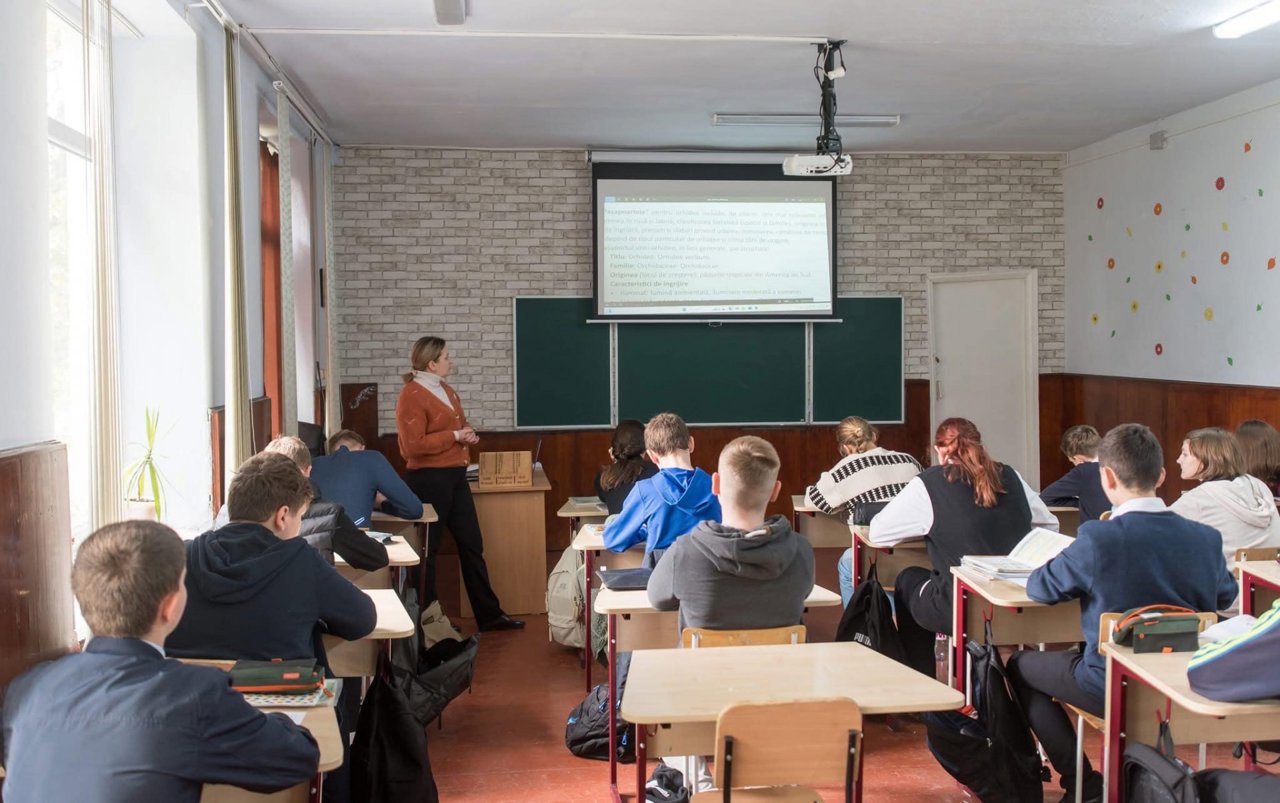
Teachers, writers, and representatives of the Ministry of Education and Research are currently discussing the new curriculum for Romanian Language and Literature. Proposals include incorporating more contemporary authors into the school syllabus and allocating more time for reading.
Sergiu Afanasiu, the director of a private educational institution in Durlești—a suburb of the capital—argues that, based on his experience and numerous meetings with writers, the new curriculum should place greater emphasis on activities that foster a love of reading among children. In his view, the school syllabus should include not only modern literary works that align with today's children's interests and concerns but also fairy tales and classics.
"It is as if we start out on the same path in kindergarten, yet by the third grade, some children are already developing reading preferences that differ from what the curriculum recommends or suggests. I would like to see a place for complete works by authors and for specific themes—themes being crucial. We must realize that while we discuss education, psychology, and technology, we cannot simply leave Romanian language and literature to fend for themselves. Alongside everything that drives the world forward, we need those fairy tales, novels, and short stories that resonate with children's lives and interests," he noted.
Meanwhile, the academic community believes that the new Romanian language and literature curriculum should incorporate authors from various literary genres, including contemporary writers. Ivan Pilchin, Vice-President of the Writers' Union, believes that reading a larger and more diverse range of works will enable students to gradually build a mental map of values and knowledge that will serve them throughout their lives.
"There are names that stand as landmarks in the history of Romanian literature from the Basarabian region, while also aligning with the literary and aesthetic achievements that have taken place across the entire Romanian linguistic and cultural landscape. In our case, these include Mihai Cimpoi, Ion Druță, and Nicolae Dabija. At the same time, the presence of contemporary writers—those who rose to prominence in the 1990s and younger voices representing the evolving literary process—is crucial," he noted.
The new educational document, currently undergoing public consultation, focuses on promoting national values, developing digital skills, and expanding the list of writers and works designated for mandatory reading. Adriana Cazacu, State Secretary at the Ministry of Education and Research, notes that the reading list remains a subject of ongoing discussion. "The list includes a new component: national identity. Previously, this aspect was less emphasized. This component is now present across all grade levels—10th, 11th, and 12th. While language and national identity were touched on before, they now receive greater emphasis. The focus is on a cross-curricular, interdisciplinary approach. Interdisciplinary projects are included to foster harmony between subjects. There is also a strong emphasis on digitalization within the discipline, as well as on linking Romanian language and literature with media literacy," she said.
Cazacu also announced that students would be exposed to more contemporary literature.
"There are some innovations. In addition to other authors, more contemporary writers have been included, as the decision was made to feature more modern literature. While the scope previously stopped at 2000, it now extends beyond that to include writers who have published books more recently. Literary movements will be studied in both the 11th and 12th grades, with monographic approaches integrated within the study of these movements," she noted.
The draft curricula for Romanian language and literature—along with other subjects submitted for public consultation—will be finalized once the consultation period ends and the received proposals and feedback have been reviewed and analyzed. Phased training for over 8,000 teachers is scheduled for November. Before applying the new curricula, the Ministry must develop and prepare textbooks, methodological guides, and other resources needed by teachers and students.
The new curriculum is set to be implemented in educational institutions starting September 1, 2027.
On August 12, the Ministry of Education and Research released the new school curriculum for public consultation. The document proposes integrating various content areas and prioritizing the development of practical skills by the end of the course of study.
Public consultations are open until the end of September; during this period, teachers, students, parents, and other stakeholders in the educational process can access and complete a questionnaire on the Ministry's official website. The Ministry will forward comments and suggestions to the authoring teams.
The MEC recommends that, when formulating these proposals, you indicate the specific section, grade, or content in question, explain the identified problem, and—whenever possible—provide an example from school practice and a solution.