Lithuanian Deputy Minister: "Russia tests NATO with drones; Ukraine protects us at a cost"
Russia is intensifying its attacks on Ukraine and using drones to test NATO's reaction and spread uncertainty within Western societies. For this reason, it is essential to strengthen regional security and maintain support for Kyiv, regardless of economic pressures. These statements were made to Moldova 1 by Lithuania's Deputy Minister of Foreign Affairs, Kristupas Vaitiekūnas.
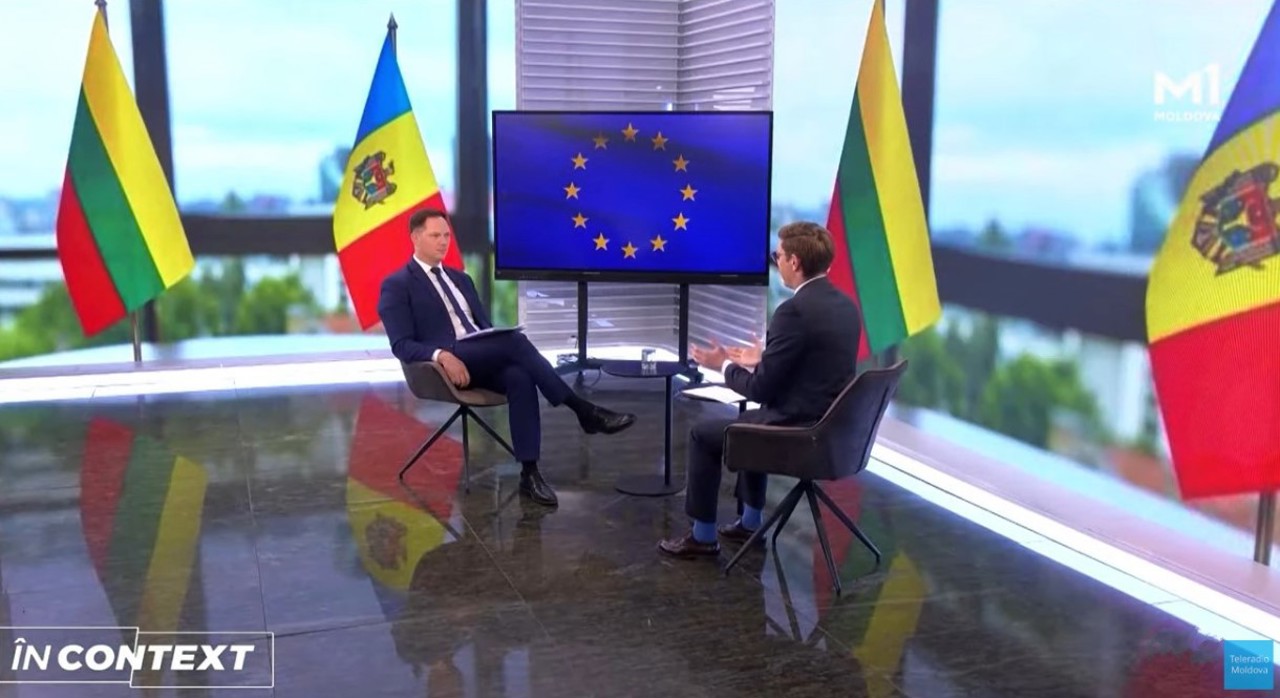
"They test how we react, monitor our responses, identify gaps, and exploit them later. This is one of the Moscow regime's objectives. Another goal is to spread insecurity within the business community and society as a whole. And, of course, to divide us," stated Kristupas Vaitiekūnas on the Moldova 1 program „În Context”.
Testing vigilance and Moscow's hybrid tactics
In the official's view, Moldova's involvement in European security mechanisms could also bring additional expertise.
"Lithuania and the Republic of Moldova face similar hybrid threats, such as drone incursions. The two countries can exchange experiences regarding their responses. That is just one example of cooperation. Of course, the Republic of Moldova would not only benefit from the European security mechanism but would also contribute its own expertise," Vaitiekūnas explained.
Regarding the possibility of the Kremlin regime escalating the war against Ukraine, the Lithuanian official states that there are no signs of the conflict de-escalating.
"This could be a consequence of their lack of progress and insufficient defensive capabilities against air strikes targeting Russian regions, refineries, and other sites," Kristupas Vaitiekūnas stated.
Russia expands its campaign of terror
The Lithuanian official notes that attacks on Ukraine's energy infrastructure, followed by strikes on logistics infrastructure, are complicating preparations for the cold season; Western states must continue to provide financial and military support, despite the costs.
"Russia is expanding its terror against Ukraine, especially in winter—the most difficult time of the year. Last winter, they attacked energy and heating infrastructure to make life unbearable for Ukrainians. Ultimately, they failed. Now, they are extending their campaign to the logistics sector with very heavy attacks. They are targeting locomotives, trains, border checkpoints, and other infrastructure, attempting to paralyze them. All these attacks place pressure primarily on Ukrainians, but also on Western societies. We must stay the course: support Ukraine and provide whatever is necessary," the Lithuanian official emphasized.
Financial support is an accessible way to help Ukraine, whereas supplying weaponry and military equipment entails greater effort: "It is far cheaper than the price Ukraine is paying. Ukraine is paying with blood," explained Lithuania's Deputy Minister of Foreign Affairs.
Economic impact of crises and European solidarity
When asked whether economic pressures might affect support for Ukraine, the deputy minister replied “that this crisis demonstrates how unstable the world is and that we must support the right side in these conflicts.” Pressures on energy markets, including those linked to the crisis in the Strait of Hormuz, risk driving up costs for European economies; however, price hikes must be viewed within the context of geopolitical instability.
"There has been a war in Europe for five years, yet we are not facing shortages. We are only seeing price increases. (...) We should be grateful that this is the only price we are paying. We do not have to pay with blood. We must support Ukraine, and once they win the war, all other issues can be resolved," concluded Kristupas Vaitiekūnas on Moldova 1.