Small farms in villages can have up to 30 cattle, 150 sheep or goats, and 5,000 quails
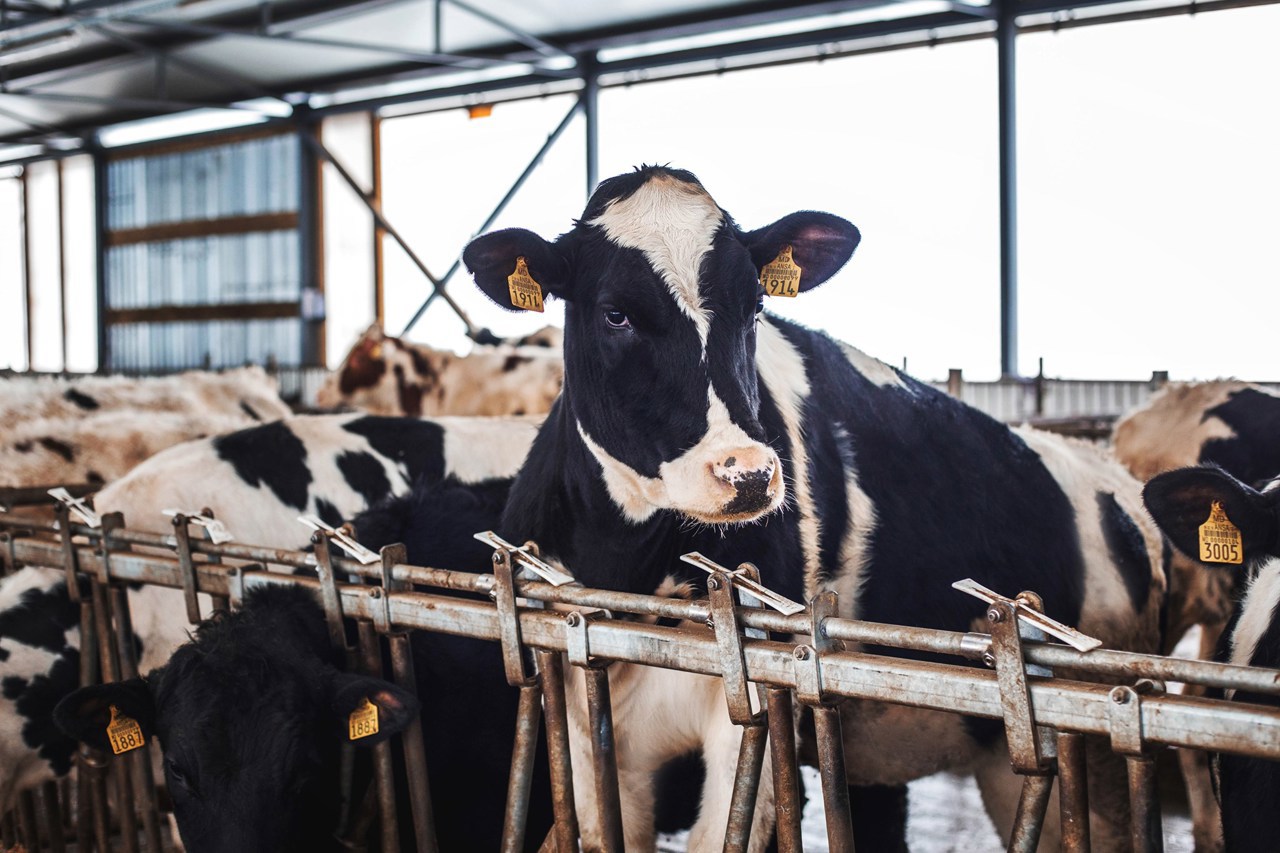
People in rural areas will be able to establish or legalize small-scale farms, even within the boundaries of their localities. To do so, owners will need local council approval and must comply with regulations on environmental protection, public health, and animal welfare. Parliament adopted the draft law on Thursday, October 29, in its second reading, with the votes of 68 deputies.
The changes primarily target those who want to turn animal husbandry into a small-scale business. For instance, a resident planning to raise sheep, goats, cows, or quail for commercial purposes could conduct such operations within the village, provided the chosen land meets legal requirements and the community is consulted prior to authorization.
Previously, legislation restricted farm siting within localities, preventing some producers from officially registering their activities. The new law gives local councils the authority to decide whether such an operation may operate within the village, taking into account each locality's specific conditions.
These amendments are particularly significant for villages experiencing population decline, where small businesses could contribute to the development of the local economy—a point highlighted during parliamentary debates by Serghei Ivanov, a member of the "Partidul Nostru" (Our Party) and chair of the Committee on Agriculture and Food Industry.
"A crucial change is the decision to leave it to the community to determine whether a farm or an apiary can be located within the village boundaries. Given that some areas are, unfortunately, depopulated, there is potential for development—for establishing a business or carrying out an activity that was previously not permitted, but which will now be possible thanks to this law," stated Serghei Ivanov.
Neighbors will have a say
A farm cannot be established automatically simply because the owner happens to possess land within the locality. The local council must examine each application and make a reasoned decision after a public consultation on the project.
Residents and property owners in the vicinity of the proposed facility will be informed of the intention to establish the farm. Prior to authorization, assessments will be conducted regarding factors such as the distance from dwellings and other sites, the capacity to manage manure and other waste, and the measures in place to mitigate odors, noise, and the risk of pollution.
"The consent of neighbors is required when a new farm is proposed; conversely, those moving near an existing farm—which has already secured the necessary permits—must also be made aware of its presence. Yes, neighbor consent is required, and that is a positive thing," Ivanov replied.
Limits on the number of animals that can be raised on a farm
The new law also establishes limits on the number of animals kept on farms located within villages. These limits vary by species and the specific care requirements.
Under these rules, such a farm may house up to 30 adult cattle—along with their offspring—or 150 adult sheep or goats, also including their offspring. For horses, donkeys, and mules, the limit is set at 30 animals.
For poultry farmers, the maximum capacity is 3,000 birds; for quail and pigeons, it is 5,000. Additionally, up to 3,000 rabbits may be kept, and beekeepers are permitted to maintain a maximum of 100 bee colonies.
These limits do not grant owners an automatic right to keep the maximum number of animals. Authorities will evaluate each case based on the farm's location, the available space, and compliance with all sanitary and environmental regulations.
Higher fines for purchasing unregistered animals
In addition to farm regulations, the law changes the system for tracking and recording animals. Individuals who purchase animals—which must be identified and registered—that do not appear in official records will face stiffer penalties.
Fines will be imposed for each individual animal that is not identified or registered. For individuals and those in positions of responsibility, penalties will range from 1,000 to 1,500 lei, while legal entities will face penalties of 1,500 to 2,500 lei.
The purpose of these measures is to enable authorities to track the origin of animals and their movement between households and farms. Maintaining such records is particularly important in the event of an outbreak of contagious diseases, as it allows for the rapid identification of animals that may have come into contact with infected ones.
The document also introduces stricter rules regarding medicines used to treat animals. Importers, manufacturers, distributors, veterinarians, and animal owners will be required to record relevant information concerning the circulation and use of these products in an electronic system managed by the National Food Safety Agency.
This will allow authorities to more easily verify the origin of veterinary medicines, who they were sold to, and how they were used.
Furthermore, the new provisions aim to ensure better conditions for poultry raised on farms that produce eggs for human consumption, in line with the animal welfare standards applied within the European Union.