When to call an ambulance in Moldova: 112 guidance
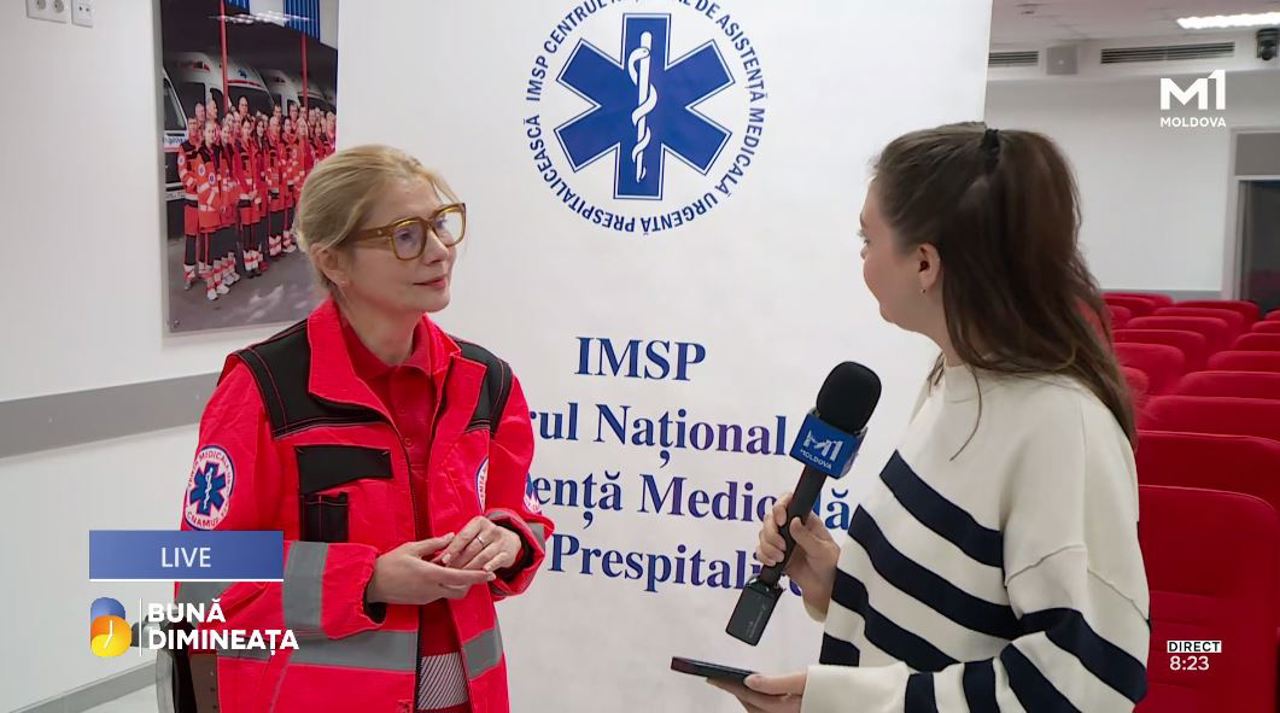
People in Moldova should call 112 for sudden, potentially life-threatening medical conditions and provide dispatchers with accurate information about the patient and their location, emergency doctors say.
When should you call an ambulance?
The National Centre for Pre-Hospital Emergency Medical Assistance (CNAMUP) advises people to call 112 when someone experiences a sudden medical condition that could endanger their health or life.
Warning signs include loss of consciousness, chest pain, sudden difficulty speaking, loss of balance, fainting, very high fever and sudden acute pain.
“People should call the emergency service when they encounter an unconscious patient, someone who does not respond or a person complaining of chest pain. Sudden speech difficulties, balance problems, fainting, a very high fever of 39–40 degrees Celsius or any sudden acute pain also require calling 112,” Ala Rabovila, a CNAMUP doctor, said on Moldova 1’s Good Morning programme.
An ambulance should also be requested following road accidents, falls from heights and other incidents involving acute medical conditions that could threaten someone's health or life.
For medical problems that do not require emergency intervention, people should contact their family doctor.
Unjustified calls can delay emergency assistance
The CNAMUP also records calls that do not warrant an emergency medical response. Approximately 545 such cases were reported between October 19 and 25, according to Rabovila. The year was not specified in the original report.
“Sometimes the patient is not at the location provided, the address is incorrect or the call is made with malicious intent. Some people simply contact the service to disrupt its work, even though there is no actual emergency requiring medical assistance,” the doctor said.
Such calls can affect the service's ability to respond to genuine emergencies, as ambulance crews may be dispatched to cases that do not require immediate medical intervention.
In October 2025, Moldova's national 112 service received 176,774 calls, of which 59,536, or 37.32%, were classified as non-urgent, according to figures published by Moldova 1. These figures refer to all emergency services, not exclusively ambulance requests.
What information should you give the dispatcher?
Callers should clearly explain why they need an ambulance and describe the patient's condition. The information should include the symptoms, the nature of the pain and whether the person is conscious or has fainted.
“It is important to explain as accurately and clearly as possible why you are calling, what is wrong with the patient and what symptoms they have, including whether they are unconscious or have fainted. Providing the patient's name is also important, if known. But after explaining the reason for the call, the next essential step is to give the location,” Rabovila said.
Callers should provide:
- Reason for the call: The patient's symptoms, complaints or loss of consciousness.
- Patient's name: If known.
- Exact address: Locality, street, house or building number, entrance and floor.
- Access code: If required to enter the building.
- Nearby landmarks: If the emergency occurred in a public place.
Whenever possible, another person should meet the ambulance crew and guide them to the patient to help reduce response times.
112MD app offers another way to request emergency assistance
Moldova launched the free 112MD mobile application in March 2026. It allows users to contact emergency services, automatically share their location with dispatchers and communicate through text messages when they cannot speak on the phone.
The application also provides accessibility features for people with hearing or visual impairments, according to information published by Moldova 1.
Doctors stress that 112 should be used responsibly and only when emergency services are needed. Accurate information and a precise location can help ambulance crews reach patients faster and save lives.
Translation by Iurie Tataru
RELATED COVERAGE
- Ambulance called every 43 seconds: the main emergencies reported to 112
- Emergency 112: Managing summer demand and false alarms
- Stroke cases are rising among young people in Moldova
- "Every minute counts!" – Doctors urge swift action for stroke patients
- Most stroke patients in Republic of Moldova are of working age