Moldova gains economic leverage over breakaway region
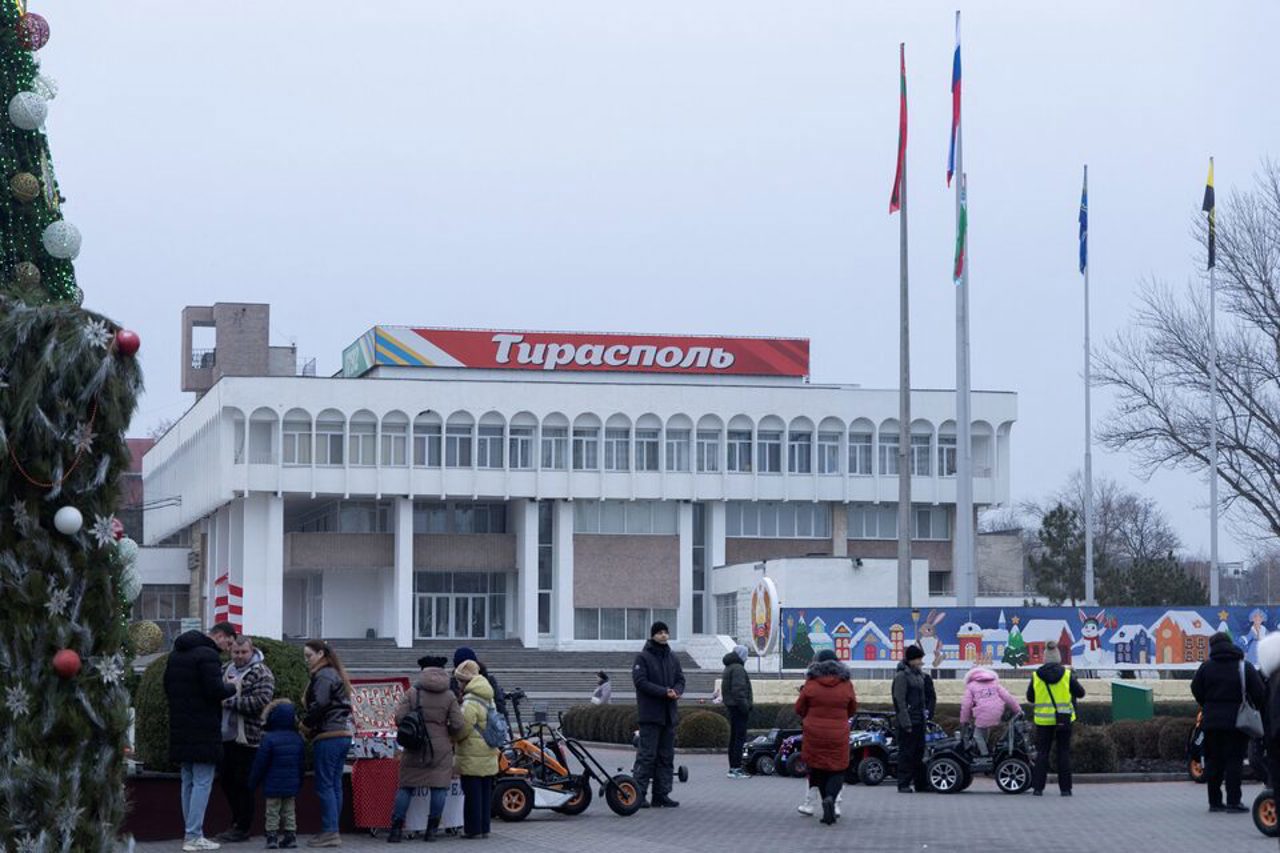
Moldova has gained economic leverage over the breakaway region on the left bank of the Dniester as Russian-backed economic support weakens, creating new opportunities for the country's reintegration, an IDIS Viitorul study says.
Russia-backed economic model running out of resources
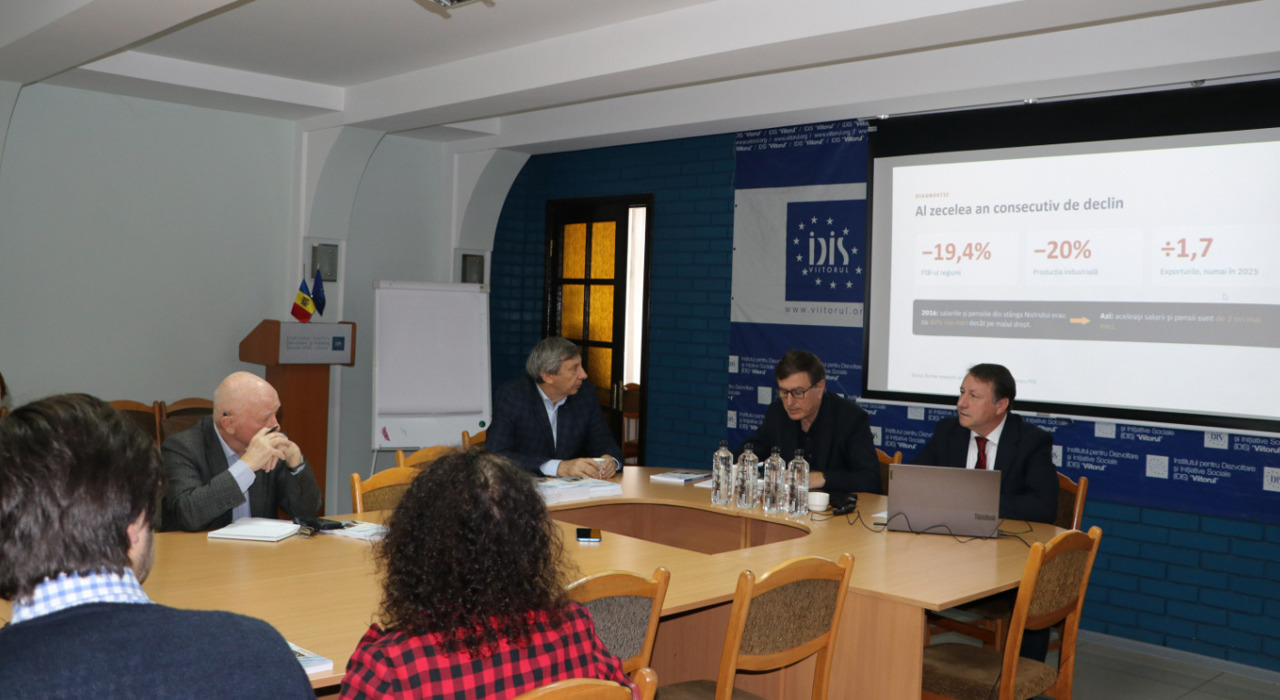
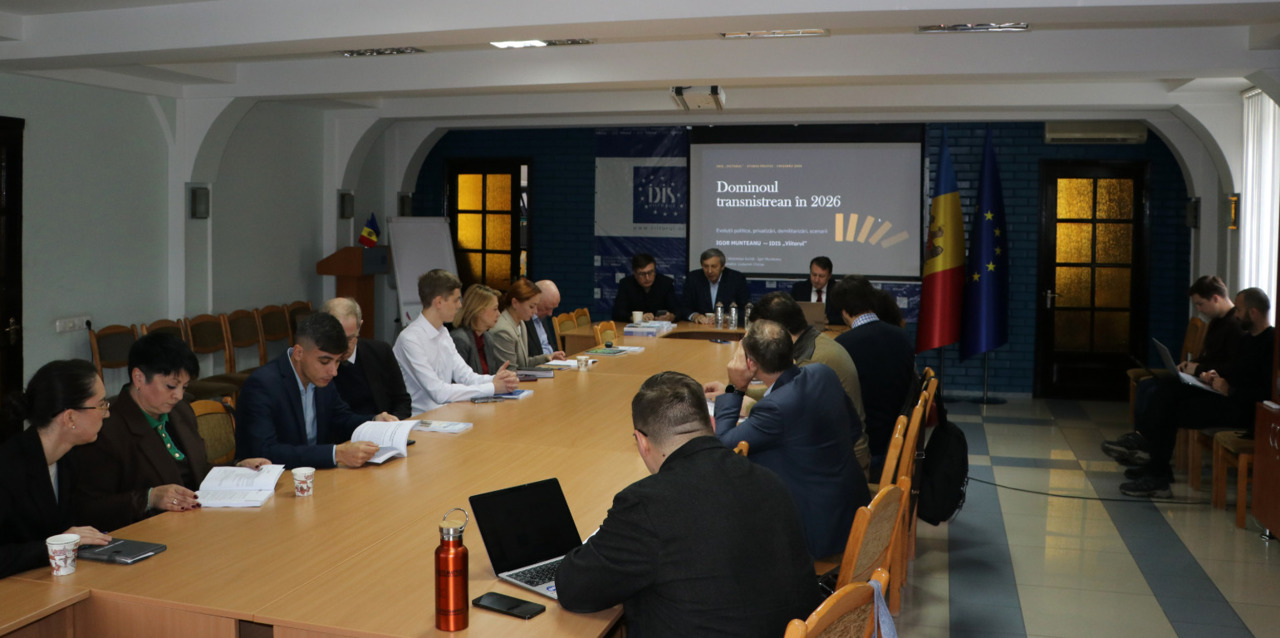
The study, titled The Transnistrian Domino in 2026: Political Developments, Privatizations, Demilitarization and Scenarios, was presented on Wednesday, November 4. It describes a deepening economic crisis in the region and a shift in the balance of economic dependence between the two banks of the Dniester.
According to the research, the region's gross domestic product (GDP) fell by 19.4% in 2025, while industrial output declined by 20%.
External sales dropped by 39.7%, from $722.8 million to $435.9 million (€389.9 million, approximately 7.87 billion MDL). The figure includes exports to other countries and sales to Moldova's right bank, according to the study.
The researchers say that approximately 77% of the region's exports are destined for the European Union (EU), highlighting its growing dependence on European markets.
The region's registered population fell to approximately 460,000 in 2025, while an estimated 165,000 people were living abroad, according to figures cited in the research.
Salaries and pensions on the left bank are currently around half the levels recorded on the right bank, the authors say.
The traditional economic model, based on Russian natural gas supplied without immediate payment, subsidies, smuggling and political patronage, can no longer sustain the separatist administration, according to the researchers.
Internal reforms are unlikely because expressions of criticism are suppressed, said Liubomir Chiriac, executive director of IDIS Viitorul.
Moldova's European integration and territorial reintegration must advance simultaneously, he said, adding that the authorities should carefully examine the study's recommendations.
"Both Moldova's integration process and the reintegration of the left-bank region must proceed in parallel," Chiriac said.
Chisinau gains economic leverage
One of the study's main findings is that the economic balance between the two banks of the Dniester has shifted in Moldova's favour.
More than 86% of the region's external sales depend on Moldova's customs services, certificates of origin and legislation. Meanwhile, 77% of its exports are directed towards EU markets, according to the study.
Official Moldovan government figures provide additional evidence of this commercial reorientation. In 2025, 71% of the region's overall trade activity was directed towards the EU, according to data supplied by the Customs Service. The corresponding share reached 76.9% in the first half of 2026.
Romania, Poland and Italy were among the main destinations for exports in 2025.
The researchers say Chisinau has strengthened its position through measures including its refusal to return to the 5+2 negotiation format and the introduction of tax obligations for businesses operating in the region.
Russia, meanwhile, no longer has the resources to maintain its previous system of economic support. The Russian military presence and repressive mechanisms remain the main instruments of control available to the separatist administration, according to the study.
This shift gives Chisinau a stronger position in the reintegration process, said Igor Munteanu, one of the study's authors.
"The asymmetry has been reversed: Chisinau now dominates in terms of will, strategy and resources, while Tiraspol is merely surviving. The regime still has fear and Russian military pressure, but a model without resources cannot survive indefinitely," Munteanu said.
He also pointed to growing ties between residents on the left bank and Moldova's state institutions, particularly through access to public services.
"Residents of the left bank, who are citizens of the Republic of Moldova, have begun systematically benefiting from state services and are becoming fully integrated. Chisinau must turn this change into a credible offer," Munteanu said.
Russian support estimated at billions of dollars
The study estimates that Russia invested between $14 billion and $19 billion (€12.5 billion–€17 billion, approximately 252.9 billion–343.2 billion MDL) in supporting separatism in the region under a minimum scenario.
Under a maximum scenario, the estimated amount rises to between $20 billion and $25 billion (€17.9 billion–€22.4 billion, approximately 361.3 billion–451.6 billion MDL).
Approximately 70%–80% of these resources were directed towards the natural gas sector, through supplies for which payment was deferred or which were provided free of charge.
The accumulated debt for Russian natural gas had reached approximately $11.1 billion (€9.9 billion, approximately 200.5 billion MDL) in 2025, according to the study.
The authors also found that the regional economy is highly concentrated, with more than 85% of economic activity controlled by just three companies.
Privatization and property rights
Another part of the research examines privatizations carried out in the region and the need to clarify the legal status of economic assets in the event of reintegration.
By 2005, 38 major enterprises had been privatized in the region. Examples include the Cuciurgan Power Plant (MGRES), sold in 2003 for $29 million (€25.9 million, approximately 523.9 million MDL), and the Tirotex textile company, reportedly acquired for approximately 24% of its assessed value.
The study proposes evaluating each asset under two scenarios: continuation of the current situation and reintegration into the constitutional framework of the Republic of Moldova.
The difference between the two valuations would represent what the authors call a "reintegration premium", a mechanism intended to establish the economic benefits arising from the regularization of property rights.
The researchers stress that the process should involve neither arbitrary confiscation nor unconditional recognition of properties acquired through illegal transactions.
They also argue that asset regularization must not legitimize illicit capital or transfer debts accumulated by the separatist administration to the Republic of Moldova.
Security risks and conditions for reintegration
The study identifies three levels of security risks: military, hybrid and societal.
The military component includes the Operational Group of Russian Forces (OGRF), estimated at between 1,500 and 2,500 troops, as well as local forces.
The hybrid dimension includes 11 unauthorized checkpoints in the Security Zone, while the societal component includes militarization activities involving more than 74,000 children and young people, according to figures cited in the research and human rights monitoring reports.
The authors argue that reintegration should not be conditional on the complete demilitarization of the region before the process begins. However, they say that a verifiable reduction in each category of security risk is essential.
The study also examines proposals by Moldova's Reintegration Policy Bureau to withdraw Russian forces and military equipment under international monitoring, replace the current trilateral peacekeeping mission with an International Civilian Mission, and establish a Provisional International Administration.
Convergence Fund proposed as a tool for reintegration
One of the study's central recommendations is to make the Convergence Fund operational. The mechanism would be financed through VAT collected from businesses in the region, the state budget and external grants.
According to the researchers, the fund could provide more than 600 million MDL annually for infrastructure, social cohesion and the development of Moldova's eastern districts.
The experts recommend a gradual transition over four to ten years, based on a predictable timetable, with tax exemptions scheduled to end on January 1, 2030.
Additional fiscal pressure should not exceed approximately 1% of GDP annually, the study proposes.
The authors also call for safeguards for pensioners and vulnerable households, transparent fund management and respect for legitimate property rights.
Veaceslav Ioniță, another author of the study, said the current circumstances offer Moldova an important opportunity to use economic instruments to bring the two banks of the Dniester closer together.
"We now have an opportunity that would be a shame to miss. I believe there has never been a better time to use economic instruments, to engage in discussions and negotiations with people on the left bank," Ioniță said.
He said the Convergence Fund should be designed as an instrument for dialogue and negotiation rather than simply as a financial mechanism.
"The Convergence Fund should not be seen as a simple tool for collecting money, but as an instrument for holding a genuine discussion, provided we know exactly what we want to achieve," Ioniță said.
The IDIS Viitorul study provides Moldovan authorities and international partners with data, estimates and scenarios for developing reintegration policies covering economic, fiscal, property and security issues.
The authors argue that developments in recent years have created conditions for a firmer, better-informed approach, with economic integration and closer ties to the European market serving as key instruments for the reintegration of the Republic of Moldova.
Translation by Iurie Tataru
RELATED COVERAGE
Moldova establishes Convergence Fund to drive Transnistrian reintegration
Moldova shifts Transnistria strategy, proposes €1B convergence fund amid frozen dialogue
Skepticism in Tiraspol over convergence fund: Decisions made outside negotiations "do not work"
Moldova advances fiscal integration plan for Transnistria region
Moldova starts collecting taxes from firms in breakaway east