Czech firms eye Moldova energy and transport as EU bid advances
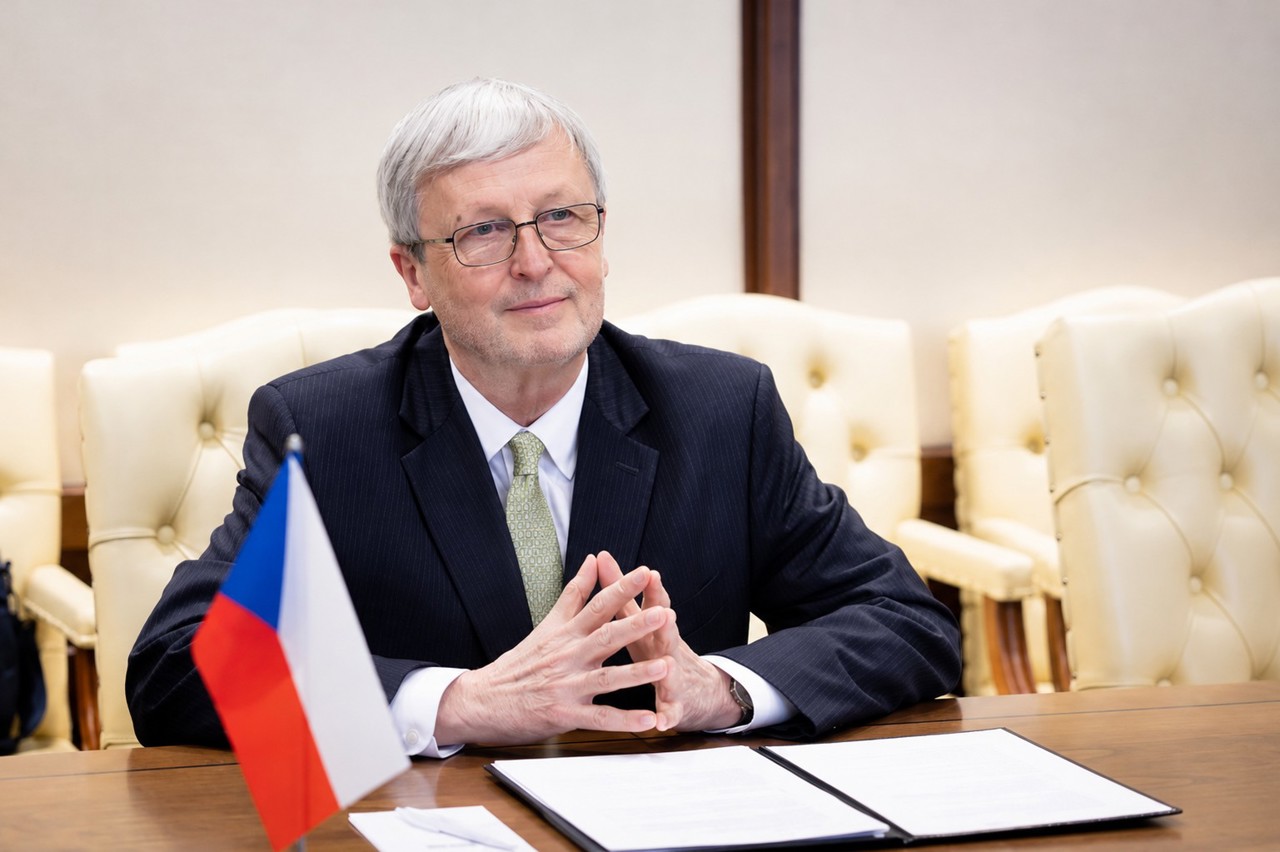
Czech companies are eyeing investments in Moldova’s energy, transport, and healthcare sectors as the country’s European Union accession drive improves business predictability, Ambassador Jaromír Plíšek said in a Radio Moldova interview.
Speaking to journalist Anatol Caciuc, Plíšek said aligning with EU standards and building a more stable business climate would strengthen foreign investor confidence. He noted that Moldova’s investment climate has gradually improved in recent years, earning a more favorable international assessment in 2026.
“This is a good thing. At the same time, due to factors such as Russia’s aggression and the need for greater transparency and predictability, some reluctance still persists among certain investors,” Plíšek said.
Regional expansion and priority sectors
Moldova could also attract capital from Czech companies already operating in neighboring Romania and Ukraine. According to the ambassador, several firms are weighing expanding into Moldova or relocating part of their production and logistics operations there, partly due to regional security conditions.
“The greatest interest from Czech companies is focused on healthcare, energy, and the modernization of the airport, railways, and logistics hubs,” Plíšek said. “It is precisely in these areas that Czech firms can provide the expertise and technology Moldova needs for its modernization.”
Bilateral trade and investment will top the agenda at the next meeting of the Moldovan-Czech Intergovernmental Commission for Economic Cooperation, scheduled to convene in Chișinău in early 2027. Talks will focus on energy cooperation, transport links, digitalization, Czech companies’ role in Ukraine’s reconstruction, and tapping EU investment financing instruments.
A parallel business forum will connect Moldovan and Czech firms across agriculture, food processing, construction materials, and medical equipment manufacturing. “Some Czech-backed companies are already investing or looking to invest in Moldova, especially in energy and transport infrastructure. I am confident the volume of investment will grow significantly,” Plíšek said.
Two decades of development aid
Beyond private capital, Czech development cooperation with Moldova has spanned more than 20 years, supporting social services, agriculture, environmental protection, and state institutions.
Czech-funded programs have helped nearly 2,000 people with intellectual disabilities transition from institutional care to community-based services and established 12 home-based medical and social care centers serving over 3,000 patients annually. More than 16,000 telemedicine consultations have also been delivered, primarily to rural residents.
In addition, over 700 specialists have been trained in autism spectrum disorders, and Moldova’s first accredited specialized medical center in the field was established with Czech support. In agriculture and environmental protection, Czech aid helped create the National Vineyard and Wine Register and remove hundreds of tons of hazardous pesticides and contaminated soil.
Plíšek said future development funding will continue to target public administration, social and health reforms, sustainable agriculture, human rights, and independent media—provided current and future governments uphold this partnership. He also highlighted projects outside Chișinău, including support for the dairy sector in northern Moldova and improved rural healthcare access.
Enforcing reforms beyond paper
Drawing on the Czech Republic’s own EU integration experience, Plíšek stressed that adopting European legislation is not enough unless new rules are enforced in practice.
“Reforms must not exist only on paper by transposing EU texts and rules, but must be effectively enforced. Otherwise, there is no point,” Plíšek said.
He added that aligning with EU standards should be viewed not merely as an obligation imposed by Brussels, but as an opportunity to modernize institutions, improve public services, and grow the economy. “Being asked to follow certain rules is not just a burden—it is also for your own benefit,” Plíšek said.
Translation by Iurie Tataru
RELATED COVERAGE
- The Czech Republic backs Moldova's European path: "We will support Moldova during this difficult time"
- Czech senator: Moldova shouldn't wait for others in EU accession talks
- Experts: Moldova needs $700 million in foreign investment annually for real development
- Republic of Moldova has risen to fifth among EU accession candidates, Cristina Gherasimov
- EXCLUSIVE | Moldova could provisionally close its first EU accession chapters in the coming months, Marta Kos