Moldovan town halls lack capacity for EU accession
Moldova’s local authorities lack the staff, money and institutional capacity to meet responsibilities linked to EU membership, a study presented on Tuesday, November 24, has found.
Shortage of qualified staff and procurement expertise
The findings come from a study on the impact of EU accession on local public administration, conducted under the PACE Local project, implemented by SALAR International with support from the Swedish Government and contributions from the Institute for European Policies and Reforms (IPRE) and the Congress of Local Authorities of Moldova (CALM).
The assessment covered five areas directly affecting town halls: public administration, public procurement, environmental protection and communal services, regional policy, and transport.
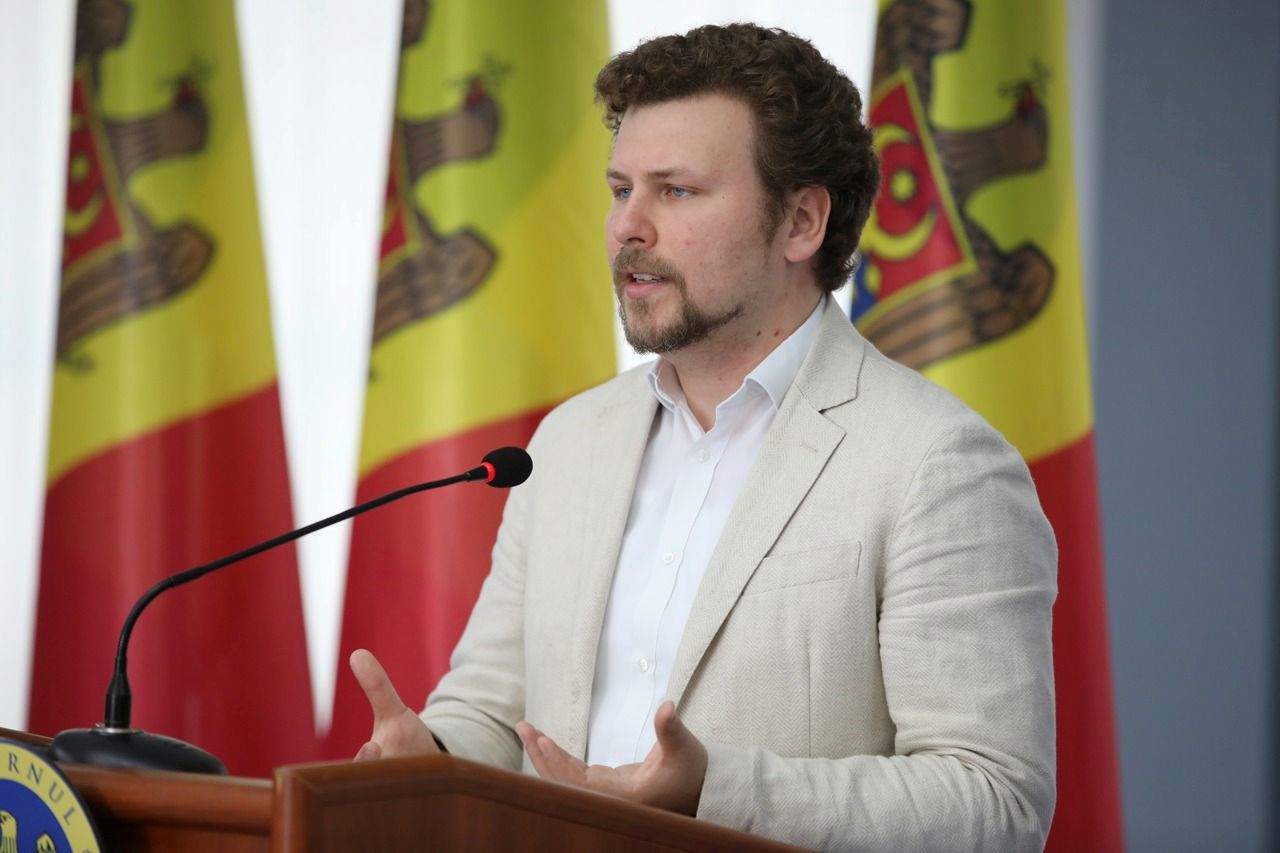
Adrian Ermurachi, IPRE’s executive co-director, said around 70% of European Union legislation is implemented at local level, according to the European Committee of the Regions. He said town halls should therefore play an active role in shaping and implementing European policies rather than simply carrying out decisions made by central authorities.
Local authorities are already represented in the National Commission for European Integration and participate in working groups involved in accession negotiations. However, their involvement must be substantive rather than merely formal, Ermurachi said.
The study also identified a shortage of qualified employees and limited opportunities to recruit specialists, partly because of uncompetitive salaries and the existing administrative-territorial structure.
Public procurement emerged as one of the most significant weaknesses. Among the 200 town halls surveyed, 76% said they needed support with procurement, nearly 60% considered it a major challenge, and more than 70% reported difficulties preparing tender documentation and technical specifications.
Only 13% of respondents rated their public procurement capacity as high, while 56% described it as moderate and 26% as low.
Ermurachi said local authorities needed training across the entire procurement process, from planning tenders to executing contracts and delivering investments. Managing decentralised EU funding will require qualified staff able to prepare documentation, follow procedures and monitor projects.
Water, waste management and climate adaptation gaps
The study also identified substantial shortcomings in environmental protection and communal services.
Nearly 70% of households have access to public water supply networks, but only around 10% are connected to public sewage systems. About 60% of town halls collect mixed waste, while 16% have no waste collection system.
Only 2% of local authorities have a comprehensive climate adaptation system incorporating an action plan, designated staff and monitoring mechanisms.
Ermurachi said aligning these sectors with European standards would require substantial investment, closer cooperation between communities and service providers, and a regional approach to water supply, sewage and waste management.
Cofinancing remains a major obstacle to EU funding
The ability to attract and use European funds is another major weakness identified in the assessment.
The annual co-financing requirement for infrastructure projects could reach €70 million (approx. 1.41 billion MDL), while available resources are estimated at between €40 million and €60 million.
More than half of the surveyed town halls, or 56%, reported difficulties securing their own contribution to projects. In 2025, local authorities implemented only around 60% of their planned investments.
The share of own-source revenues in local budgets also declined from approximately 39% in 2022 to 33% in 2025.
Ermurachi said local government reform must go hand in hand with fiscal decentralisation, giving local authorities access to pre-financing and co-financing mechanisms for major infrastructure projects.
Only 19% can independently implement EU-funded projects
The survey was conducted in July using a 54-question questionnaire answered by representatives of 200 town halls, Alexandru Osadci, international relations coordinator at CALM, said.
The results point to a low level of preparedness among local administrations for European integration. Osadci also warned that voluntary amalgamation and the reduction in the number of administrative-territorial units could lead to the loss of institutional knowledge and experience.
“All these measures to strengthen capacities in various areas – public procurement, regional funds, regional development and even fiscal decentralisation – must start from the very beginning,” Osadci said.
He stressed that preparations for new administrative structures should not be postponed until the reform is completed, as some employees risk losing their positions during the restructuring process.
The survey found that 84.5% of respondents considered access to funding the main benefit of EU accession. At the same time, 62% identified securing co-financing as the biggest obstacle to accessing European projects.
Only 19% of local authorities believed they had the capacity to independently develop and implement projects financed by EU funds.
Local autonomy must remain part of the accession agenda
Ryan Knox, executive director of SALAR International, said European integration should be viewed as a transformation of the entire governance system rather than simply a process of aligning legislation through negotiations between national authorities and Brussels.
Drawing on Sweden’s experience of joining the European Union in 1995, Knox said local authorities must be involved from the outset when preparing reforms, rather than being limited to implementing decisions made centrally.
“EU accession must not become an argument for recentralisation. The European Union does not prescribe a single model for local authorities, and the principle of subsidiarity should guide the allocation of responsibilities. Local authorities cannot be expected to take on new obligations without having the necessary autonomy. Strengthening local autonomy must be part of the Republic of Moldova’s accession agenda,” Knox said.
He also highlighted the gap between expectations surrounding EU funding and the ability of local administrations to use it effectively.
“Funding certainly offers opportunities, but using these funds effectively does not happen automatically and is not such a simple process. Local authorities must have the capacity to plan, manage public procurement and ensure the long-term sustainability of projects,” Knox said.
He added that the success of accession should be measured not only by the number of laws adopted or the amount of funding secured, but also by tangible improvements in communities.
Mayors and local councillors also have an important role in explaining the opportunities, obligations and difficult decisions associated with EU integration to residents, Knox said.
Government expects local administration reform to improve capacity
Reducing the economic gap between Moldova and the European Union must remain a priority both before and after accession, Government Secretary-General Alexei Buzu said.
Citing International Monetary Fund estimates, Buzu said Moldova’s GDP per capita could reach only 36–37% of the EU average at the time of accession. Romania and Bulgaria stood at around 40% when they joined the bloc, while countries that became members in 2004 recorded levels ranging from 50% to 59%.
He said legislative harmonisation and the adoption of strategies would not be enough to accelerate economic development without specialists capable of turning funding opportunities into concrete projects.
“Our obsession is that we need to build a large, formidable army of project managers in this country – at town hall level, at the second tier of local government and within the Government,” Buzu said.
According to the Government official, local government reform should enable town halls to recruit more project specialists, strengthen their fiscal capacity and develop investment project portfolios.
These measures should help local authorities secure the co-financing needed for infrastructure projects and make more effective use of available funding.
Translation by Iurie Tataru
RELATED COVERAGE
- Moldova local authorities unlock direct EU funding via EAST GATE
- Network of Local Ambassadors for European Integration launched to train City Halls in EU policies
- European expertise for Moldovan municipalities: Joint Consultative Committee launched in Chișinău
- Institutional capacity-building: Moldova’s path to EU integration via cross-border cooperation
- Moldova to receive €12.9m German grant for EU accession reforms