Putin: NATO threat dismissed, Ukraine war advances
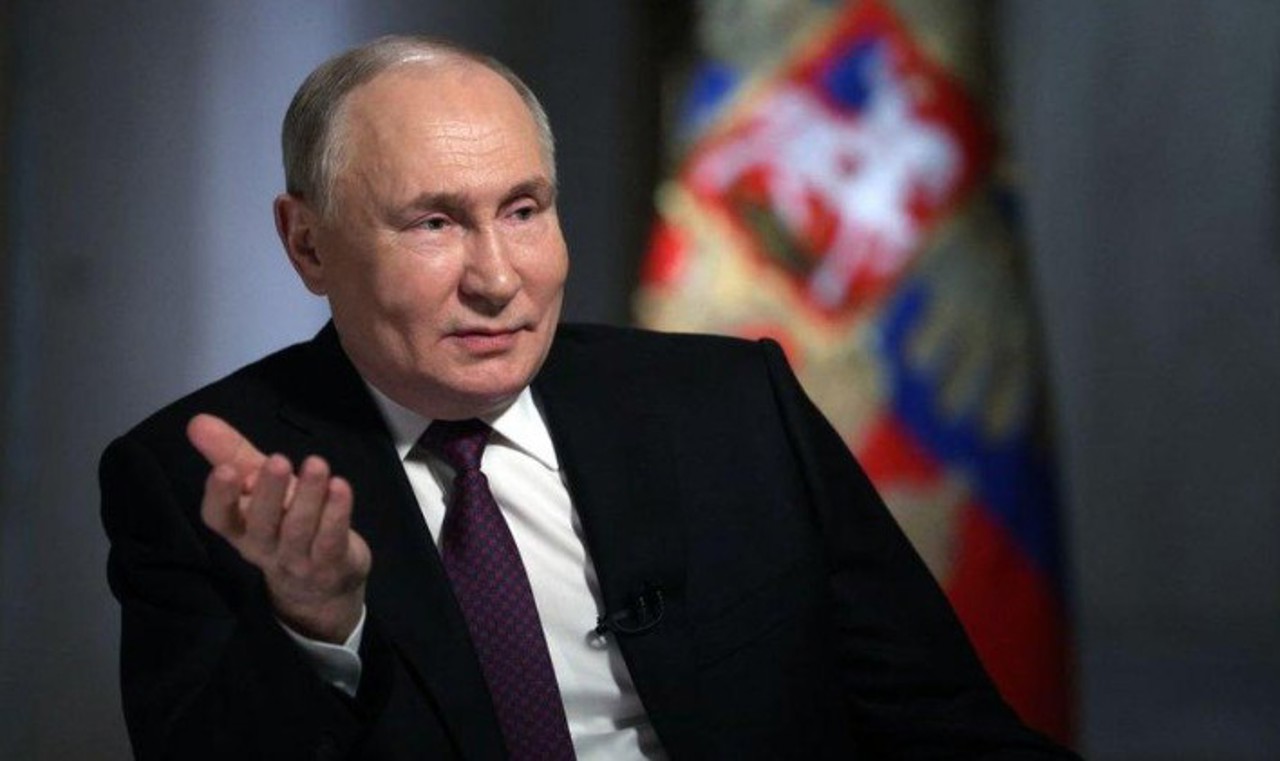
Russian President Vladimir Putin said that NATO's rearmament poses no "threat" to Russia, as his country possesses the necessary "defense capabilities" to counter it.
This comes after more than three years of conflict in Ukraine, which has militarized the Russian state, AFP reports.
Putin also welcomed his army's daily advances on the front line, noting that they face a less numerous and struggling Ukrainian army.
The North Atlantic Treaty Organization (NATO), set to hold a summit next week in The Hague, is urging its members to boost their security spending amidst the volatile conflict in Ukraine, sparked by Russia's 2022 attack against its neighbor.
Putin stated: "We do not consider NATO rearmament a threat to the Russian Federation because we are self-sufficient in terms of security."
"We are constantly improving our armed forces and defense capabilities," he added during a June 19 meeting with foreign news agencies, including AFP, in St. Petersburg.
While an increase in NATO member countries' spending to 5% of their GDP would create "specific" challenges for Russia, Putin conceded, he still considered this rise "senseless" for Alliance members.
"We will counter all emerging threats. There's no doubt about that," he emphasized, quoted by Agerpres.
The Russian leader presented the large-scale offensive launched in Ukraine in 2022 as part of a broader conflict between Russia and NATO, which he considers an "existential threat" to his country's borders.
During peace talks concerning Ukraine, he wants to discuss – especially with American leader Donald Trump – the security architecture of the "old continent."
Kyiv, for its part, is seeking security guarantees from NATO should any agreement aim to end the fighting.
At this stage, peace negotiations between the two belligerents, initiated under pressure from Donald Trump, are deadlocked, with both sides entrenched in highly divergent positions.
Russia rejected Ukraine's desired "unconditional" ceasefire; Kyiv, in turn, described Russia's demands as "ultimatums."
Ukrainian President Volodymyr Zelenskyy asked Vladimir Putin for a personal meeting to find a solution to the conflict. However, the Russian president rejected this, as he did Kyiv's proposal for an unconditional ceasefire.
On Thursday, Putin said he's open to such a summit, but only as part of the "final stage" of negotiations.
"I'm ready to meet [with Zelenskyy], but only if it's the final stage" of negotiations, the Russian president told foreign news agencies.
However, he again questioned the legitimacy of the Ukrainian leader, whose presidential term officially expired in May 2024.
Kyiv could not hold presidential elections due to the Russian attack and the imposition of martial law.
"I'm ready to meet with anyone, even with Zelenskyy. That's not the issue. If the Ukrainian state trusts a particular person to lead negotiations, by God, that can be Zelenskyy," the Russian leader affirmed during the roundtable.
"It doesn't matter who negotiates, even if it's the current head of the regime," he added.
Putin also stated the necessity of "finding a solution that not only ends the current conflict but also creates the necessary conditions to prevent the recurrence of such situations in the long term."
Two rounds of talks between Russians and Ukrainians took place in Istanbul but made no progress towards a ceasefire in this conflict, which has caused tens of thousands of deaths and injuries.
Moscow, whose army still occupies nearly 20% of Ukrainian territory, demands that Kyiv, among other things, withdraw its forces from four regions it claims to have annexed, renounce NATO membership, and limit the size of its military.
On the ground, Russian forces continue their daily bombardment of Ukrainian cities and villages. On the morning of June 18, they launched a series of attacks on Kyiv, resulting in at least 28 deaths, according to Ukrainian authorities, marking one of the deadliest tolls in the capital since 2022.
Translation by Iurie Tataru