Mayors back administrative-territorial reform to boost development, EU funds
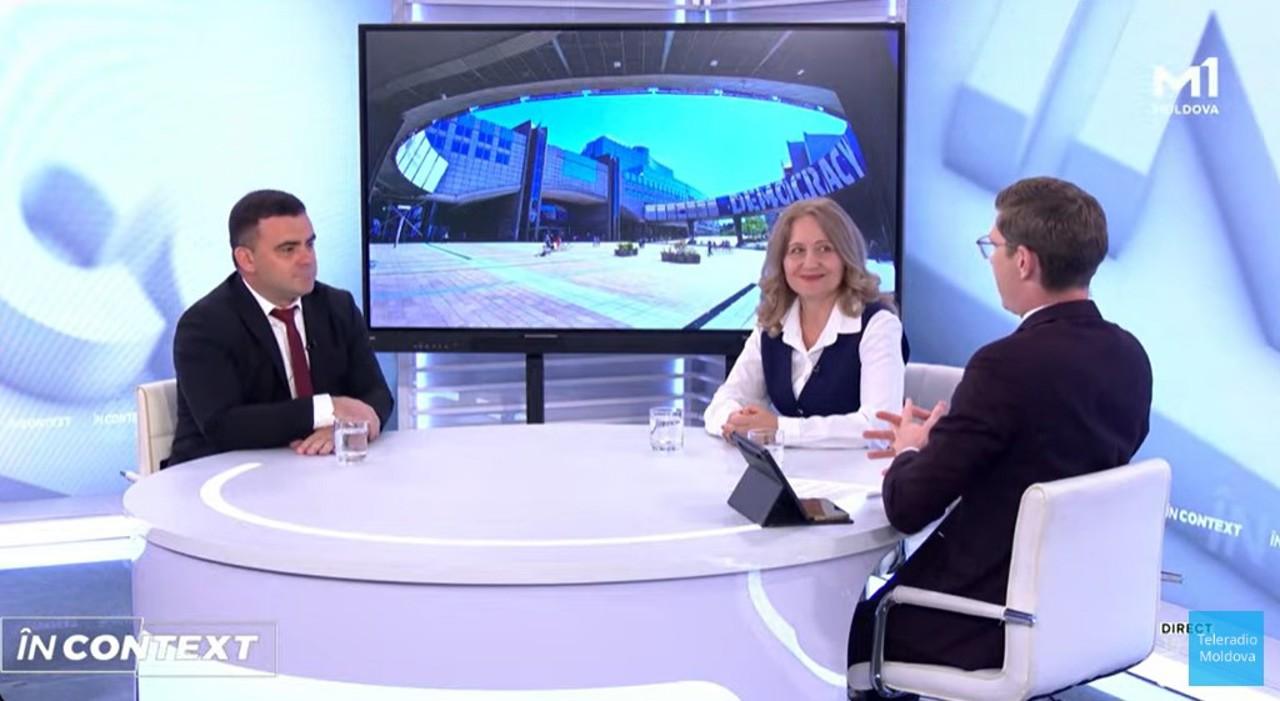
The administrative-territorial reform is crucial for the development of local communities, enhancing their ability to access European funds and improving the public services provided to citizens, according to Ala Procopciuc, the mayor of Călinești commune in the Fălești district. Similarly, Iulian Eremei, the mayor of Prepelița commune in the Sângerei district, believes that the territorial reform should begin with small villages, where a lack of financial and human resources hinders sustainable development without external support.
On the show IN CONTEXT on Moldova 1 TV, two mayors expressed their appreciation for the invitation from European Commissioner for Enlargement, Marta Kos, to visit Brussels. They noted that this week they had the opportunity to engage with representatives of European institutions, discussing the issues affecting their communities and exploring ways to access funding for solutions.
Mayors: The “key to success” in the EU accession process
“The European Union needs us at the grassroots level to make the right decisions and help us progress on the European path. [...] Mayors are the key to success in the accession process. We are constantly in discussions with the people, understand what citizens want, and propose solutions. Therefore, we, the mayors, must actively seek funding, implement projects, demonstrate results, and, most importantly, communicate with citizens about where these funds come from,” declared Ala Procopciuc during the show.
The mayors identified a decline in population and a lack of human resources as significant barriers to accessing European funds. Ala Procopciuc, the mayor of Călinești, believes that amalgamation is a necessary solution for local administration, stating that it “must be a strong team.”
"This reform is essential in the context of population decline. The limited access to funds has motivated my colleagues and me to implement this reform. Small municipalities, such as those with only 500 residents, lack specialists, preventing us from providing quality services to citizens. The shortage of qualified staff was a crucial factor in my decision to pursue amalgamation. Without a strong team, we cannot attract these funds. [...] With a solid team, we can develop the community and implement projects,” Procopciuc explained.
Iulian Eremei, the mayor of Prepelița commune in the Sângerei district, echoed the concern about a lack of well-trained staff, highlighting an urgent need for reform.
“The most pressing issue I’ve faced is the absence of young people willing to engage not only in politics but also in community activities. Students who move to Chișinău for college rarely return home. This contributes to our shortage of specialists,” Eremei explained.
“Development partners are with us”
Eremei also emphasized the urgency of administrative reform given the limited resources of small communities.
“We urgently need optimization. We can’t do it alone... Thankfully, we have access to European funds, which enable us to sustain our efforts. [...] The administrative-territorial reform should begin with small municipalities, particularly in areas with villages housing fewer than 1,000 inhabitants,” he added.
To enhance access to European funds, the Prepelița City Hall has focused on developing technical projects since the start of Eremei's term. "At the beginning of my term, we dedicated our city hall budget strictly to developing technical projects to later apply for European funds," Iulian Eremei stated.
Prepelița village secured EU funding to rehabilitate its infrastructure.
"We are currently working on a local road. It’s essential to inform citizens that accumulating the 9 million lei needed for this road in a community like Prepelița requires nine years of funding from the Road Fund,” Eremei emphasized, highlighting the significant impacts of European funding on local infrastructure.
Călinești has also initiated various projects aimed at enhancing the lives of its residents with the support of development partners.
"Development partners are on our side. We have launched projects focused on sanitation services, energy efficiency, and the development of recreational areas. [...] Citizens look for actions, not just words. We must all strengthen our collaboration: the city hall team, the Government, and the ministries. By demonstrating our commitment, I believe reforms will be successful in other communities,” concluded the mayor.
The two mayors expressed their willingness to apply for additional projects but emphasized the need for clarity regarding funding opportunities.
"We would like to know: can we apply for funding for street lighting, water supply systems, or thermal insulation for kindergartens?” Iulian Eremei conveyed his hopes during the interview with Moldova 1 TV.
Several mayors from the Republic of Moldova recently took a two-day trip to Brussels at the invitation of European Commissioner for Enlargement, Marta Kos. Their agenda included meetings with representatives from European institutions and organizations that advocate for the interests of local authorities in both EU member states and partner countries. They also engaged in discussions regarding community development policies at the regional level.
In an exclusive interview with Moldova 1 TV, Commissioner Marta Kos announced that the instalments of the Economic Growth Plan, amounting to 1.9 billion euros, will be released based on the successful implementation of reforms. Of the already allocated funds, one billion lei will be directed toward local infrastructure, while an additional 600 million lei will be invested in the modernization of regional roads. These investments are crucial for economic development and for ensuring the security of the Republic of Moldova.