Constitutional Court validates September 28 elections, confirms new deputies’ mandates
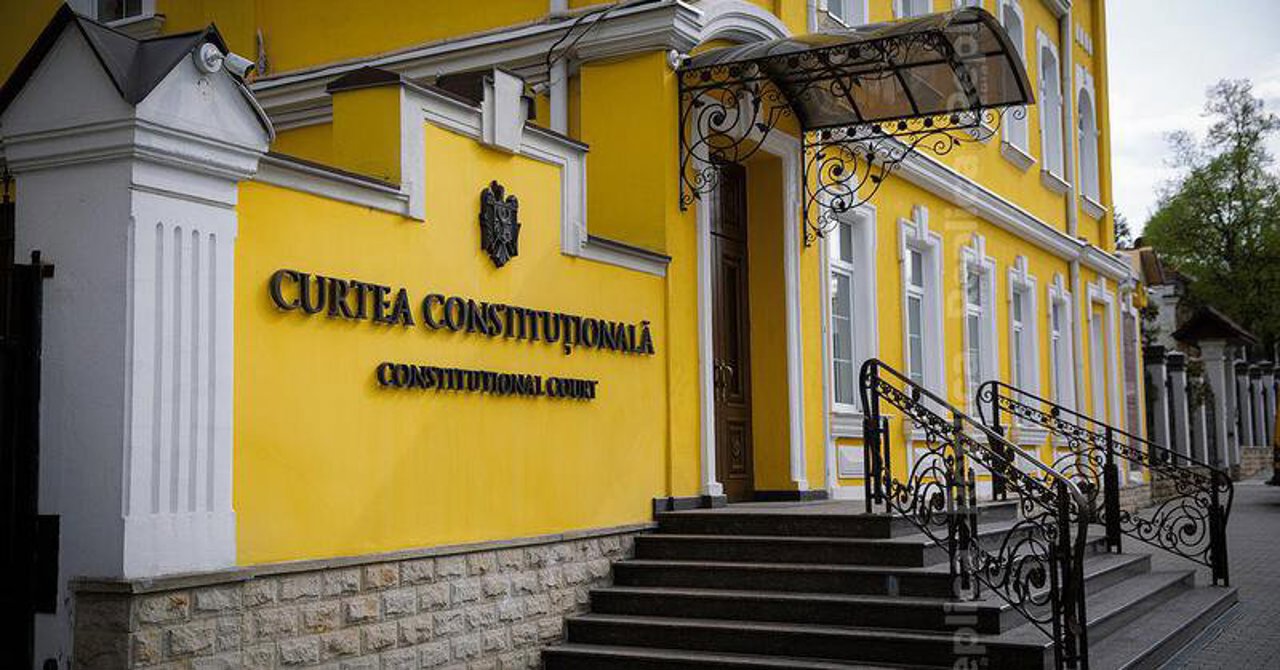
The Constitutional Court has validated the results of the parliamentary elections held on September 28, 2025, along with the mandates of the elected deputies. This decision was announced on October 16. The High Court affirmed the legality of the elections, confirming that they adhered to the provisions of the Constitution and the Electoral Code. Additionally, the Court validated the lists of alternate candidates.
“The results of the parliamentary elections of September 28, 2025 are confirmed. The mandates of the deputies elected to the Parliament of the Republic of Moldova in the parliamentary elections of September 28, 2025 are validated. (...) This decision will be sent to the Parliament of the Republic of Moldova, the President of the Republic of Moldova and the Central Electoral Commission. The decision is final, cannot be subject to any appeal, enters into force on the date of adoption and is published in the Official Gazette of the Republic of Moldova”, declared Domnica Manole.
According to the results of the validly cast vote, five electoral competitors exceeded the minimum threshold of representation.
Thus, the Action and Solidarity Party (PAS) obtained 55 mandates, followed by the Patriotic Electoral Bloc (BEP) – with 26 mandates, the “Alternative” Bloc – with eight mandates, and the Our Party (PN) and the “Democracy at Home” Party (PPDA) obtained six mandates each.
Within a maximum of 30 days after the elections, the President of the Republic of Moldova is to convene the new Parliament for its constituent session.
From the day of this session, the Parliament will be considered legally constituted, and will begin its legislative activity in the current legislature.
13.25 Constitutional Court judges retire to decide fate of September 28 elections
After more than three hours of hearings, Constitutional Court judges have retired to deliberate on the validation of the results of the September 28 parliamentary elections. The ruling is due to be delivered at 15:30.
12:40 PAS representative requests validation of the election: “The elections were fair, transparent and legal”
Before the magistrates of the Constitutional Court, the representative of the Action and Solidarity Party (PAS), Sergiu Gherciu, declared that his party considers the parliamentary election of September 28 to be “fair, transparent and legal”, with “minor deviations noted by the Central Electoral Commission, law enforcement agencies and courts”.
Asked by the judges whether validation is requested only for PAS or for all electoral competitors who crossed the threshold, he said: “Yes, for all electoral competitors. We consider that the election was legal and, therefore, validation is appropriate for all political parties”.
12:25 "Patriotic" Bloc asks Constitutional Court to validate parliamentary election results
The representative of the "Patriotic" Bloc, Adrian Lebedinschi, requested the Constitutional Court "not to recognize the election results and to invalidate these results", citing multiple violations that, according to him, "essentially affected the legality and fairness of the parliamentary elections of September 28, 2025".
In his plea, Lebedinschi stated that the elections were "marked by multiple innovations in terms of undermining democracy and ignoring the principle of the rule of law", and that qualifying them as partially free and fair would be "at least modest and misleading".
Among the main irregularities invoked, the representative of the "Patriotic" Bloc mentioned:
the use of administrative resources by the Action and Solidarity Party (PAS);
the involvement of President Maia Sandu in promoting PAS;
the formation of so-called camouflaged electoral blocs, in particular the collaboration between PAS and the DA Platform;
the use of hate speech and widely distributed alarmist campaign materials;
limiting the access of voters from the left bank of the Nistru by reducing the number of polling stations from 30 to 12.
“The support given by the President of the Republic of Moldova, Maia Sandu, to the PAS electoral competitor is incompatible with the principle of holding elections in free, equal and fair conditions,” Lebedinschi stated.
He also criticized the decision of the Central Electoral Commission regarding the number of ballots for the diaspora and voters from the Transnistrian region: “A record number of ballots for the diaspora was expected, over 864 thousand, while only 23,500 were reserved for residents of the left bank of the Nistru. This denotes disproportionate treatment and arbitrary behavior of the electoral authorities.”
He concluded by asking the Constitutional Court “to take into account all these illegal actions that compromised the rule of law and the free exercise of the right to vote” and “not to validate the results of the parliamentary election.”
Asked whether irrevocable court decisions confirmed the aforementioned irregularities, Adrian Lebedinskii acknowledged that the courts did not accept the requests submitted by the bloc: “I would like to draw attention to the fact that, during this election, starting with August 27th until September 28th, the “Patriotic” Electoral Bloc filed 46 appeals on various situations, but, unfortunately, the courts did not give us any credence.”
11:40 TikTok – the authorities’ “homework” for the upcoming elections in the Republic of Moldova
During the Constitutional Court hearing on the validation of the parliamentary election results, the president of the court, Domnica Manole, asked the president of the Central Electoral Commission (CEC), Angelica Caraman, a question regarding the lack of concrete measures to regulate the electoral campaign on social networks, especially on the TikTok platform.
“You mentioned that there is a concern about this aspect. A concern that, in the next election, we could encounter bigger problems or a greater scale of these irregularities. Here, I want to ask you why the necessary attention was not paid to the regulation of these activities before the start of the electoral campaign?” asked Domnica Manole.
In response, Angelica Caraman specified that the institution she heads has focused on its direct competences, in particular on monitoring campaign spending, including those carried out online, but she acknowledged that the phenomenon of disinformation and manipulation on social platforms remains a challenge.
"The Central Electoral Commission has focused its attention on what is directly within its remit. So, we monitor everything related to campaign spending, including online. But what is related to the aspect of disinformation and manipulation, so this scale that can influence, this remains a homework assignment," said Caraman.
11:20 Angelica Caraman presented the CEC report to the Constitutional Court
The President of the Central Electoral Commission, Angelica Caraman, presented the CEC report on the confirmation of the results of the parliamentary elections of September 28 and the validation of the mandates of the elected deputies at the central tribune of the Constitutional Court. Angelica Caraman detailed the institution’s activity in organizing the elections and noted that, on October 5 of this year, the central electoral authority declared the elections valid.
According to the CEC President, over a third of the voters registered on the lists participated in the parliamentary elections, and the process of centralizing the results was carried out based on the reports of the 2,274 polling stations, including those from abroad and those intended for voters in the Transnistrian region. According to the report, the CEC registered 23 electoral competitors in the parliamentary elections — 15 parties, four electoral blocs and four independent candidates — and found full compliance with the minimum gender representation quota of 40%.
Angelica Caraman also stated that, for the first time, the new electoral rules, which came into force at the beginning of 2023, were fully applied, and some were adjusted based on the recommendations of international observation missions. These include the digitalization of electoral processes, the extension of the deadlines for the nomination of candidates, the regulation of "camouflaged" electoral blocs and the tightening of sanctions for voter corruption.
The report also shows that, during the electoral period, the CEC adopted 484 decisions, organized over 50 meetings and examined almost 100 appeals.
The CEC President announced that the institution applied sanctions, including regarding the lack of budgetary allocations, notified the Ministry of Justice in two cases and initiated over 40 contravention processes.
“The mission of the Central Electoral Commission was to ensure all the conditions for the exercise of the electoral rights of voters to be elected and to vote in fair, transparent and honest elections”, the CEC chairperson emphasized.
In total, the CEC examined 99 appeals, with 27 resolved by decisions and the rest forwarded to other authorities.
The CC Chairperson, Domnica Manole, announced that there are “no files” on the docket of the Supreme Court of Justice and the Central Court of Appeal regarding electoral appeals.
“The Constitutional Court received the conclusion of the Court of Appeal by which the request or appeal of Mrs. Olesea Stamate was declared inadmissible, and from the Supreme Court of Justice we received the conclusion by which the appeal declared by lawyer Doina Ioana Străisteanu on behalf of the interests of the “Democracy at Home” Political Party was rejected. Thus, the Supreme Court of Justice informs us that there is no file pending before it that has as its object appeals filed in electoral matters. We have the same answer from the Chisinau Court of Appeal. So, as of today, all appeals at that time have been resolved”, pointed out Domnica Manole.
The Vice-President of the CEC, Pavel Postica, specified that five political formations have exceeded the electoral threshold and are to be represented in the future Parliament of the Republic of Moldova. These are the Action and Solidarity Party (PAS), the "Democracy at Home" Party (PPDA), the Patriotic Electoral Bloc of Socialists, Communists, the Heart and Future of Moldova (BEP), the "Alternative" Electoral Bloc and the Our Party (PN).
According to Postica, PAS ranked first, with 50.2% of the votes, which ensures it 55 mandates and a parliamentary majority. The formation is followed by the BEP, which obtained 26 mandates, the "Alternativr" Bloc - 8 mandates, and the Our Party and the PPDA - 6 mandates each.
During the question and answer section, the CEC President, Angelica Caraman, was addressed by representatives of the "Patriotic" Bloc and the "Democracy at Home" Party, as well as judges Nicolae Roșca, Sergiu Litvinenco, Liuba Șova and the President of the Court, Domnica Manole.
10.20 Representatives of the "Alternative" Bloc and the Our Party did not come to the High Court
The meeting is attended by the President of the CEC, Angelica Caraman, as well as the Vice President of the institution, Pavel Postica.
The "Patriotic" Bloc is represented by the lawyer Adrian Lebedinschi, and the "Democracy at Home" Party – by Vasile Costiuc and the lawyer Doina Ioana Străisteanu.
The representatives of the "Alternative" Bloc and the "Our Party" formation did not appear at the examination of the CEC report.
The President of the Constitutional Court, Domnica Manole, specified that both formations were notified in accordance with the legal provisions. Also, Dominica Manole pointed out that "the absence of these representatives does not prevent the conduct of the constitutional process in today's session."
On October 5, the CEC approved the report on the election results, a document with over 190 pages, structured in 16 chapters. It was sent to the High Court on October 6, which had a ten-day deadline to decide on the validation or annulment of the election results and the mandates of the new deputies.
What follows after the validation of the parliamentary elections
The Court’s decision must be published in the Official Gazette no later than two days after its pronouncement, which gives official and enforceable character to the decisions on the composition of the Parliament.
Within a maximum of 30 days after the elections, the President of the Republic of Moldova convenes the new Parliament for a constitutive session.
At that session, the Constitutional Court presents the final report, and once the formalities are completed, the Parliament becomes legally constituted and can begin internal organisational procedures.
Election of the Parliament's leadership
After the constitution, the deputies have a maximum of ten days to elect the Parliament Speaker, the Vice-Presidents and the Standing Bureau, as well as to form the parliamentary factions for the next term.
Formation of the Government and inauguration of the Executive
After consultations with the newly formed factions, the President will designate a candidate for the position of Prime Minister.
The designated candidate has 15 days to present the proposed list of ministers and the government program to the Parliament. The Government is then put to a vote in plenary and is inaugurated, if it obtains the vote of the majority of the deputies.
After the inauguration vote, the President of the Republic of Moldova, Maia Sandu, has a maximum of 14 days to sign the appointment decree, and the ministers take the oath - at which point the new Executive officially takes office.
Three parties and two blocs in the future Parliament
According to the preliminary results of the parliamentary elections on September 28, five electoral competitors will enter the new Legislative. The pro-European party founded by Maia Sandu exceeded the 50% threshold of votes and will govern the Republic of Moldova independently for the next four years.
More precisely, the Action and Solidarity Party (PAS) has 792,557 votes or 50.2% and would hold 55 mandates in the future Parliament. The "Patriotic" Bloc has 24.17%, i.e., 381,505 votes and 26 parliamentary mandates.
The Electoral Bloc "Alternative" obtained 7.96% or 125,685 votes and eight mayoral mandates, the Our Party - 6.20% or 97,852 and six mandates, and the "Democracy at Home" Party - 5.62% or 88,679 and also six deputy mandates.
The other competitors did not reach the threshold necessary to enter the Legislative.