Chisinau faces water rationing risk as Dniester River drops
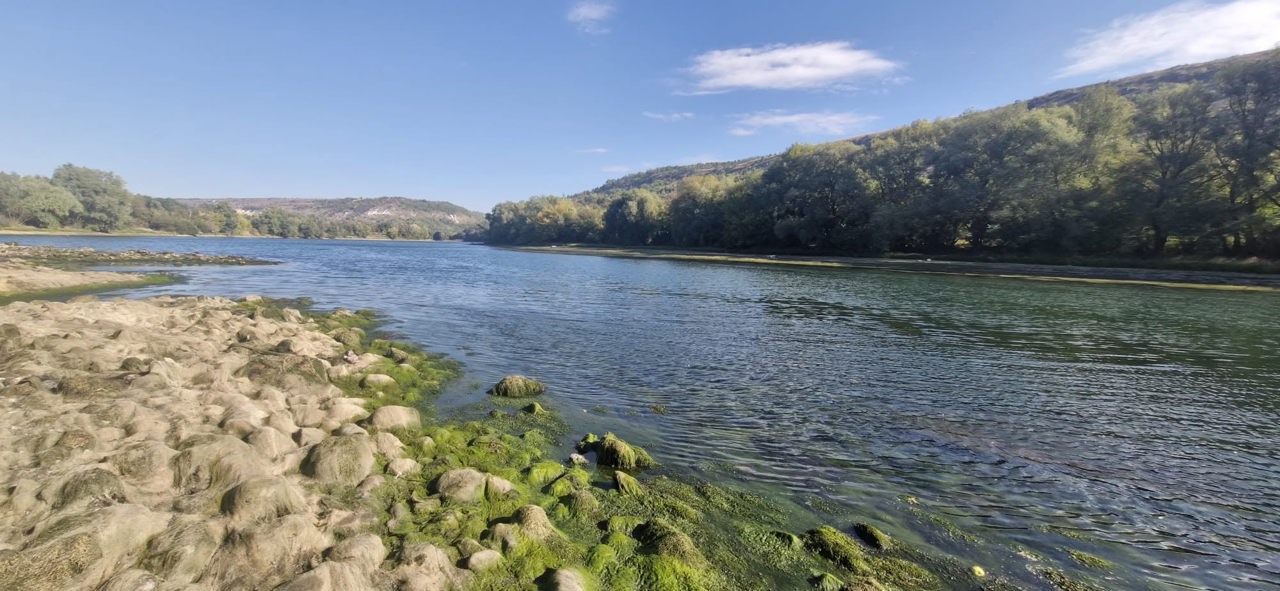
Chisinau residents face potential drinking water rationing as critically low levels along the Dniester River threaten municipal supply, following similar scheduled restrictions across Ukrainian cities upstream, Environment Minister Gheorghe Hajder warned.
The primary intake station supplying Moldova’s capital remains particularly vulnerable during prolonged hydrological deficits, official assessments show. Central authorities pledged swift interventions to safeguard uninterrupted public supplies if regional river flows deteriorate further.
“Water levels in the Dniester remain at alarmingly low marks,” Hajder said. “In Ukraine, Novodnistrovsk, Chernivtsi, and several other localities already receive water on a strict schedule. Securing drinking water for citizens remains our absolute priority, and the municipal intake facility feeding Chisinau is one of our most vulnerable assets. We must coordinate closely to prevent a major crisis.”
Emergency coordination and infrastructure strain
On September 28, the Environment Ministry convened crisis talks with technical engineers, municipal water operator S.A. “Apă-Canal Chișinău,” and the Chisinau City Hall under the coordination of the National Crisis Management Center. Officials discussed additional technical contingencies to maintain network pressure.
“We can only manage this complex situation through close institutional cooperation,” the minister noted. “We are continuously monitoring hydrological indicators and will provide all required support to local public administrations and utility operators.”
Upstream in Ukraine, municipal authorities in Chernivtsi introduced scheduled supply curbs between September 24 and October 1, responding to acute drought and reduced water intake ceilings enforced by the State Agency of Water Resources of Ukraine.
According to Ukrainian news agency UA News, Chernivtsi delivers tap water during two daily operational windows: from 06:00 to 10:00 and from 18:00 to 22:00. Outside these hours, network pressure drops sharply or is temporarily shut off across more than 70 streets to enable technical reservoir replenishment ahead of peak consumption hours.
Surface water intake vulnerabilities
Built between 1960 and 1970, the raw water intake station at Vadul lui Vodă was not engineered to operate at such critically depleted river levels. Unlike the northern Soroca facility, which draws deeper bottom water, the Chisinau intake station relies exclusively on surface extraction, exposing it directly to severe drops in river levels.
To avert supply shutdowns, authorities deployed emergency technical safeguards. The State Material Reserves Agency allocated five high-capacity auxiliary motor pumps to reinforce Apă-Canal Chișinău.
Emergency teams also constructed a temporary retention weir near the intake perimeter to stabilize river levels around the pumps, alongside structural adaptations enabling operations during reduced volumetric flows.
Translation by Iurie Tataru
RELATED COVERAGE
- New central Moldova water pipeline enters testing amid drought
- Moldova and Ukraine lower Nistru water discharge amid drought
- Dniester River levels plunge amid severe drought
- Dniester River flow maintained as Moldova and Ukraine face drought
- Moldova deploys high-capacity pumps to secure Chișinău water supply