JEF nations plan closer naval cooperation to deter Russia
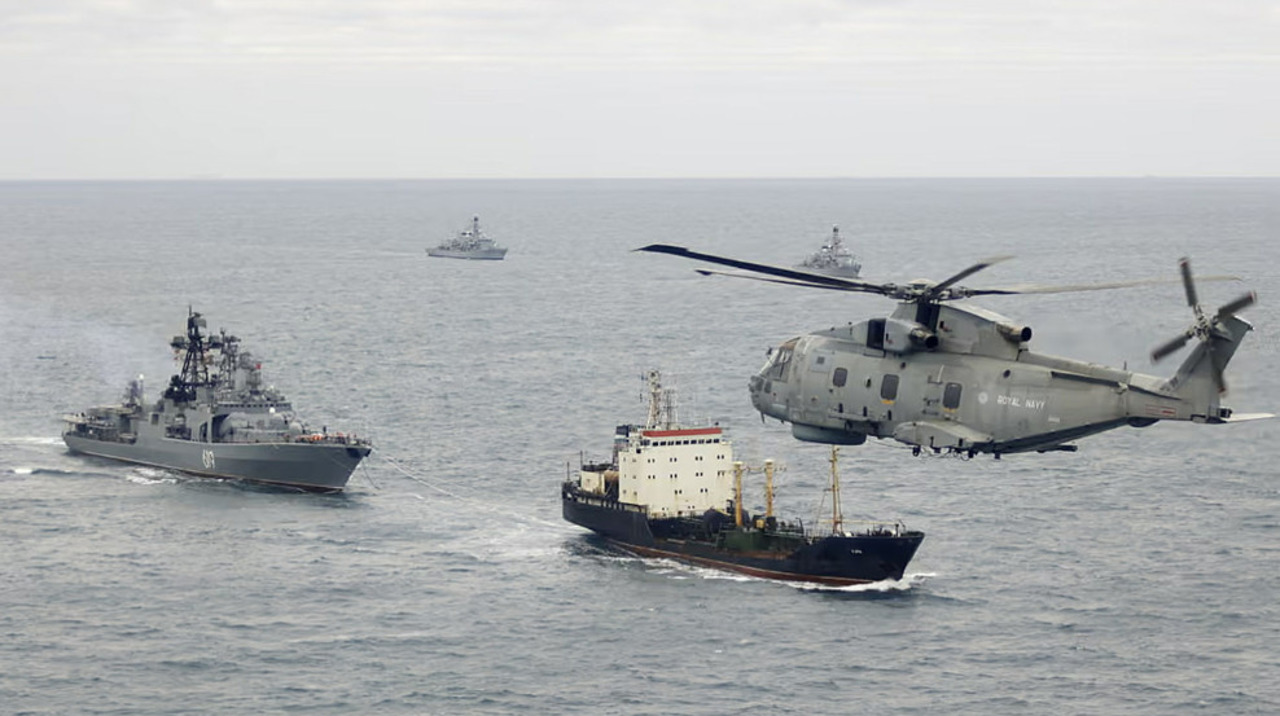
Ten northern European countries are preparing to deepen naval cooperation through the UK-led Joint Expeditionary Force (JEF) to deter Russian submarines and protect critical maritime infrastructure.
A stronger northern European naval partnership
The initiative aims to strengthen the allies' ability to counter Russian submarines in the North Atlantic, the Arctic and the Baltic Sea, preventing them from targeting or threatening commercial shipping. UK Chief of the Defence Staff Air Chief Marshal Sir Richard Knighton outlined the plans in an interview with the Financial Times.
The agreement is expected to be signed aboard HMS Prince of Wales, a Royal Navy aircraft carrier. The JEF brings together the United Kingdom, the Netherlands, Norway, Finland, Sweden, Iceland, Denmark, Latvia, Lithuania and Estonia.
The participating countries want to move beyond information-sharing and consultations towards practical cooperation between their naval, air and land forces.
Knighton said Britain needed to “catch up” with its European allies in countering the Russian threat. He explained that countries closer to Russia's borders were more acutely aware of the consequences of the war in Ukraine and the potential risks to their own security.
“This is the most dangerous period I've known in my adult life,” Knighton said.
He also said Moscow's willingness to escalate tensions had “clearly increased”, adding that the term “hybrid activity” no longer captured the full scale of the threat.
“We are talking about targeted assassinations, acts of sabotage and cyberattacks. These are real actions by the Russian state, for which there is evidence in Europe and, to some extent, in the UK,” Knighton said.
Nuclear deterrence and critical infrastructure
In September, the United Kingdom proposed extending nuclear protection to JEF member states. The initiative envisaged an additional deterrence mechanism operating outside NATO's framework, with British nuclear-powered submarines expected to play a central role in providing the nuclear umbrella.
The North Atlantic and Arctic regions are becoming increasingly important to NATO's security, partly because melting ice is opening up new shipping routes and because critical undersea communications cables cross these waters, the Financial Times reported.
Protecting this infrastructure is important not only for European countries but also for the eastern coast of the United States.
Britain's plans to strengthen cooperation within the JEF first emerged in the spring. At the time, First Sea Lord and Chief of the Naval Staff General Sir Gwyn Jenkins proposed creating multinational naval forces that could jointly use ships, weapons, ammunition, personnel, digital systems and logistical infrastructure.
Under the proposal, allied fleet command arrangements would be coordinated from Northwood, a British military headquarters.
Moscow warns against increased NATO presence in the Arctic
Russia has repeatedly stated that it intends to defend its interests in the Arctic. President Vladimir Putin has described the region as strategically important to the country's economy, sovereignty and national security.
The Russian Foreign Ministry has also warned that Moscow would respond to any expansion of NATO's presence in the Arctic and, if necessary, use all available means, including military force.
Translation by Iurie Tataru
RELATED COVERAGE
- Moldova and NATO launch 2025–2028 partnership to fight hybrid threats
- Moldova PM warns Russia uses drones to test NATO resolve
- NATO sees no signs of direct Russian military involvement in the Republic of Moldova
- Moldova and NATO: Balancing neutrality with stronger defense capabilities
- Ambassador: NATO is a key partner for Moldova’s security