Moldovan youths develop devices for health and Braille learning
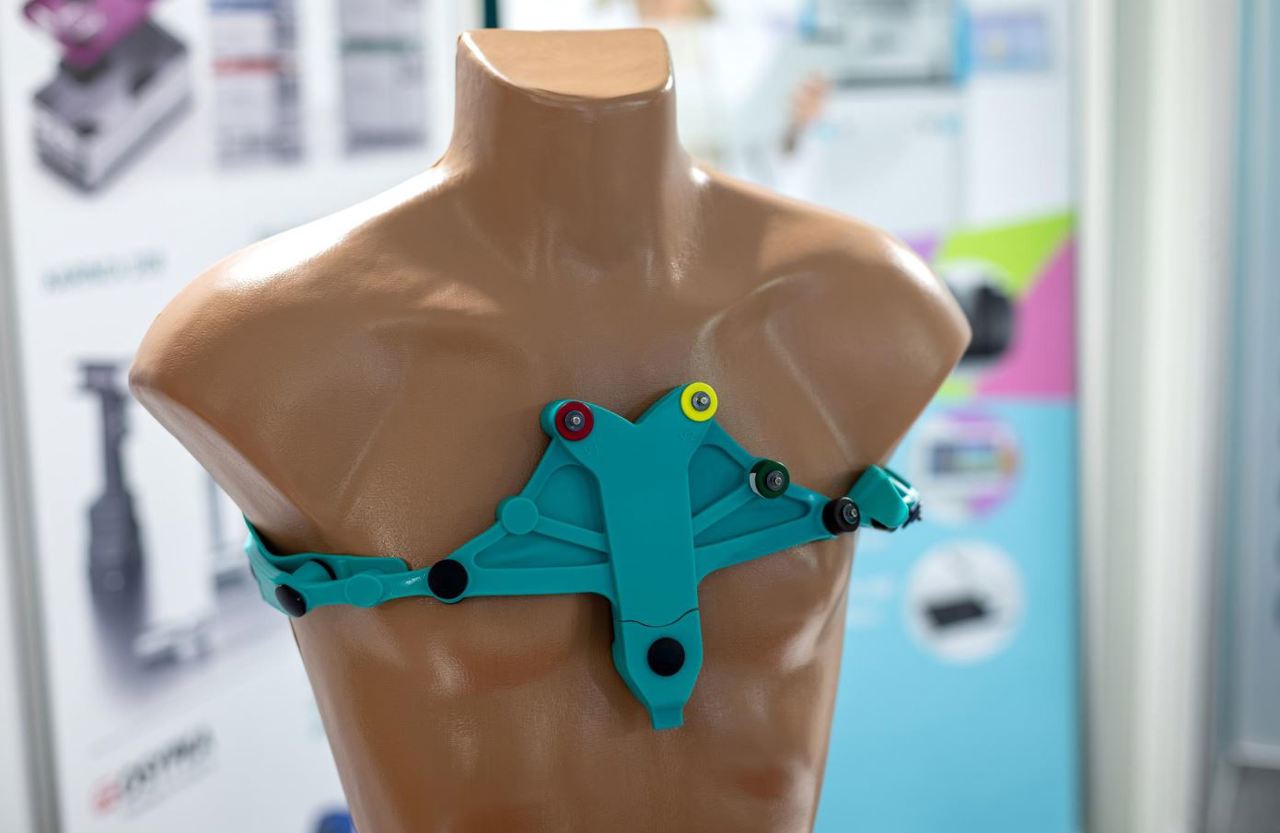
Two young inventors in Moldova have developed two devices designed to support cardiovascular health monitoring and help visually impaired people learn to read Braille by touch.
A smart exoskeleton for health monitoring
The smart exoskeleton includes sensors that measure blood oxygen levels. It also allows users to view an electrocardiogram (ECG) through a mobile application.
“We have a device, a smart exoskeleton for monitoring cardiovascular health. It has a sensor that monitors and displays blood oxygen levels,” Elena Chițcă, one of the project's creators, said on Radio Moldova's Zi de Zi programme.
Users can access the recorded data on the device or on their mobile phones, making the results easier to consult. “Through the mobile application, we can view the electrocardiogram, just as on the device, but on the phone screen,” she said.
A hands-on approach to learning Braille
The second invention offers an interactive way for visually impaired people to practise tactile reading. The device uses motor-driven moving elements to reproduce the raised-dot patterns associated with letters in Braille.
An assistant can enter words using a keyboard, after which the device successively forms the corresponding letter patterns. Users identify the configurations by touch, exploring the raised dots with their fingers and practising how to recognise and form words.
The device could be used in educational activities and guided learning exercises, potentially helping visually impaired users develop greater independence.
Although the inventions address different needs, both aim to use technology to make health monitoring and learning more accessible.
Translation by Iurie Tataru
RELATED COVERAGE
- Braille access remains a key barrier to education for visually impaired students
- Nearly 100 Moldovan schools equipped with assistive tools for students with special needs
- Blind woman defies odds, finds purpose in Moldova
- Republic of Moldova wins gold at the 2025 FIRST Global Challenge
- Cardiologists: Most heart diseases can be prevented